
Tree Hole Frog

Tree Hole Frog

Metaphrynella sundana

Silhouette: Dmitry Bogdanov (vectorized by T. Michael Keesey) · PhyloPic

LCLeast ConcernNTVUENCR
Daily sighting probability ~10% · With luck
at Sepilok

In 3 days ~30% in a week ~50%

7 Verified sightings at Sepilok From 2019 to 2026
55 In all 3 parks
November Best month
☀️ Diurnal When it's spotted

About the Tree Hole Frog

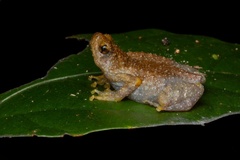
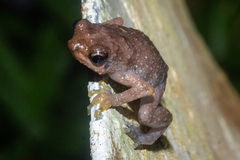
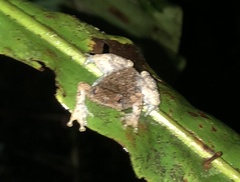
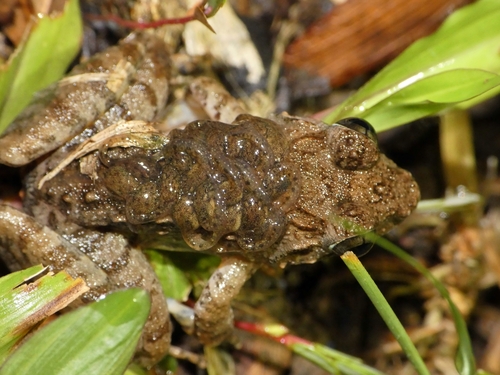
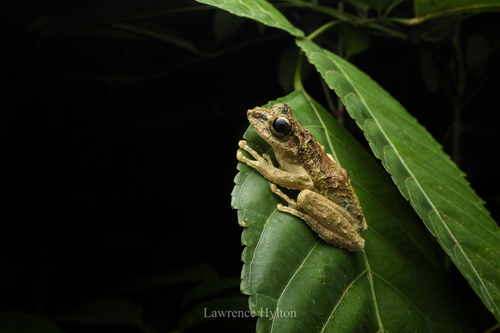
Metaphrynella sundana (Borneo treefrog or Bornean tree hole frog) is a species of frog in the family Microhylidae. It is endemic to Borneo and found in Brunei, Indonesia, and Malaysia. Metaphrynella sundana are small frogs; adults measure up to about 25 mm (0.98 in) in snout–vent length. The body is stocky and the limbs are moderately short. Skin has rounded tubercles that are larger on the sides. Colouration and texture show considerable variation.

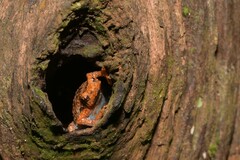
The male has a median subgular vocal sac. Males call at night from tree holes that are about 1–5 m (3 ft 3 in – 16 ft 5 in) meters above the ground. Males are able to adjust their call to the resonance frequency of the tree hole they call from.

The species' natural habitats are lowland primary rainforests to about 700 m (2,300 ft) asl. It is a common frog in primary and secondary rainforests. Reproduction takes place in tree holes with water. It is threatened by habitat loss from clear-cutting.

Sound recordings of Metaphrynella sundana at BioAcoustica Wikipedia →

Sounds

Uncertain0:23

Malaysia · 2025

© Nick Talbot · XC1036442 · CC BY-NC-SA 4.0

Advertisement call1:13

Malaysia · 2019

© Marc Anderson · XC883115 · CC BY-NC-ND 4.0

Recording0:23

Malaysia · 2024

© phrynosoma13 · iNaturalist · CC BY-NC 4.0

Global Distribution

Parks Where Found

# Park Country Daily sighting probability
1 Danum Valley Conservation Area 🇲🇾 Malaysia
~30%
2 Kinabalu Park 🇲🇾 Malaysia
~30%
3 Sepilok 🇲🇾 Malaysia
~10%

Before you go

What are the chances of seeing a Tree Hole Frog in Sepilok?

With luck

About 10% of wildlife watchers report a Tree Hole Frog sighting in Sepilok on a given day, based on 7 verified sightings from GBIF citizen-science data from 2019 to 2026. It is the 16th most-seen of the 18 amphibians we can rate there. Over three days the chance rises to about 30%, and over a week to about 50%, if each day is a fresh chance.

When is the best time to see a Tree Hole Frog in Sepilok?

November

In that month about 30% of wildlife watchers report a Tree Hole Frog in Sepilok on a given day, against under 5% in February–March, May–June, August–September and December, the lowest months. That is one of Sepilok's wettest months, with about 400 mm of rain against 170 mm in March.

What time of day is best to see a Tree Hole Frog?

Between 1 and 4 pm

Across all the parks we cover, that three-hour window holds the most Tree Hole Frog sightings with a recorded time, and about 9 in 10 of them come between 6 am and 6 pm: it is a daytime animal.

Is Sepilok the best place to see a Tree Hole Frog?

3rd of 3

Of the 3 parks where we can rate Tree Hole Frog sightings, Sepilok ranks 3rd at about 10%. The best odds are in Danum Valley Conservation Area (Malaysia, about 30%) and Kinabalu Park (Malaysia, about 30%).

Which relatives of the Tree Hole Frog live in Sepilok?

Same family: Microhylidae

The closest relatives of the Tree Hole Frog that you can see in Sepilok (family Microhylidae, Narrow-mouthed Frogs) are Bornean Sticky Frog (about 10%) and Yellow-spotted Narrow-mouthed Frog (about 10%), with each one's daily chance of a sighting.

Where does the Tree Hole Frog sighting chance come from?

GBIF citizen-science records

It is estimated from how often the Tree Hole Frog is recorded against all the amphibians logged in Sepilok (7 verified sightings from 2019 to 2026), calibrated against known sighting rates. Figures are rounded to the nearest 10% because citizen-science data supports honest approximations, not decimals, and months with records from fewer than five people show "—". How it works.

← Back to Sepilok