California Gall Wasp

California Gall Wasp

Andricus quercuscalifornicus

Daily sighting probability ~10% · With luck
at Sequoia and Kings Canyon National Parks

In 3 days ~20% in a week ~40%

8 Verified sightings at Sequoia and Kings Canyon National Parks From 2019 to 2026
217 In all 3 parks
December Best month
☀️ Diurnal When it's spotted

About the California Gall Wasp

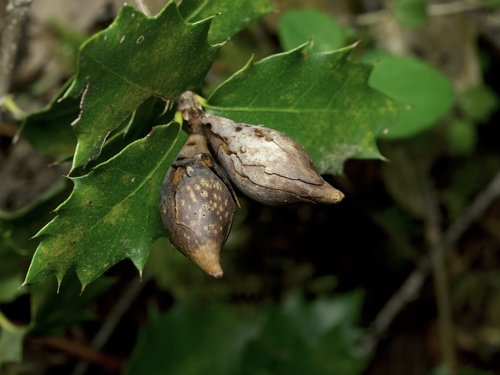
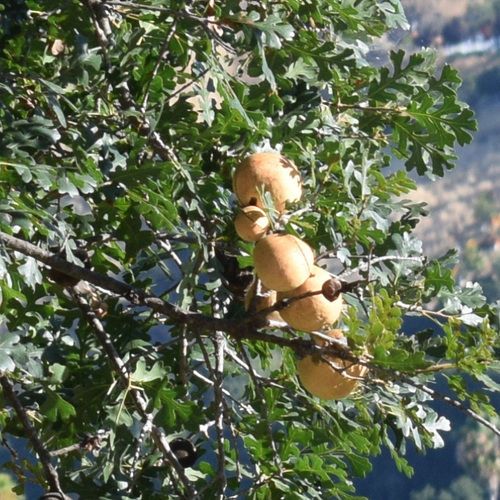
Andricus quercuscalifornicus (occasionally Andricus californicus), or the California gall wasp, is a small wasp species that induces oak apple galls on white oaks, primarily the valley oak (Quercus lobata) but also other species such as Quercus berberidifolia, and Quercus garryana in Oregon. The California gall wasp is considered an ecosystem engineer, capable of manipulating the growth of galls for their own development. It is found from Washington, Oregon, and California to northern regions of Mexico. Often multiple wasps in different life stages occupy the same gall. The induced galls help establish complex insect communities, promoting the diversification in niche differentiation. Furthermore, the adaptive value of these galls could be attributed their ecological benefits such as nutrition, provision of microenvironment, and enemy avoidance.

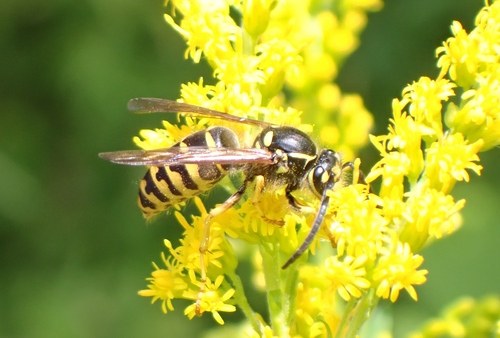
The adult wasps are small, stout and brown, about 5 mm long with clear wings nearly twice the length of the body. The antennae are filiform and about the same length as the legs. Despite their size they are one of the largest species of cynipid wasps.

The gall itself is a typical oak apple gall in appearance, roughly spherical... Wikipedia →
Global Distribution

Parks Where Found

# Park Country Daily sighting probability
1 Channel Islands National Park 🇺🇸 United States
~30%
2 Joshua Tree National Park 🇺🇸 United States
~20%
3 Sequoia and Kings Canyon National Parks 🇺🇸 United States
~10%

Cities Where Found

# City Country Daily sighting probability
1 Sacramento 🇺🇸 United States
~30%
2 San Francisco 🇺🇸 United States
~10%
3 Portland 🇺🇸 United States
~10%
4 San Diego 🇺🇸 United States
<5%
5 Los Angeles 🇺🇸 United States
<5%
6 Seattle 🇺🇸 United States
<5%

Before you go

What are the chances of seeing a California Gall Wasp in Sequoia and Kings Canyon National Parks?

With luck

About 10% of wildlife watchers report a California Gall Wasp sighting in Sequoia and Kings Canyon National Parks on a given day, based on 8 verified sightings from GBIF citizen-science data from 2019 to 2026. It is the 137th most-seen of the 161 insects we can rate there. Over three days the chance rises to about 20%, and over a week to about 40%, if each day is a fresh chance.

When is the best time to see a California Gall Wasp in Sequoia and Kings Canyon National Parks?

December

In that month about 30% of wildlife watchers report a California Gall Wasp in Sequoia and Kings Canyon National Parks on a given day, against under 5% in January–June and August–September, the lowest months. That is one of Sequoia and Kings Canyon National Parks's wettest months, with about 120 mm of rain against 10 mm in September.

What time of day is best to see a California Gall Wasp?

Between 10 am and 1 pm

Across all the parks we cover, that three-hour window holds the most California Gall Wasp sightings with a recorded time, and nearly all of them come between 6 am and 6 pm: it is a daytime animal.

Is Sequoia and Kings Canyon National Parks the best place to see a California Gall Wasp?

3rd of 3

Of the 3 parks where we can rate California Gall Wasp sightings, Sequoia and Kings Canyon National Parks ranks 3rd at about 10%. The best odds are in Channel Islands National Park (United States, about 30%) and Joshua Tree National Park (United States, about 20%).

Where does the California Gall Wasp sighting chance come from?

GBIF citizen-science records

It is estimated from how often the California Gall Wasp is recorded against all the insects logged in Sequoia and Kings Canyon National Parks (8 verified sightings from 2019 to 2026), calibrated against known sighting rates. Figures are rounded to the nearest 10% because citizen-science data supports honest approximations, not decimals, and months with records from fewer than five people show "—". How it works.

← Back to Sequoia and Kings Canyon National Parks