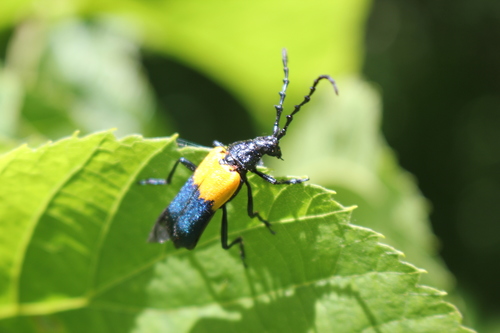
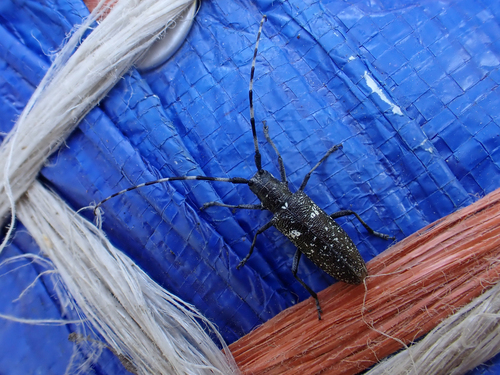
Broad-Necked Root Borer

Broad-Necked Root Borer

Prionus laticollis

Daily sighting probability ~10% · With luck
at Shenandoah National Park

In 3 days ~30% in a week ~50%

28 Verified sightings at Shenandoah National Park From 2019 to 2026
114 In all 2 parks
July Best month
🌅 Crepuscular When it's spotted

About the Broad-Necked Root Borer

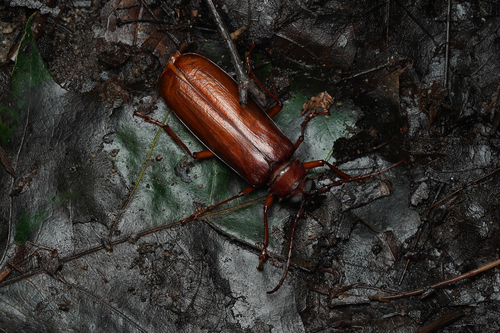
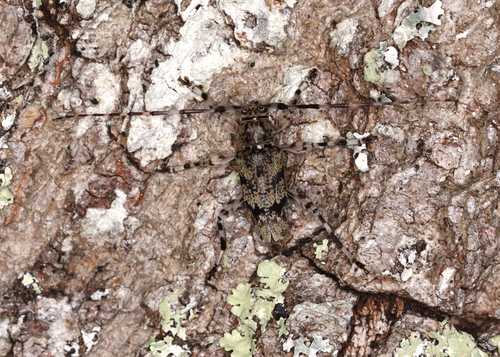
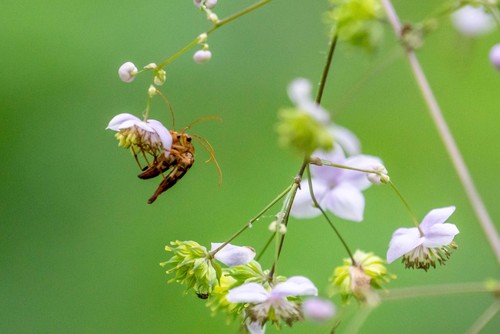
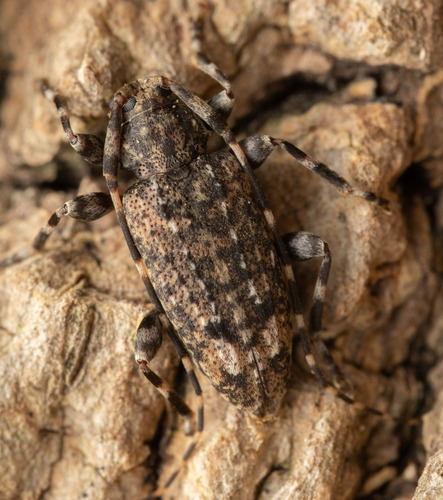
Prionus laticollis, also known as the broad-necked root borer or broad necked prionus, is a root-boring longhorn beetle described by Dru Drury in 1773. It is widespread throughout eastern North America: its range covers a vast swath from Quebec in the northeast to Arkansas in the southwest.

The larvae damage trees and other plants by feeding on their roots. They are mostly active during dusk and at night. They are good burrowers and hide at the base of oak trees and other food sources. The female is larger than the male, with an ovipositor used to deposit eggs. When the female is laying eggs, she "shivers" and eggs are laid through the ovipositor, positioned down into the soil or under litter, usually in groups of threes and twos, but sometimes ones or fours. After the eggs are laid, the female moves her ovipositor up and down to fill the hole she created. When freshly laid, the eggs are pure white, glistening with moisture, but, after a while, they usually change to a deep yellow. Within a few days, the deep yellow eggs turn to a light washed pink. As the larvae develop inside, the eggs turn ivory in color. The eggs are the size of small grains of rice. When the larvae are hatching, they chew through one of the elongated, pointed sides of the egg. The larvae's heads are adapted for digging into the soil, and they have strong black mandibles for chewing roots.

Larvae tunnel downward to feed on the living roots of a variety of trees and shrubs. At first, they may feed on bark, but then proceed to hollow out small roots. They often feed on dead wood, with a preference for soft food. Pupation occurs in spring, about 10 cm under the ground. During pupation parts of the digestive tract degenerate. The life cycle is probably three years.

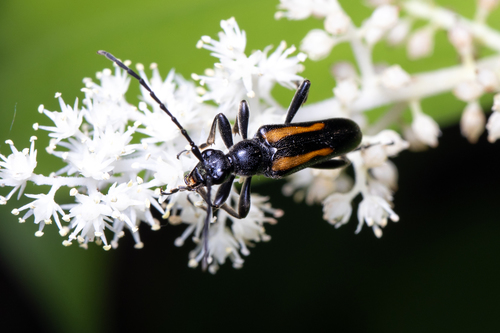
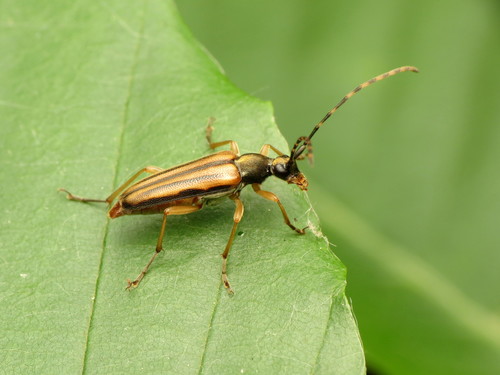
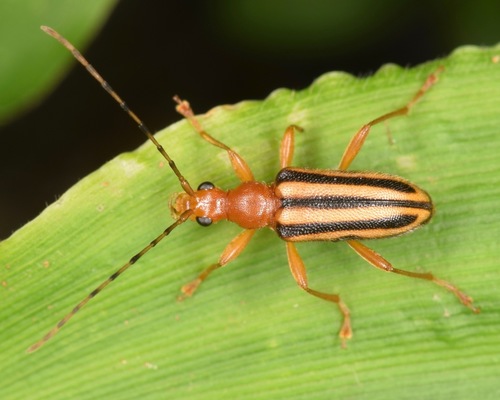
This beetle is about 2-5 cm long, with the females significantly larger than the males. Males fly more often and are attracted to lights. Wikipedia →

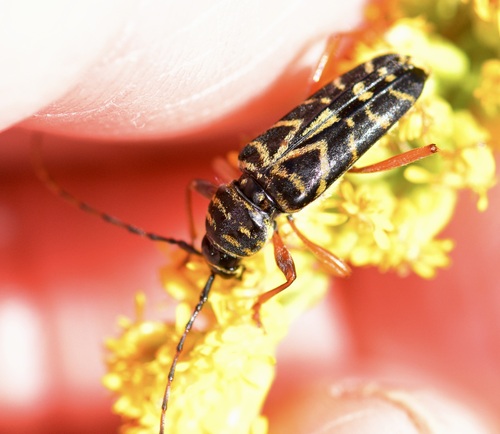
Global Distribution

Parks Where Found

# Park Country Daily sighting probability
1 Great Smoky Mountains National Park 🇺🇸 United States
~20%
2 Shenandoah National Park 🇺🇸 United States
~10%

Cities Where Found

# City Country Daily sighting probability
1 Philadelphia 🇺🇸 United States
~10%
2 Boston 🇺🇸 United States
~10%
3 New York City 🇺🇸 United States
<5%
4 Washington 🇺🇸 United States
<5%
5 Baltimore 🇺🇸 United States
<5%

Before you go

What are the chances of seeing a Broad-Necked Root Borer in Shenandoah National Park?

With luck

About 10% of wildlife watchers report a Broad-Necked Root Borer sighting in Shenandoah National Park on a given day, based on 28 verified sightings from GBIF citizen-science data from 2019 to 2026. It is the 131st most-seen of the 723 insects we can rate there. Over three days the chance rises to about 30%, and over a week to about 50%, if each day is a fresh chance.

When is the best time to see a Broad-Necked Root Borer in Shenandoah National Park?

July

In that month about 20% of wildlife watchers report a Broad-Necked Root Borer in Shenandoah National Park on a given day, against under 5% in September to June, the lowest months.

What time of day is best to see a Broad-Necked Root Borer?

Between 5 and 8 pm

Across all the parks we cover, that three-hour window holds the most Broad-Necked Root Borer sightings with a recorded time, and about 7 in 10 of them come between 6 am and 6 pm: it is most active around dawn and dusk.

Is Shenandoah National Park the best place to see a Broad-Necked Root Borer?

2nd of 2

Of the 2 parks where we can rate Broad-Necked Root Borer sightings, Shenandoah National Park ranks 2nd at about 10%. The best odds are in Great Smoky Mountains National Park (United States, about 20%).

Which relatives of the Broad-Necked Root Borer live in Shenandoah National Park?

Same family: Cerambycidae

The closest relatives of the Broad-Necked Root Borer that you can see in Shenandoah National Park (family Cerambycidae, Longhorn Beetles) are Locust Borer (about 20%), Red Milkweed Beetle (about 20%) and Strangalepta Flower Longhorn Beetle (about 10%), with each one's daily chance of a sighting.

Where does the Broad-Necked Root Borer sighting chance come from?

GBIF citizen-science records

It is estimated from how often the Broad-Necked Root Borer is recorded against all the insects logged in Shenandoah National Park (28 verified sightings from 2019 to 2026), calibrated against known sighting rates. Figures are rounded to the nearest 10% because citizen-science data supports honest approximations, not decimals, and months with records from fewer than five people show "—". How it works.

← Back to Shenandoah National Park