

Emerald Ash Borer

Emerald Ash Borer

Agrilus planipennis

Daily sighting probability ~10% · With luck
at Shenandoah National Park

In 3 days ~20% in a week ~40%

16 Verified sightings at Shenandoah National Park From 2019 to 2026
16 In 1 park
June Best month
☀️ Diurnal When it's spotted

About the Emerald Ash Borer

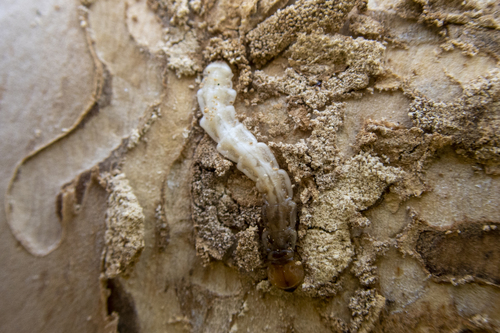
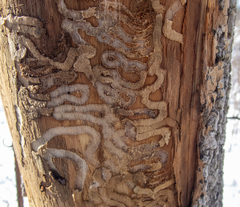
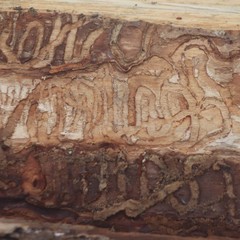
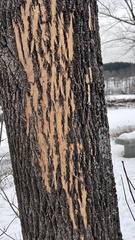
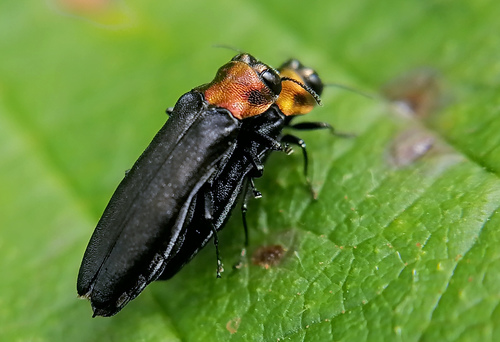
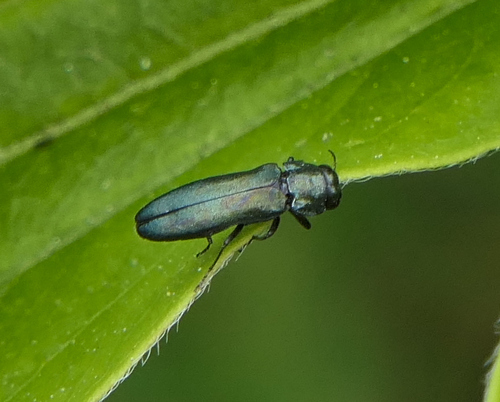
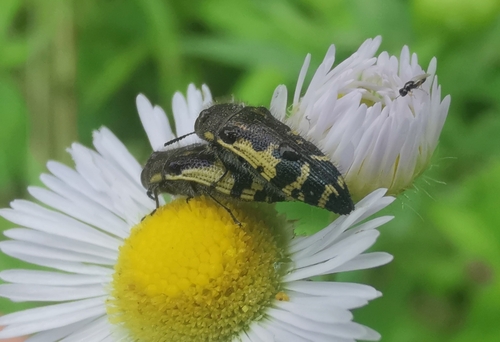
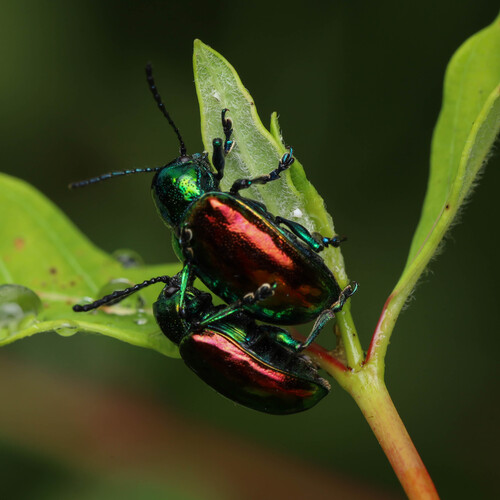
The emerald ash borer (Agrilus planipennis), also known by the abbreviation EAB, is a green buprestid or jewel beetle native to north-eastern Asia that feeds on ash species (Fraxinus spp.). Females lay eggs in bark crevices on ash trees, and larvae feed underneath the bark of ash trees to emerge as adults in one to two years. In its native range, it is typically found at low densities and does not cause significant damage to trees native to the area. Outside its native range, it is an invasive species and is highly destructive to ash trees native to Europe and North America. Before it was found in North America, very little was known about the emerald ash borer in its native range; this has resulted in much of the research on its biology being focused in North America. Local governments in North America are attempting to control it by monitoring its spread, diversifying tree species, and through the use of insecticides and biological control.

French priest and naturalist Armand David collected a specimen of the species during one of his trips through Imperial China in the 1860s and 1870s. He found the beetle in Beijing and sent it to France, where the first brief description... Wikipedia →

Global Distribution

Parks Where Found

# Park Country Daily sighting probability
1 Shenandoah National Park 🇺🇸 United States
~10%

More parks will be added in future updates.

Cities Where Found

# City Country Daily sighting probability
1 Kharkiv 🇺🇦 Ukraine
~10%
2 Kyiv 🇺🇦 Ukraine
~10%
3 Minneapolis [Saint Paul] 🇺🇸 United States
~10%
4 Montreal 🇨🇦 Canada
~10%
5 Baltimore 🇺🇸 United States
<5%
6 Philadelphia 🇺🇸 United States
<5%
7 Washington 🇺🇸 United States
<5%
8 Chicago 🇺🇸 United States
<5%
9 Toronto 🇨🇦 Canada
<5%
10 New York City 🇺🇸 United States
<5%

Before you go

What are the chances of seeing an Emerald Ash Borer in Shenandoah National Park?

With luck

About 10% of wildlife watchers report an Emerald Ash Borer sighting in Shenandoah National Park on a given day, based on 16 verified sightings from GBIF citizen-science data from 2019 to 2026. It is the 234th most-seen of the 723 insects we can rate there. Over three days the chance rises to about 20%, and over a week to about 40%, if each day is a fresh chance.

When is the best time to see an Emerald Ash Borer in Shenandoah National Park?

March–July and October

In those months about 10% of wildlife watchers report an Emerald Ash Borer in Shenandoah National Park on a given day, against under 5% in August–September and November–February, the lowest months.

What time of day is best to see an Emerald Ash Borer?

Between noon and 3 pm

Across all the parks we cover, that three-hour window holds the most Emerald Ash Borer sightings with a recorded time, and nearly all of them come between 6 am and 6 pm: it is a daytime animal.

Where else can you see an Emerald Ash Borer?

Only Shenandoah National Park, in our data

Shenandoah National Park is the only park on Wallace's Line with enough records to rate Emerald Ash Borer sightings: about 10% of wildlife watchers there report one on a given day.

Which relatives of the Emerald Ash Borer live in Shenandoah National Park?

Same genus: Agrilus

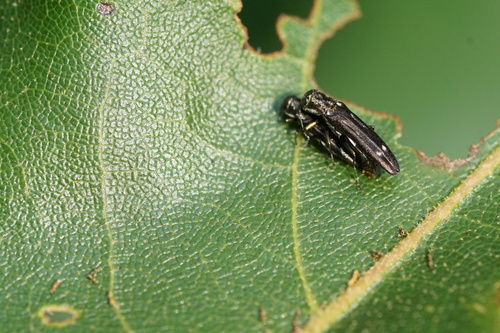
The closest relatives of the Emerald Ash Borer that you can see in Shenandoah National Park (genus Agrilus) are Red-Necked Cane Borer (about 10%) and Agrilus cyanescens (about 10%), with each one's daily chance of a sighting.

Where does the Emerald Ash Borer sighting chance come from?

GBIF citizen-science records

It is estimated from how often the Emerald Ash Borer is recorded against all the insects logged in Shenandoah National Park (16 verified sightings from 2019 to 2026), calibrated against known sighting rates. Figures are rounded to the nearest 10% because citizen-science data supports honest approximations, not decimals, and months with records from fewer than five people show "—". How it works.

← Back to Shenandoah National Park