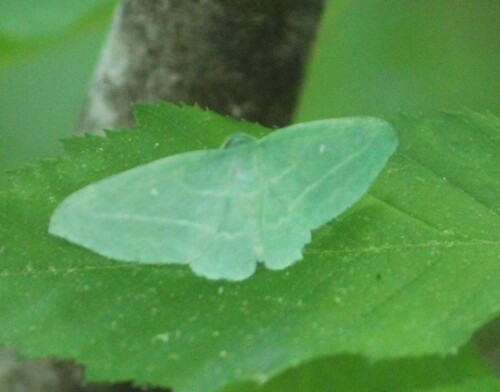
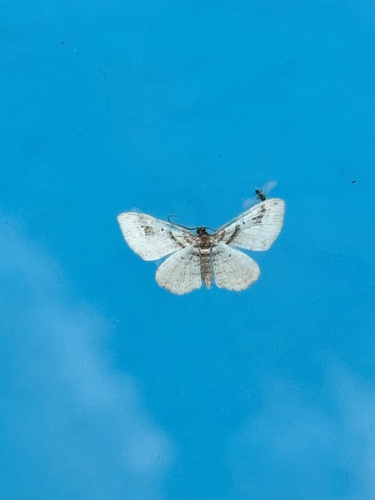
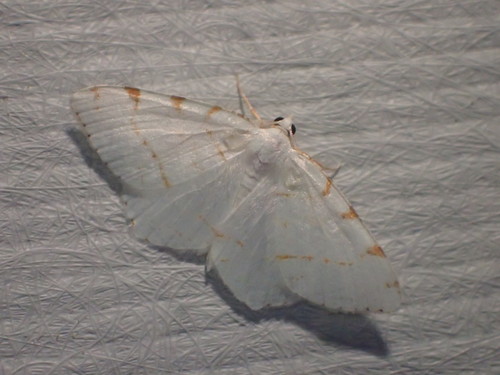
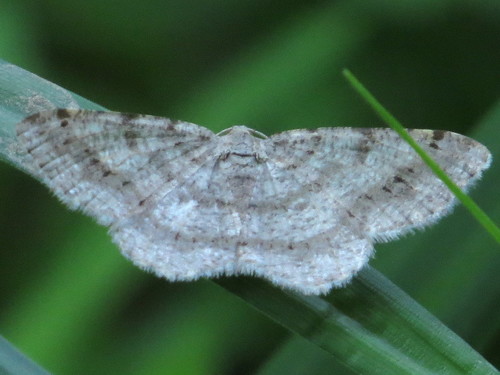
Fall Cankerworm Moth

Fall Cankerworm Moth

Alsophila pometaria

Daily sighting probability <5% · Rare
at Shenandoah National Park

In 3 days ~10% in a week ~30%

5 Verified sightings at Shenandoah National Park From 2019 to 2026
5 In 1 park
January Best month
☀️ Diurnal When it's spotted

About the Fall Cankerworm Moth

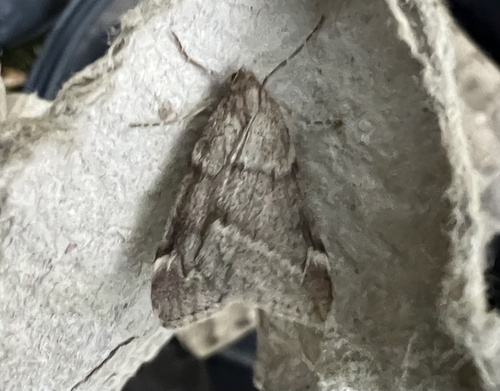
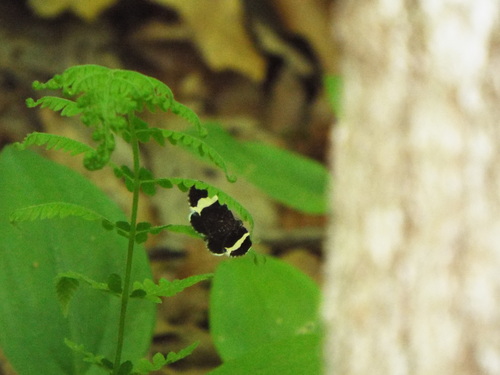
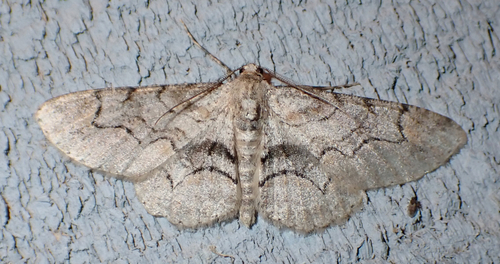
Alsophila pometaria, the fall cankerworm, is a moth of the family Geometridae. It is found in North America from Nova Scotia west to Alberta, south to Colorado and California. The caterpillars grow to about 25 mm long. In color, they vary from light green to a dark brownish green. Light green caterpillars have white lines running down the body from the head to the tip of the abdomen while the darker caterpillars have a black stripe the length of their back. Larvae have three pairs of legs on their thorax and three pairs of prolegs on their abdomen. The first pair of prolegs (on segment 8, unexpected in Geometridae as opposed to Noctuidae) is much smaller than the last two pairs (the one on segment 9 typical for geometer moths and the pygopodium at the end of the animal). The pupa is wrapped in a silk cocoon and is buried just beneath the surface of the ground.

Adult males have a 25–35 mm wingspan. The forewings are glossy brown and crossed with irregular white bands. The females are brownish gray, wingless, and 10–12 mm long. Eggs are grayish brown with a dot and ring on the top and are less than 1 mm in diameter.

The larvae feed on a large variety of... Wikipedia →

Global Distribution

Parks Where Found

# Park Country Daily sighting probability
1 Shenandoah National Park 🇺🇸 United States
<5%

More parks will be added in future updates.

Cities Where Found

# City Country Daily sighting probability
1 Minneapolis [Saint Paul] 🇺🇸 United States
~10%
2 Edmonton 🇨🇦 Canada
<5%
3 Toronto 🇨🇦 Canada
<5%
4 Boston 🇺🇸 United States
<5%
5 Calgary 🇨🇦 Canada
<5%
6 Philadelphia 🇺🇸 United States
<5%
7 Denver 🇺🇸 United States
<5%
8 New York City 🇺🇸 United States
<5%
9 Washington 🇺🇸 United States
<5%

Before you go

What are the chances of seeing a Fall Cankerworm Moth in Shenandoah National Park?

Rare

Under 5% of wildlife watchers report a Fall Cankerworm Moth sighting in Shenandoah National Park on a given day, based on 5 verified sightings from GBIF citizen-science data from 2019 to 2026. It is the 630th most-seen of the 723 insects we can rate there. Over three days the chance rises to about 10%, and over a week to about 30%, if each day is a fresh chance.

When is the best time to see a Fall Cankerworm Moth in Shenandoah National Park?

January and November

In those months about 20% of wildlife watchers report a Fall Cankerworm Moth in Shenandoah National Park on a given day, against under 5% in February–May, July–October and December, the lowest months.

What time of day is best to see a Fall Cankerworm Moth?

Between 2 and 5 pm

Across all the parks we cover, that three-hour window holds the most Fall Cankerworm Moth sightings with a recorded time, and about 9 in 10 of them come between 6 am and 6 pm: it is a daytime animal.

Where else can you see a Fall Cankerworm Moth?

Only Shenandoah National Park, in our data

Shenandoah National Park is the only park on Wallace's Line with enough records to rate Fall Cankerworm Moth sightings: under 5% of wildlife watchers there report one on a given day.

Which relatives of the Fall Cankerworm Moth live in Shenandoah National Park?

Same family: Geometridae

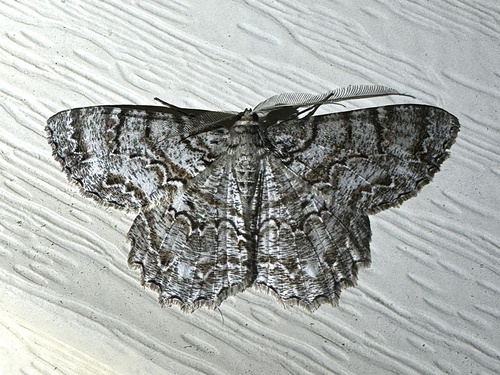
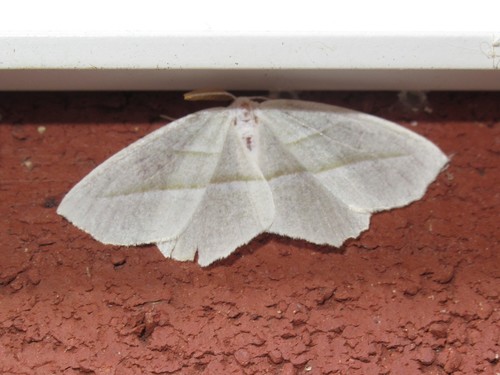
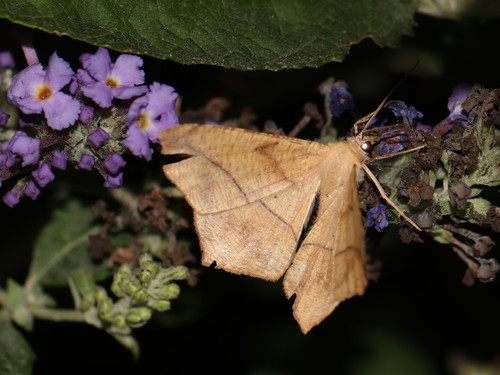
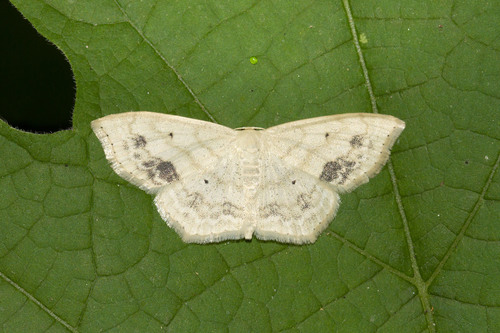
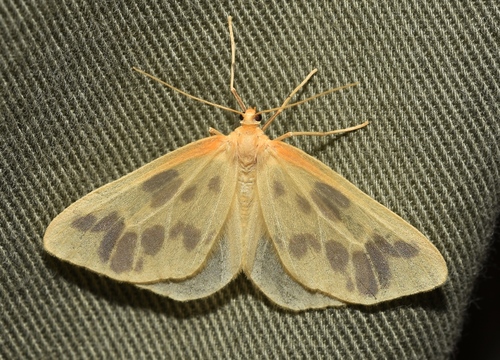
The closest relatives of the Fall Cankerworm Moth that you can see in Shenandoah National Park (family Geometridae, Geometer Moths) are Tulip-Tree Beauty (about 20%), Pale Beauty (about 10%) and Large Maple Spanworm Moth (about 10%), with each one's daily chance of a sighting.

Where does the Fall Cankerworm Moth sighting chance come from?

GBIF citizen-science records

It is estimated from how often the Fall Cankerworm Moth is recorded against all the insects logged in Shenandoah National Park (5 verified sightings from 2019 to 2026), calibrated against known sighting rates. Figures are rounded to the nearest 10% because citizen-science data supports honest approximations, not decimals, and months with records from fewer than five people show "—". How it works.

← Back to Shenandoah National Park