Fowler's Toad

Fowler's Toad

Anaxyrus fowleri

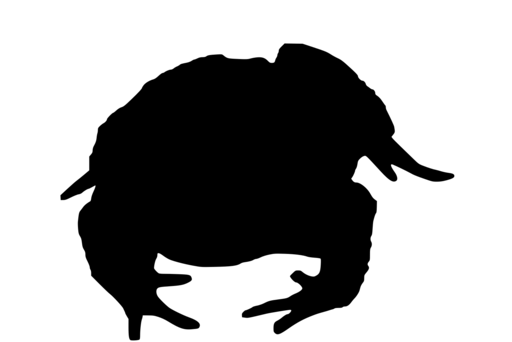
Silhouette: Michael Scroggie, from original photograph by Gary M. Stolz, USFWS (original photograph in public domain). · PhyloPic

LCLeast ConcernNTVUENCR
Daily sighting probability ~10% · With luck
at Shenandoah National Park

In 3 days ~20% in a week ~40%

15 Verified sightings at Shenandoah National Park From 2019 to 2026
61 In all 2 parks
July Best month
☀️🌙 Day & Night When it's spotted

About the Fowler's Toad

Anaxyrus fowleri, Fowler's toad, is a species of toad in the family Bufonidae. The species is native to North America, where it occurs in much of the eastern United States and parts of adjacent Canada. It was previously considered a subspecies of Woodhouse's toad (Anaxyrus woodhousii, formerly Bufo woodhousii).

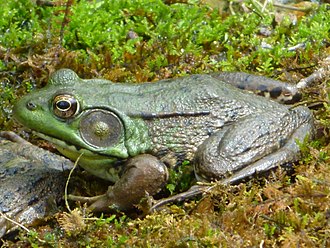
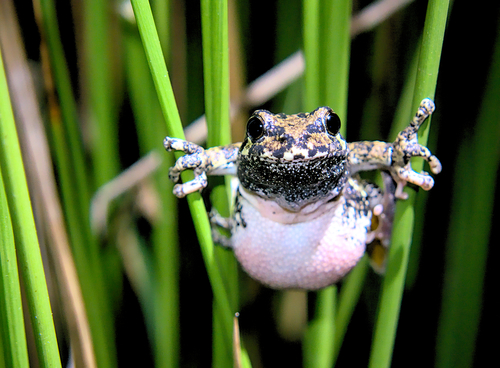
The specific name, fowleri, is in honor of naturalist Samuel Page Fowler (1800–1888) from Massachusetts, who was a founder of the Essex County Natural History Society, which later became the Essex Institute. Fowler's toad is usually brown, grey, olive green and rust red in color with darkened warty spots. If the toad has a pale stripe on its back, it is an adult. The belly is usually uniformly whitish except for one dark spot. The male may be darker in overall color than the female.

The adult toad is typically 5 to 9.5 cm (2.0 to 3.7 in) in head-body length. The tadpole is oval with a long tail and upper and lower fins, and is 1 to 1.4 cm (0.39 to 0.55 in) long. Body size is found to be dependent on the toad's environment. Higher temperatures produce smaller sized toads due to an increase in ectothermic metabolism with decreased resources.... Wikipedia →

Sounds

Advertisement call0:15

United States · 2015

© Chris Harrison · XC890998 · CC BY-NC-SA 4.0

Recording1:04

United States · 2026

© Wayne Longbottom · iNaturalist · CC BY-NC 4.0

Recording0:21

Canada · 2025

© Glenn Barrett · iNaturalist · CC BY-NC 4.0

Global Distribution

Parks Where Found

# Park Country Daily sighting probability
1 Great Smoky Mountains National Park 🇺🇸 United States
~10%
2 Shenandoah National Park 🇺🇸 United States
~10%

Cities Where Found

# City Country Daily sighting probability
1 New York City 🇺🇸 United States
~10%
2 Washington 🇺🇸 United States
~10%
3 Philadelphia 🇺🇸 United States
~10%
4 Baltimore 🇺🇸 United States
<5%

Zoos & Centres Where Found

# Zoo / Centre Country
1 National Zoological Park 🇺🇸 United States In captivity
2 Cape May County Park & Zoo 🇺🇸 United States In captivity
3 Indianapolis Zoo 🇺🇸 United States In captivity
4 North Carolina Aquarium on Roanoke Island 🇺🇸 United States In captivity

Before you go

What are the chances of seeing a Fowler's Toad in Shenandoah National Park?

With luck

About 10% of wildlife watchers report a Fowler's Toad sighting in Shenandoah National Park on a given day, based on 15 verified sightings from GBIF citizen-science data from 2019 to 2026. It is the 19th most-seen of the 20 amphibians we can rate there. Over three days the chance rises to about 20%, and over a week to about 40%, if each day is a fresh chance.

When is the best time to see a Fowler's Toad in Shenandoah National Park?

May to August

In those months about 10% of wildlife watchers report a Fowler's Toad in Shenandoah National Park on a given day, against under 5% in September to April, the lowest months.

What time of day is best to see a Fowler's Toad?

Between 8 and 11 pm

Across all the parks we cover, that three-hour window holds the most Fowler's Toad sightings with a recorded time, and about 6 in 10 of them come between 6 am and 6 pm: it is seen both by day and at night.

Is Shenandoah National Park the best place to see a Fowler's Toad?

Among the best

Of the 2 parks where we can rate Fowler's Toad sightings, Shenandoah National Park ranks 2nd at about 10%, level with the leaders once rounded. The best odds are in Great Smoky Mountains National Park (United States, about 10%).

Where does the Fowler's Toad sighting chance come from?

GBIF citizen-science records

It is estimated from how often the Fowler's Toad is recorded against all the amphibians logged in Shenandoah National Park (15 verified sightings from 2019 to 2026), calibrated against known sighting rates. Figures are rounded to the nearest 10% because citizen-science data supports honest approximations, not decimals, and months with records from fewer than five people show "—". How it works.

← Back to Shenandoah National Park