


European Dwarf Mantis

European Dwarf Mantis

Ameles spallanzania

Daily sighting probability ~10% · With luck
at Sierra de Guadarrama National Park

In 3 days ~20% in a week ~40%

28 Verified sightings at Sierra de Guadarrama National Park From 2019 to 2026
41 In all 2 parks
September Best month
🌅 Crepuscular When it's spotted

About the European Dwarf Mantis

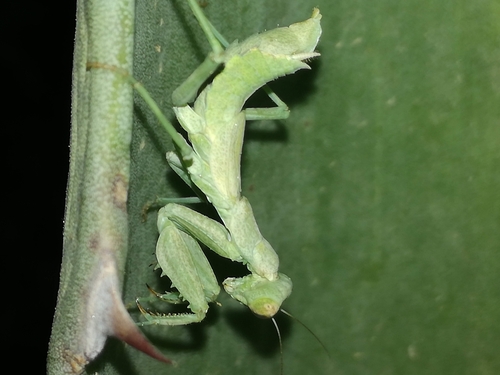
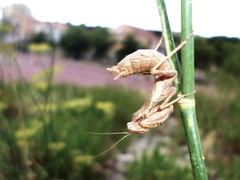
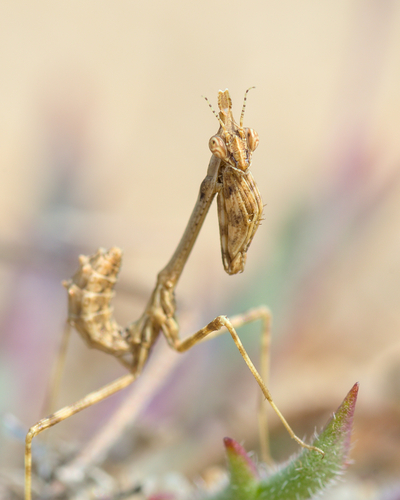
Ameles spallanzania, common name European dwarf mantis, is a species of praying mantis. The species name spallanzania honors the Italian naturalist Lazzaro Spallanzani. Ameles spallanzania can reach a length of 18–40 millimetres (0.71–1.57 in). Their colour may be brown, green, ochre or grey. The eyes are slightly pointed, antennae are threadlike, the pronotum is short and squared and the broad abdomen of the females is commonly curled upwards. This very small mantid (hence the common name) is characterized by an evident sexual dimorphism. The males are winged and have a quite slender body, while females show stubby bodies and are unable to fly, as they possess only small wing vestiges (brachypterous).

This thermophile species shows adaptable life-cycle strategies in different latitudes, as hatching earlier, more than one generation per year or overwintering nymphs or oothecae. Adults can be found from late spring to late summer, depending on the latitude. Nymphs usually hatch in July and the ootheca is commonly laid in September.

Similarly to the common Mantis religiosa the females may cannibalise the males whilst mating. Wikipedia →

Global Distribution

Parks Where Found

# Park Country Daily sighting probability
1 Sierra Nevada National Park 🇪🇸 Spain
~10%
2 Sierra de Guadarrama National Park 🇪🇸 Spain
~10%

Cities Where Found

# City Country Daily sighting probability
1 Madrid 🇪🇸 Spain
<5%

Before you go

What are the chances of seeing a European Dwarf Mantis in Sierra de Guadarrama National Park?

With luck

About 10% of wildlife watchers report a European Dwarf Mantis sighting in Sierra de Guadarrama National Park on a given day, based on 28 verified sightings from GBIF citizen-science data from 2019 to 2026. It is the 117th most-seen of the 597 insects we can rate there. Over three days the chance rises to about 20%, and over a week to about 40%, if each day is a fresh chance.

When is the best time to see a European Dwarf Mantis in Sierra de Guadarrama National Park?

April and June–November

In those months about 10% of wildlife watchers report a European Dwarf Mantis in Sierra de Guadarrama National Park on a given day, against under 5% in May and December–March, the lowest months.

What time of day is best to see a European Dwarf Mantis?

Between 4 and 7 pm

Across all the parks we cover, that three-hour window holds the most European Dwarf Mantis sightings with a recorded time, and about 7 in 10 of them come between 6 am and 6 pm: it is most active around dawn and dusk.

Is Sierra de Guadarrama National Park the best place to see a European Dwarf Mantis?

Among the best

Of the 2 parks where we can rate European Dwarf Mantis sightings, Sierra de Guadarrama National Park ranks 2nd at about 10%, level with the leaders once rounded. The best odds are in Sierra Nevada National Park (Spain, about 10%).

Which relatives of the European Dwarf Mantis live in Sierra de Guadarrama National Park?

Same order: Mantodea

The closest relatives of the European Dwarf Mantis that you can see in Sierra de Guadarrama National Park (order Mantodea, Mantises) are European Mantis (about 10%) and Mediterranean Conehead Mantis (about 10%), with each one's daily chance of a sighting.

Where does the European Dwarf Mantis sighting chance come from?

GBIF citizen-science records

It is estimated from how often the European Dwarf Mantis is recorded against all the insects logged in Sierra de Guadarrama National Park (28 verified sightings from 2019 to 2026), calibrated against known sighting rates. Figures are rounded to the nearest 10% because citizen-science data supports honest approximations, not decimals, and months with records from fewer than five people show "—". How it works.

← Back to Sierra de Guadarrama National Park