Merveille Du Jour

Merveille Du Jour

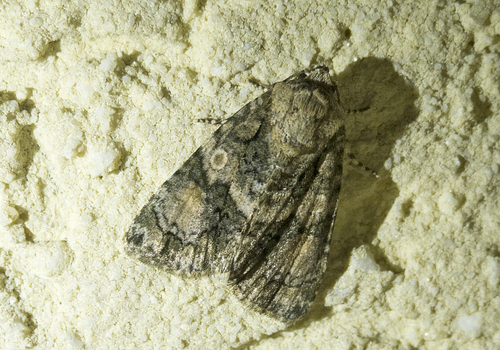
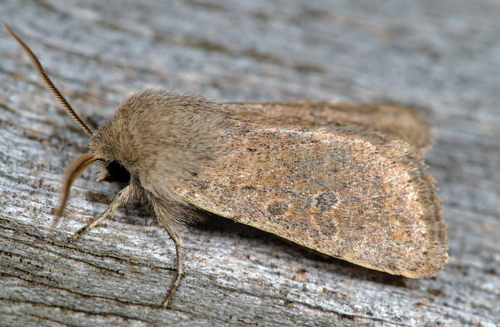
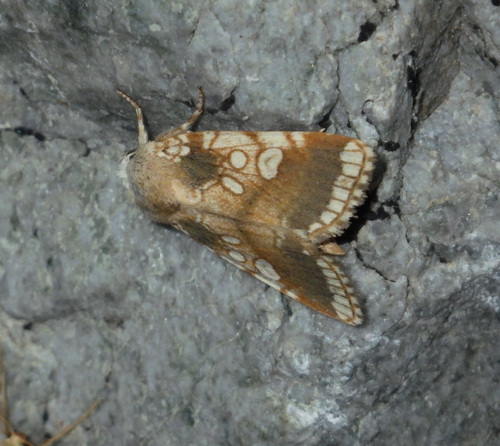
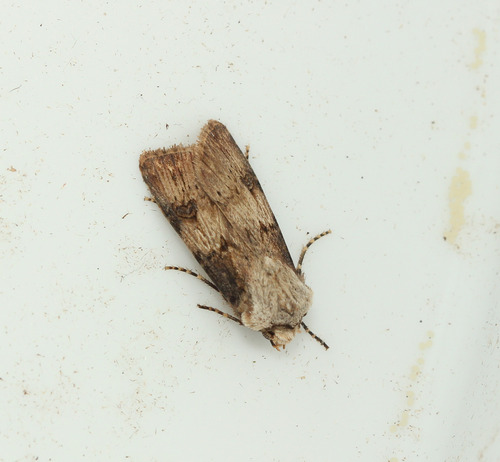
Griposia aprilina

Daily sighting probability <5% · Rare
at Sierra de Guadarrama National Park

In 3 days ~10% in a week ~20%

5 Verified sightings at Sierra de Guadarrama National Park From 2019 to 2026
11 In all 2 parks
October Best month
☀️🌙 Day & Night When it's spotted

About the Merveille Du Jour

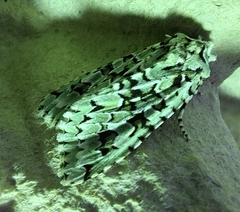
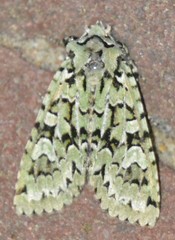
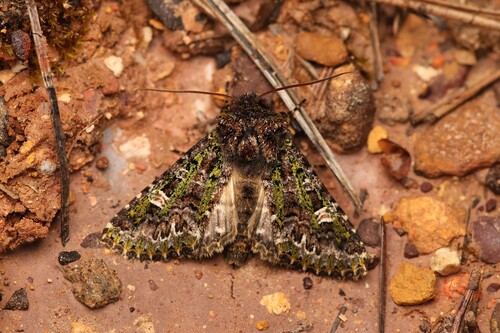
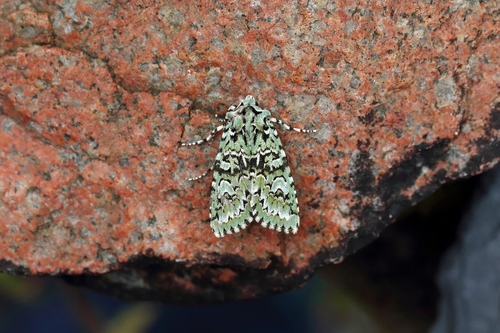
Griposia aprilina, also known as the merveille du jour, is a moth of the family Noctuidae, found in Asia and Europe. The species was first described by the Swedish taxonomist Carl Linnaeus in his 1758 10th edition of Systema Naturae.

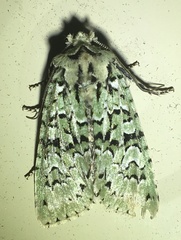
Forewing whitish green; lines and markings velvety black, the median shade especially thick; upper stigmata large; all the black markings emphasised by white; hindwing blackish grey; the cellspot, outer line, and submarginal shade darker; a white terminal space before the black marginal line; the ab. bouveti Lucas, from France, has the head, thorax, and forewings greener, the median area of forewing without black markings.

Griposia pinkeri (Kobes, 1973) is found sympatrically in Asia Minor and on the Balkan Peninsula. The moth flies in September and October and comes to light. Ovum Eggs are laid singly or in small numbers on branches, or in crevices in the bark of oak trees (Quercus species).

Larva The eggs hatch as the buds swell and the young larva bore into a bud which conceals them as they feed. They then feed on the flowers and grow rapidly and finally on the leaves.... Wikipedia →
Global Distribution

Parks Where Found

# Park Country Daily sighting probability
1 Bavarian Forest National Park 🇩🇪 Germany
<5%
2 Sierra de Guadarrama National Park 🇪🇸 Spain
<5%

Cities Where Found

# City Country Daily sighting probability
1 London 🇬🇧 United Kingdom
~10%
2 Vienna 🇦🇹 Austria
<5%

Before you go

What are the chances of seeing a Merveille Du Jour in Sierra de Guadarrama National Park?

Rare

Under 5% of wildlife watchers report a Merveille Du Jour sighting in Sierra de Guadarrama National Park on a given day, based on 5 verified sightings from GBIF citizen-science data from 2019 to 2026. It is the 528th most-seen of the 597 insects we can rate there. Over three days the chance rises to about 10%, and over a week to about 20%, if each day is a fresh chance.

When is the best time to see a Merveille Du Jour in Sierra de Guadarrama National Park?

October and November

In those months about 10% of wildlife watchers report a Merveille Du Jour in Sierra de Guadarrama National Park on a given day, against under 5% in December to September, the lowest months. Those are among Sierra de Guadarrama National Park's wettest months, with about 110 mm of rain a month against 20 mm in July.

What time of day is best to see a Merveille Du Jour?

Between 3 and 6 pm

Across all the parks we cover, that three-hour window holds the most Merveille Du Jour sightings with a recorded time, and about 7 in 10 of them come between 6 am and 6 pm: it is seen both by day and at night.

Is Sierra de Guadarrama National Park the best place to see a Merveille Du Jour?

Among the best

Of the 2 parks where we can rate Merveille Du Jour sightings, Sierra de Guadarrama National Park ranks 2nd at under 5%, level with the leaders once rounded. The best odds are in Bavarian Forest National Park (Germany, under 5%).

Which relatives of the Merveille Du Jour live in Sierra de Guadarrama National Park?

Same family: Noctuidae

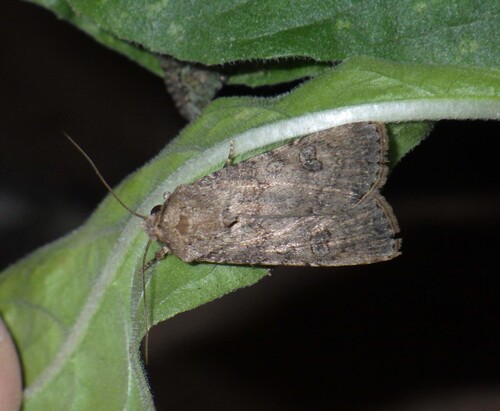
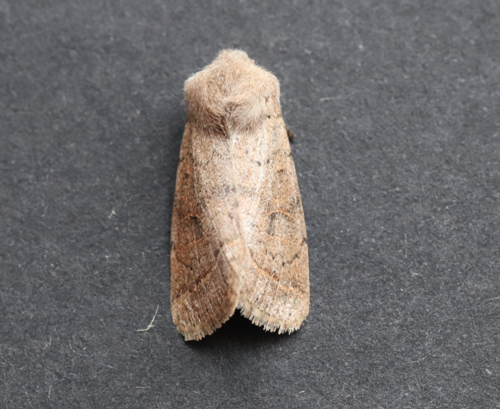
The closest relatives of the Merveille Du Jour that you can see in Sierra de Guadarrama National Park (family Noctuidae, Cutworm Moths and Allies) are Silver Υ (about 10%), Turnip Moth (about 10%) and Common Quaker (about 10%), with each one's daily chance of a sighting.

Where does the Merveille Du Jour sighting chance come from?

GBIF citizen-science records

It is estimated from how often the Merveille Du Jour is recorded against all the insects logged in Sierra de Guadarrama National Park (5 verified sightings from 2019 to 2026), calibrated against known sighting rates. Figures are rounded to the nearest 10% because citizen-science data supports honest approximations, not decimals, and months with records from fewer than five people show "—". How it works.

← Back to Sierra de Guadarrama National Park