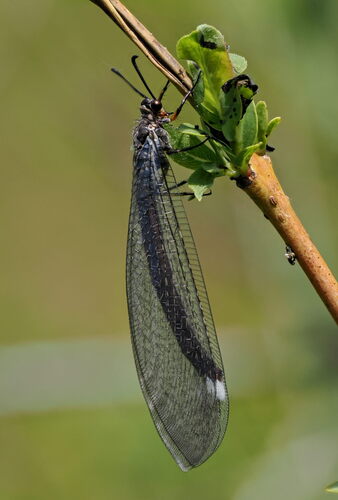
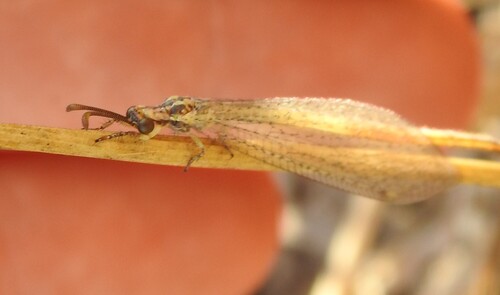
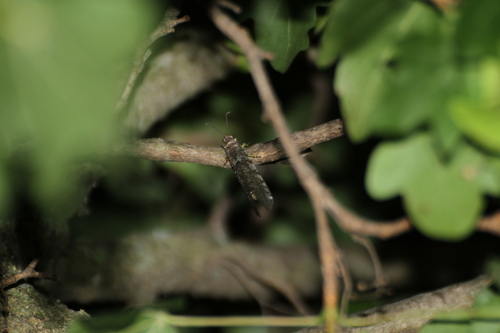
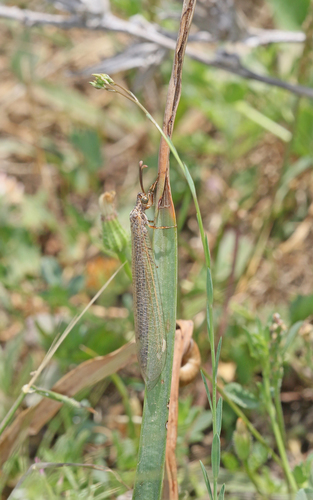
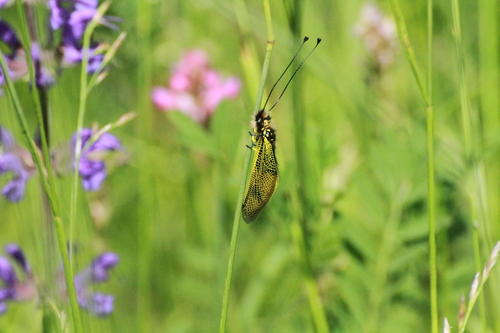
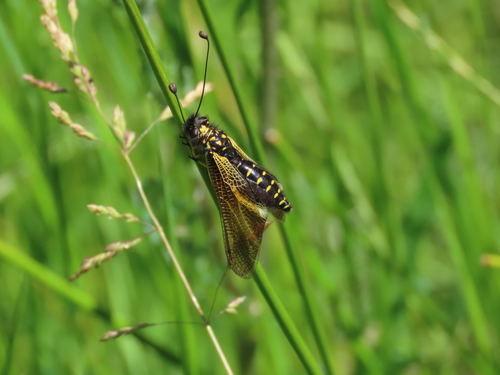
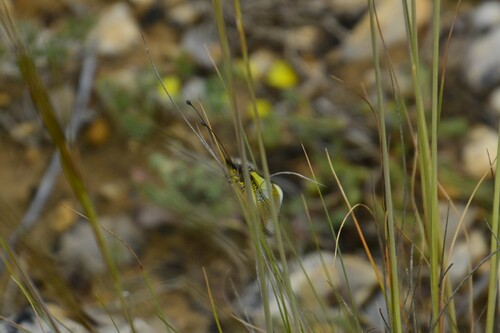


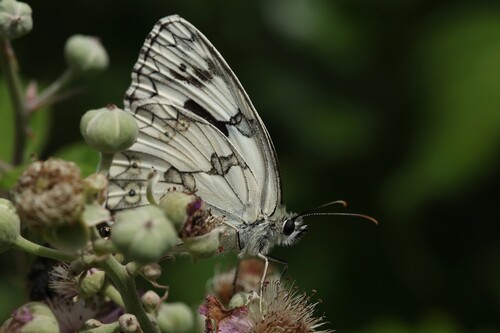
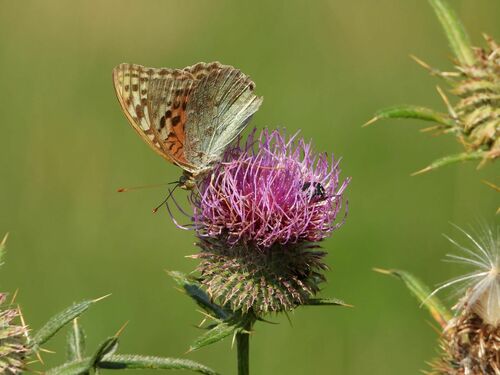
Myrmeleon formicarius

Myrmeleon formicarius

Myrmeleon formicarius

Daily sighting probability <5% · Rare
at Sierra de Guadarrama National Park

In 3 days ~10% in a week ~20%

5 Verified sightings at Sierra de Guadarrama National Park From 2019 to 2026
11 In all 2 parks
July Best month
🌅 Crepuscular When it's spotted

About the Myrmeleon formicarius

Myrmeleon formicarius is a species of antlion native to Belgium and other parts of Europe. It is known to be present in the Genk nature reserve Opglabbekerzavel in 2020, according to the species inventory prepared for the city by the ecological study/advice company Mieco-effect.

According to the European Environment Agency, this species has not yet been assessed by the IUCN and as such lacks an official conservation threat status. Despite there being little species-specific information available online, the Encyclopædia Britannica describes it as "the best known of the 65 described species" of antlions.

It has been suggested that there is a great deal of confusion in the distinction of individuals between M. formicarius and Euroleon nostras. The easiest hallmark of M. formicarius larvae is its largely black head, but this can easily be mis-seen due to fine humus/substrate particles clinging to their many head hairs. For adults, the lack of black flecks in their wing colours is an identifying feature.

A 2020 study by Wu et al., sequenced their mitochondrial genome and found that they are most closely related to Myrmeleon immanis, another antlion species. The common name of M. formicarius in Dutch is Zwartkopmierenleeuw, which translates to "Blackhead antlion". Wikipedia →

Global Distribution

Parks Where Found

# Park Country Daily sighting probability
1 Bavarian Forest National Park 🇩🇪 Germany
<5%
2 Sierra de Guadarrama National Park 🇪🇸 Spain
<5%

Before you go

What are the chances of seeing a Myrmeleon formicarius in Sierra de Guadarrama National Park?

Rare

Under 5% of wildlife watchers report a Myrmeleon formicarius sighting in Sierra de Guadarrama National Park on a given day, based on 5 verified sightings from GBIF citizen-science data from 2019 to 2026. It is the 528th most-seen of the 597 insects we can rate there. Over three days the chance rises to about 10%, and over a week to about 20%, if each day is a fresh chance.

When is the best time to see a Myrmeleon formicarius in Sierra de Guadarrama National Park?

July

In that month about 10% of wildlife watchers report a Myrmeleon formicarius in Sierra de Guadarrama National Park on a given day, against under 5% in August to June, the lowest months. That is one of Sierra de Guadarrama National Park's driest months, with about 20 mm of rain against 110 mm in November.

What time of day is best to see a Myrmeleon formicarius?

Between 11 am and 2 pm

Across all the parks we cover, that three-hour window holds the most Myrmeleon formicarius sightings with a recorded time, and about 6 in 10 of them come between 6 am and 6 pm: it is most active around dawn and dusk.

Is Sierra de Guadarrama National Park the best place to see a Myrmeleon formicarius?

Among the best

Of the 2 parks where we can rate Myrmeleon formicarius sightings, Sierra de Guadarrama National Park ranks 2nd at under 5%, level with the leaders once rounded. The best odds are in Bavarian Forest National Park (Germany, under 5%).

Where does the Myrmeleon formicarius sighting chance come from?

GBIF citizen-science records

It is estimated from how often the Myrmeleon formicarius is recorded against all the insects logged in Sierra de Guadarrama National Park (5 verified sightings from 2019 to 2026), calibrated against known sighting rates. Figures are rounded to the nearest 10% because citizen-science data supports honest approximations, not decimals, and months with records from fewer than five people show "—". How it works.

← Back to Sierra de Guadarrama National Park