

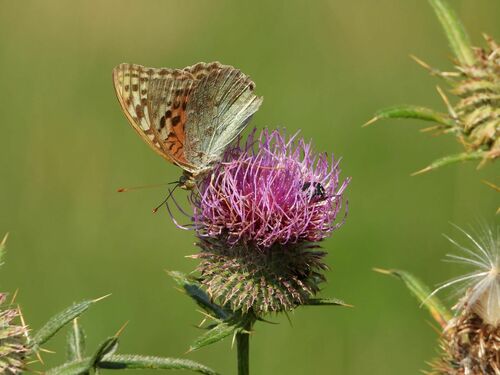
Four-Spotted Antlion

Four-Spotted Antlion

Distoleon tetragrammicus

Daily sighting probability <5% · Rare
at Sierra de Guadarrama National Park

In 3 days ~10% in a week ~20%

5 Verified sightings at Sierra de Guadarrama National Park From 2019 to 2026
68 In all 4 parks
August Best month
☀️🌙 Day & Night When it's spotted

About the Four-Spotted Antlion

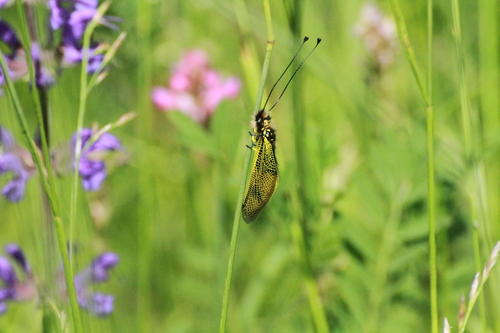
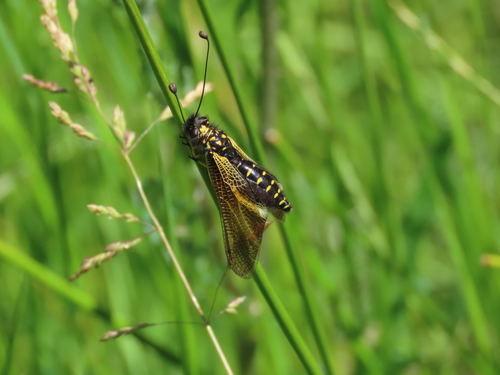
Distoleon tetragrammicus is a species of antlion in the subfamily Myrmeleontinae. Distoleon tetragrammicus is widespread in the western Palearctic realm and it is present in most of Southern Europe and in North Africa. This species can be found in a wide range of habitats, from coastal dunes to mountain forests, mainly in arid and sandy areas, in oak and pine forests and in various calcareous wasteland with minimum moisture. The larvae avoid exposed sites as coastal dunes.

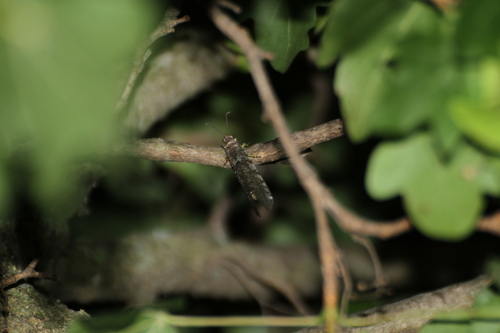
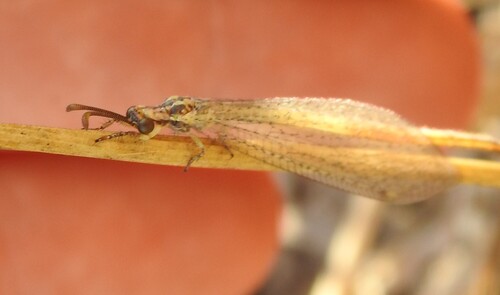
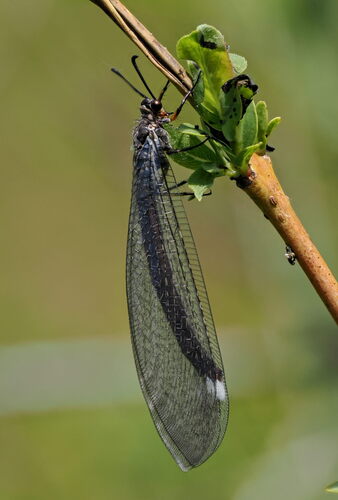
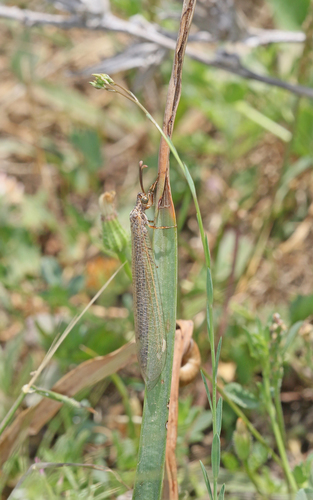
The adults of Distoleon tetragrammicus greatly resemble dragonflies or damselflies. They have a wingspan of about 75 millimetres (3.0 in). The front wing can reach a width of 26–40 millimetres (1.0–1.6 in). They have thick, prominent, apically clubbed antennae, a long, narrow abdomen and two pairs of long, transparent, multiveined wings, with some brown and opaque spots. This species is sometimes confused with Myrmeleon formicarius.

The larvae do not look anything like adults. The length of a fully grown larva is typically 12–22 millimetres (0.47–0.87 in). The basic body color is dark brown with darker markings. The head is dark brown. The strong dark brown mandibles... Wikipedia →

Global Distribution

Parks Where Found

# Park Country Daily sighting probability
1 Cévennes National Park 🇫🇷 France
~10%
2 Sierra Nevada National Park 🇪🇸 Spain
~10%
3 Pyrénées National Park 🇫🇷 France
<5%
4 Sierra de Guadarrama National Park 🇪🇸 Spain
<5%

Cities Where Found

# City Country Daily sighting probability
1 Budapest 🇭🇺 Hungary
~10%
2 Lyon 🇫🇷 France
~10%
3 Athens 🇬🇷 Greece
~10%
4 Belgrade 🇷🇸 Serbia
~10%
5 Vienna 🇦🇹 Austria
~10%
6 Bucharest 🇷🇴 Romania
~10%
7 Milan 🇮🇹 Italy
<5%
8 Porto 🇵🇹 Portugal
<5%
9 Kyiv 🇺🇦 Ukraine
<5%
10 Barcelona 🇪🇸 Spain
<5%

Before you go

What are the chances of seeing a Four-Spotted Antlion in Sierra de Guadarrama National Park?

Rare

Under 5% of wildlife watchers report a Four-Spotted Antlion sighting in Sierra de Guadarrama National Park on a given day, based on 5 verified sightings from GBIF citizen-science data from 2019 to 2026. It is the 528th most-seen of the 597 insects we can rate there. Over three days the chance rises to about 10%, and over a week to about 20%, if each day is a fresh chance.

When is the best time to see a Four-Spotted Antlion in Sierra de Guadarrama National Park?

June and August

In those months about 10% of wildlife watchers report a Four-Spotted Antlion in Sierra de Guadarrama National Park on a given day, against under 5% in July and September–May, the lowest months. Those are among Sierra de Guadarrama National Park's driest months, with about 45 mm of rain a month against 110 mm in November.

What time of day is best to see a Four-Spotted Antlion?

Between 10 pm and 1 am

Across all the parks we cover, that three-hour window holds the most Four-Spotted Antlion sightings with a recorded time, and about 6 in 10 of them come between 6 pm and 6 am: it is seen both by day and at night.

Is Sierra de Guadarrama National Park the best place to see a Four-Spotted Antlion?

4th of 4

Of the 4 parks where we can rate Four-Spotted Antlion sightings, Sierra de Guadarrama National Park ranks 4th at under 5%. The best odds are in Cévennes National Park (France, about 10%), Sierra Nevada National Park (Spain, about 10%) and Pyrénées National Park (France, under 5%).

Where does the Four-Spotted Antlion sighting chance come from?

GBIF citizen-science records

It is estimated from how often the Four-Spotted Antlion is recorded against all the insects logged in Sierra de Guadarrama National Park (5 verified sightings from 2019 to 2026), calibrated against known sighting rates. Figures are rounded to the nearest 10% because citizen-science data supports honest approximations, not decimals, and months with records from fewer than five people show "—". How it works.

← Back to Sierra de Guadarrama National Park