About the Physomeloe corallifer
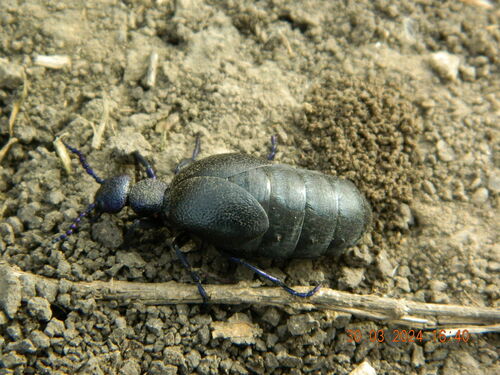
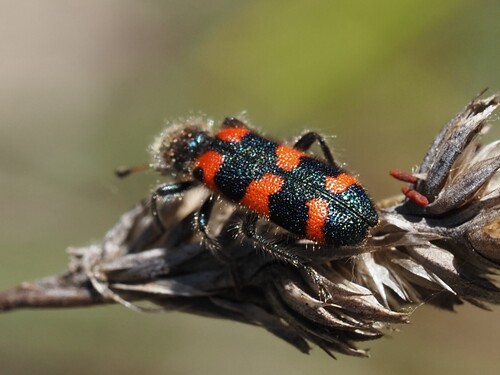
Physomeloe corallifer is a species of blister beetle native to the Iberian Peninsula, it is the only recognised species in the genus Physomeloe. As larvae, Physomeloe corallifer have long hairy bodies, with thin legs, large powerful mandibles and short antennae. Larvae are very rarely observed in the wild as they spend their time underground.
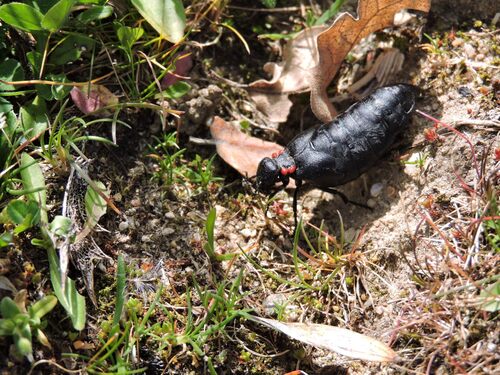
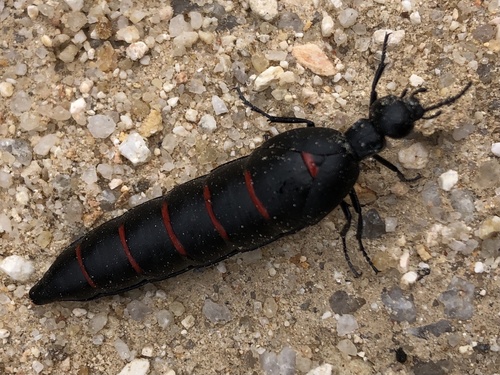
As adults they possess short elytra, barely covering a third of their massive abdomens. Their pronotum are adorned by four coral red spots, this is where the species derives its name from,corallifer, meaning "carrying or possessing coral"; these marks have an aposematic function, warning predators of the danger posed by trying to eat them, as like other blister beetles they can secrete hemolymph containing cantharidin, a highly irritating substance that can cause lesions to the skin and conjunctivitis in the eyes; this does not seem to deter great bustards, who eat them in small doses as a measure to self-medicate and expunge parasites. As it is the case with many insects, females are larger than males, measuring up to four centimetres.
Much like other blister beetles, Physomeloe corallifer can parasitize other... Wikipedia →