Chestnut-backed Owlet

Chestnut-backed Owlet

Glaucidium castanotum

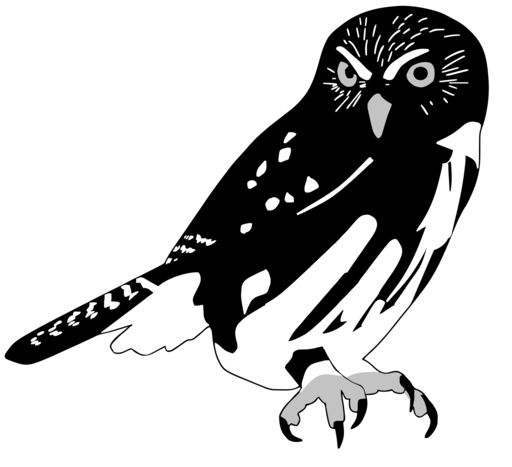
Silhouette: Edwin Price · PhyloPic

LCNTNear ThreatenedVUENCR Endemic
Daily sighting probability ~30% · Possible
at Sinharaja Forest Reserve

In 3 days ~60% in a week ~90%

485 Verified sightings at Sinharaja Forest Reserve From 2019 to 2026
485 In 1 park
February Best month
🌅 Crepuscular When it's spotted

About the Chestnut-backed Owlet

The chestnut-backed owlet (Glaucidium castanotum) (often misspelled Glaucidium castanonotum), is an owl which is endemic to Sri Lanka. This species is a part of the larger grouping of owls known as typical owls, Strigidae, which contains most of the smaller owl species. This species was formerly considered to be a subspecies of the jungle owlet.

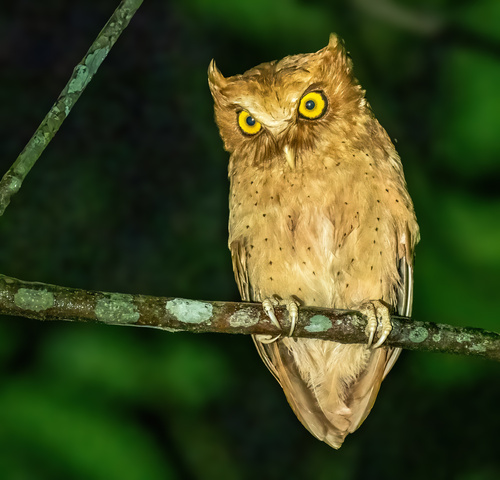
The chestnut-backed owlet is small and stocky, measuring 19 cm (7.5 in) in length. It resembles the jungle owlet in shape, size and appearance but the upperparts, scapulars and wing coverts are mainly chestnut brown, with darker barring. The underparts are white with blackish shaft-streaks. The facial disc is mainly brown and the eyes are yellow. There is a white neckband. Sexes are similar in appearance, with no sexual dimorphism.

The chestnut-backed owlet is a common resident bird in the wet zone forests of Sri Lanka, and can be seen easily at sites such as Kitulgala and Sinharaja. Historical reports of its distribution by Legge include many parts of the southern half of Sri Lanka, especially the hills and the wet-zone low country extending to the outskirts of Colombo. In recent times, its... Wikipedia →

Sounds

Song1:29

Sri Lanka · 2022

© Okamoto Keita Sin · XC756579 · CC BY-NC-SA 4.0

Call0:54

Sri Lanka · 2017

© Phil Gregory · XC619051 · CC BY-NC-SA 4.0

Alarm call0:09

Sri Lanka · 2020

© KASUN CHATHURANGA · XC534443 · CC BY-NC-ND 4.0

Global Distribution

Parks Where Found

# Park Country Daily sighting probability
1 Sinharaja Forest Reserve 🇱🇰 Sri Lanka
~30%

More parks will be added in future updates.

Before you go

What are the chances of seeing a Chestnut-backed Owlet in Sinharaja Forest Reserve?

Possible

About 30% of wildlife watchers report a Chestnut-backed Owlet sighting in Sinharaja Forest Reserve on a given day, based on 485 verified sightings from GBIF citizen-science data from 2019 to 2026. It is the 49th most-seen of the 156 birds we can rate there. Over three days the chance rises to about 60%, and over a week to about 90%, if each day is a fresh chance.

When is the best time to see a Chestnut-backed Owlet in Sinharaja Forest Reserve?

February and April

In those months about 40% of wildlife watchers report a Chestnut-backed Owlet in Sinharaja Forest Reserve on a given day, against about 10% in June, the lowest month.

What time of day is best to see a Chestnut-backed Owlet?

Between 3 and 6 am

Across all the parks we cover, that three-hour window holds the most Chestnut-backed Owlet sightings with a recorded time, and about 6 in 10 of them come between 6 am and 6 pm: it is most active around dawn and dusk.

Where else can you see a Chestnut-backed Owlet?

Only Sinharaja Forest Reserve, in our data

Sinharaja Forest Reserve is the only park on Wallace's Line with enough records to rate Chestnut-backed Owlet sightings: about 30% of wildlife watchers there report one on a given day.

Where does the Chestnut-backed Owlet sighting chance come from?

GBIF citizen-science records

It is estimated from how often the Chestnut-backed Owlet is recorded against all the birds logged in Sinharaja Forest Reserve (485 verified sightings from 2019 to 2026), calibrated against known sighting rates. Figures are rounded to the nearest 10% because citizen-science data supports honest approximations, not decimals, and months with records from fewer than five people show "—". How it works.

← Back to Sinharaja Forest Reserve