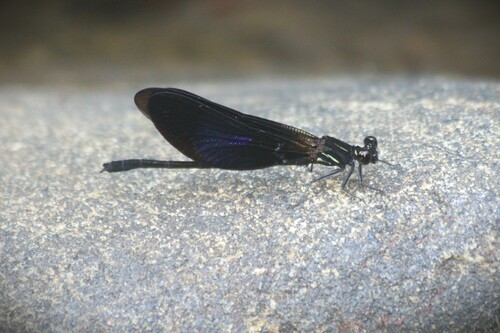
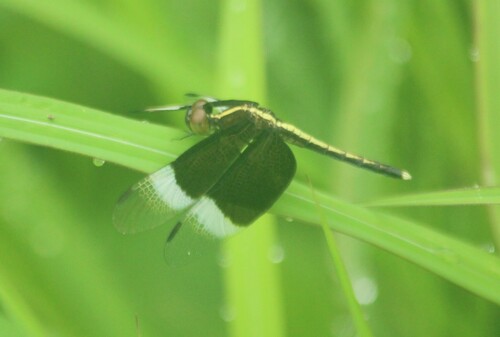
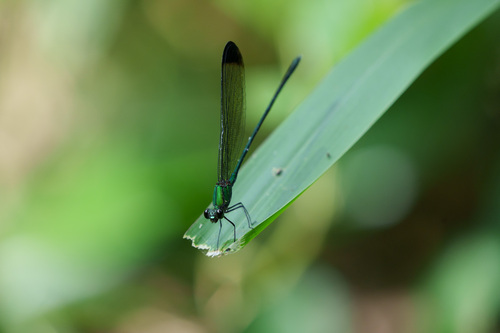
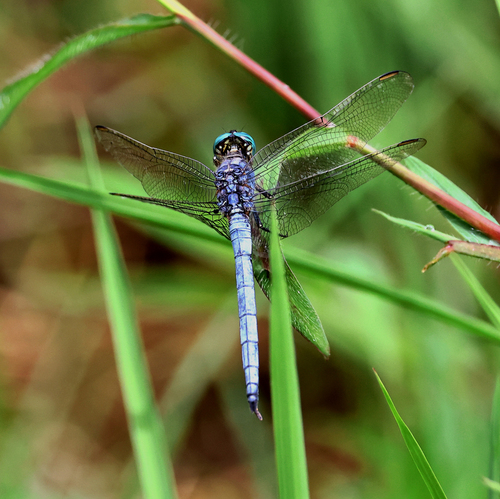
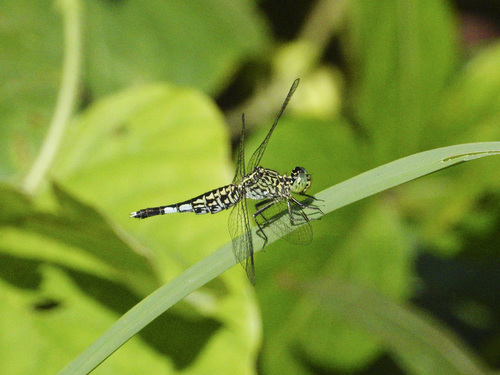
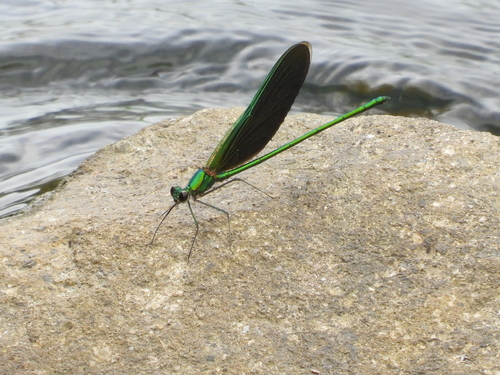
Ebony Gem

Ebony Gem

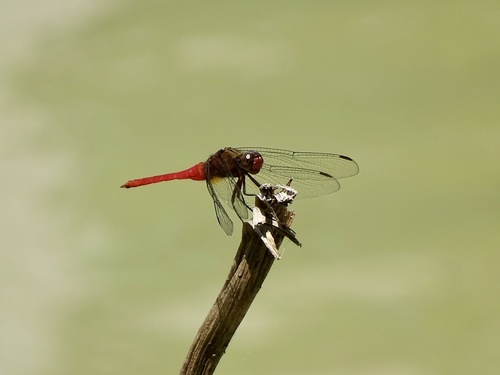
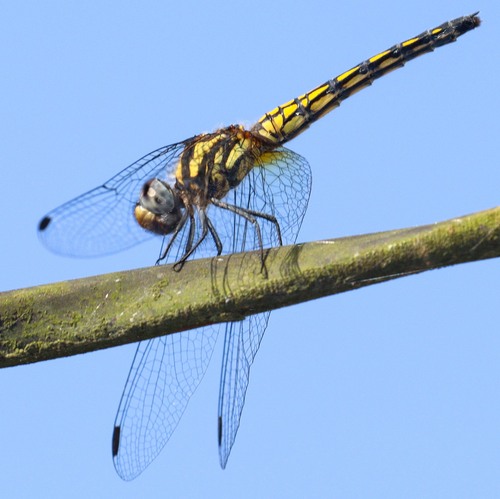
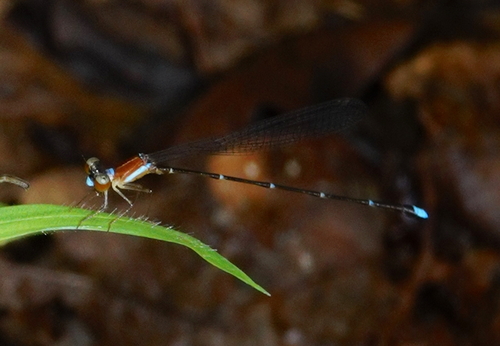
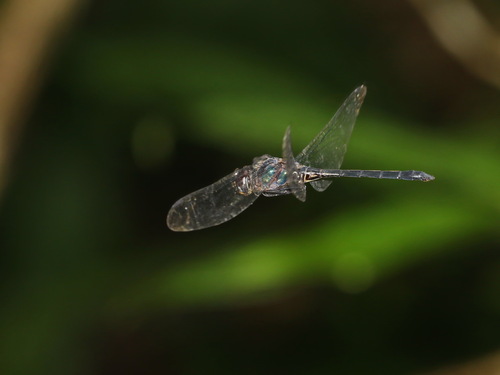
Libellago corbeti

Daily sighting probability ~10% · With luck
at Sinharaja Forest Reserve

In 3 days ~30% in a week ~60%

6 Verified sightings at Sinharaja Forest Reserve From 2019 to 2026
6 In 1 park
August Best month
☀️ Diurnal When it's spotted

About the Ebony Gem

Libellago is a genus of damselflies in the family Chlorocyphidae. It is the only genus in the subfamily Libellagininae. Species of Libellago are found mainly in Southeast Asia. Selys established the genus Libellago in 1840, in his Monographie des libellulidées d'Europe, as one of two new non-European genera separated from Calopteryx. In 1853, he established the "Legion Libellago", a group of damselflies centred on the genus.

The subfamily name Libellagininae was introduced by Bianchi in 1905, in the work published jointly with Jakobson. Laidlaw proposed the subfamily Libellaginae in 1917, and subsequent authors also used the names Libellagini and Libellaginidae at tribal and family rank, respectively. The name Libellaginidae was formerly applied more broadly to the damselflies now placed in Chlorocyphidae.

In modern classifications, Libellagininae is recognised as a subfamily of Chlorocyphidae, comprising only the genus Libellago. The following are included in BioLib.cz: Genus Libellago of Borneo Wikipedia →
Global Distribution

Parks Where Found

# Park Country Daily sighting probability
1 Sinharaja Forest Reserve 🇱🇰 Sri Lanka
~10%

More parks will be added in future updates.

Before you go

What are the chances of seeing an Ebony Gem in Sinharaja Forest Reserve?

With luck

About 10% of wildlife watchers report an Ebony Gem sighting in Sinharaja Forest Reserve on a given day, based on 6 verified sightings from GBIF citizen-science data from 2019 to 2026. It is the 77th most-seen of the 117 insects we can rate there. Over three days the chance rises to about 30%, and over a week to about 60%, if each day is a fresh chance.

When is the best time to see an Ebony Gem in Sinharaja Forest Reserve?

March and August–September

In those months about 30% of wildlife watchers report an Ebony Gem in Sinharaja Forest Reserve on a given day, against under 5% in April–July and October–February, the lowest months.

What time of day is best to see an Ebony Gem?

Between 8 and 11 am

Across all the parks we cover, that three-hour window holds the most Ebony Gem sightings with a recorded time, and about 8 in 10 of them come between 6 am and 6 pm: it is a daytime animal.

Where else can you see an Ebony Gem?

Only Sinharaja Forest Reserve, in our data

Sinharaja Forest Reserve is the only park on Wallace's Line with enough records to rate Ebony Gem sightings: about 10% of wildlife watchers there report one on a given day.

Where does the Ebony Gem sighting chance come from?

GBIF citizen-science records

It is estimated from how often the Ebony Gem is recorded against all the insects logged in Sinharaja Forest Reserve (6 verified sightings from 2019 to 2026), calibrated against known sighting rates. Figures are rounded to the nearest 10% because citizen-science data supports honest approximations, not decimals, and months with records from fewer than five people show "—". How it works.

← Back to Sinharaja Forest Reserve