Indigo Dropwing

Indigo Dropwing

Trithemis festiva

Daily sighting probability ~30% · Possible
at Sinharaja Forest Reserve

In 3 days ~60% in a week ~90%

27 Verified sightings at Sinharaja Forest Reserve From 2019 to 2026
199 In all 12 parks
March Best month
☀️ Diurnal When it's spotted

About the Indigo Dropwing

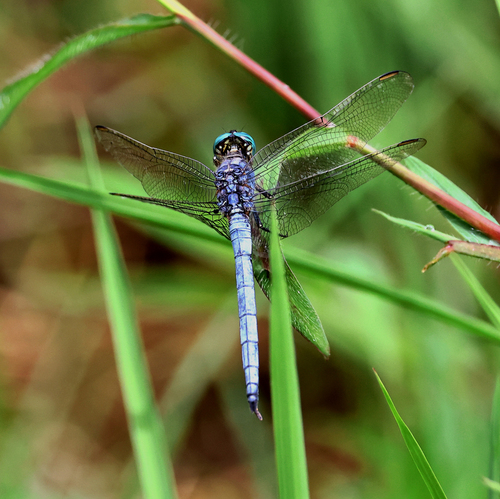
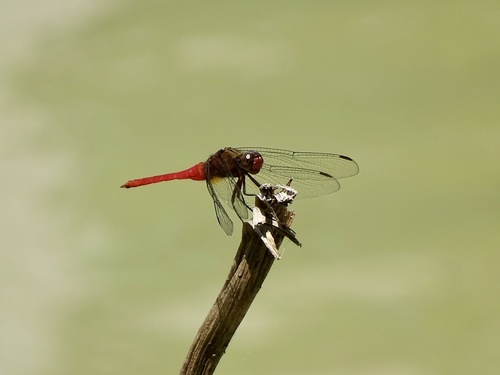
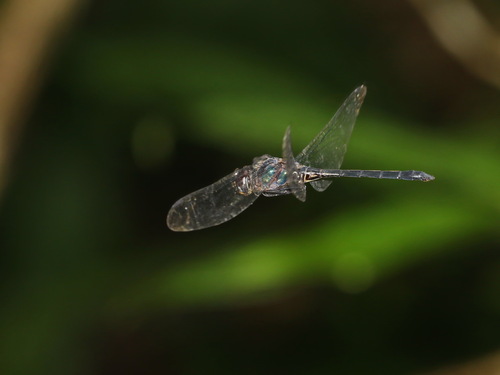
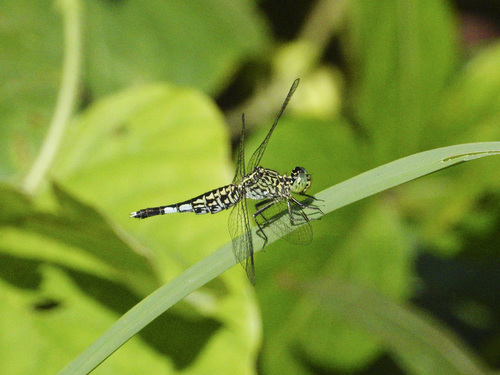
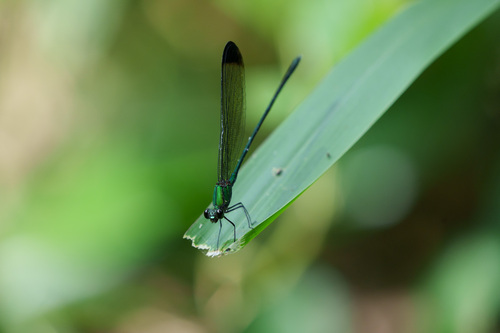
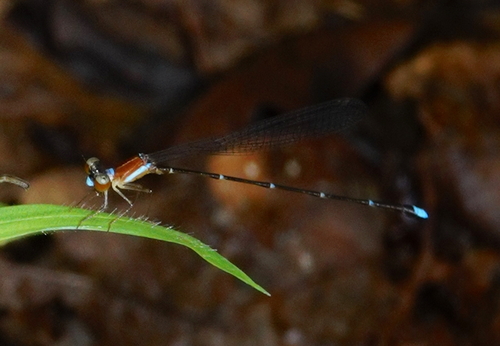
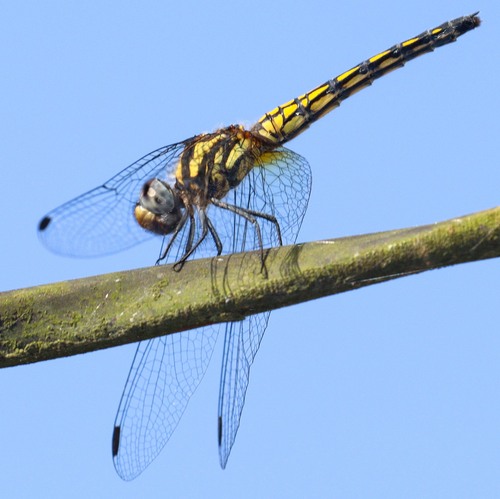
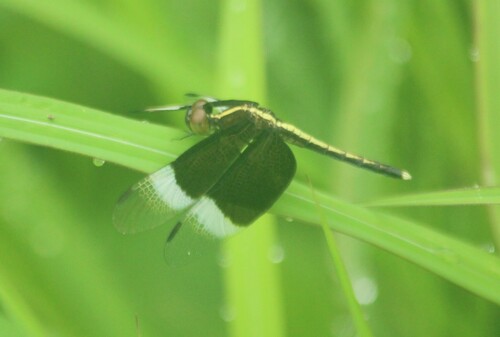
The black stream glider (Trithemis festiva), also known as the indigo dropwing is a species of dragonfly in the family Libellulidae. It is a very widespread species, occurring from Greece, Cyprus and Turkey, throughout Asia to New Guinea.

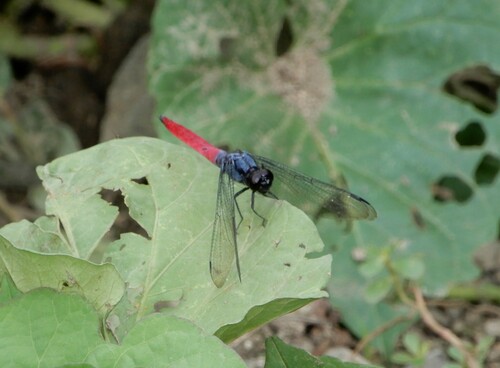
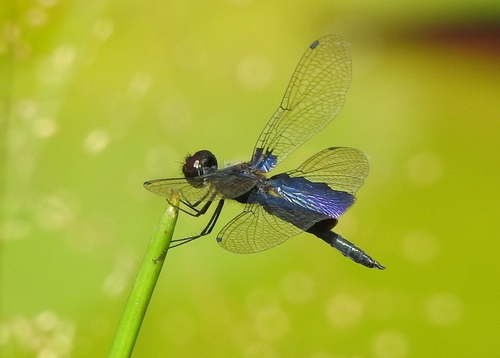
Black stream glider is a medium-sized dragonfly with purple color on its body structure. In the male, the frontal area appears darker purplish grey. The eyes are dark brown above, with a purple colored tinge, which is bluish grey, lateral and beneath. The thorax is black, covered with purple pruinescence, which helps it appear deep blue. The legs are black and wings are transparent with a dark opaque brown mark at the base of hind wing, with a black spot on tip of the wing. The abdomen is covered with fine blue pruinescence.

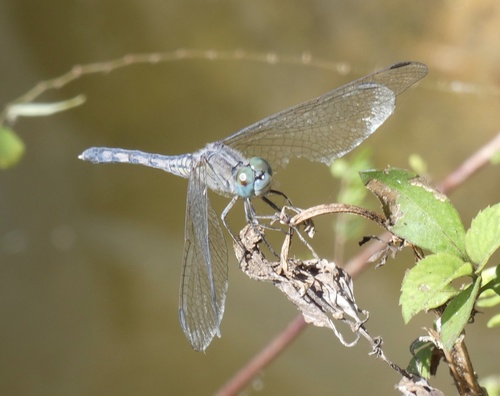
The female looks brown in the front and extends above. The eyes are dark brown above and appear more grey-ish below. Thorax is greenish-yellow to olivaceous, with the presence of a medial dark brown lateral stripe. In addition, a Y-shaped inverted stripes can be observed on the sides. Legs are black with anterior femora being yellow on the inner side. Wings are transparent with dark reddish-brown tip with a black... Wikipedia →
Global Distribution

Parks Where Found

# Park Country Daily sighting probability
1 Sinharaja Forest Reserve 🇱🇰 Sri Lanka
~30%
2 Periyar National Park 🇮🇳 India
~20%
3 Danum Valley Conservation Area 🇲🇾 Malaysia
~20%
4 Satpura National Park 🇮🇳 India
~20%
5 Gunung Leuser National Park 🇮🇩 Indonesia
~20%
6 Kinabalu Park 🇲🇾 Malaysia
~20%
7 Bali Barat National Park 🇮🇩 Indonesia
~20%
8 Doi Inthanon National Park 🇹🇭 Thailand
~20%
9 Kanha National Park 🇮🇳 India
~20%
10 Khao Sok National Park 🇹🇭 Thailand
~20%
11 Khao Yai National Park 🇹🇭 Thailand
~20%
12 Kaeng Krachan National Park 🇹🇭 Thailand
~10%

Cities Where Found

# City Country Daily sighting probability
1 Kota 🇮🇳 India
~20%
2 Nagpur 🇮🇳 India
~20%
3 Antalya 🇹🇷 Turkey
~20%
4 Dehradun 🇮🇳 India
~20%
5 Hong Kong 🇨🇳 China
~20%
6 Tuen Mun 🇨🇳 China
~20%
7 Taichung 🇹🇼 Taiwan
~10%
8 Singapore 🇸🇬 Singapore
~10%
9 Kuala Lumpur 🇲🇾 Malaysia
~10%
10 Taipei 🇹🇼 Taiwan
~10%

Before you go

What are the chances of seeing an Indigo Dropwing in Sinharaja Forest Reserve?

Possible

About 30% of wildlife watchers report an Indigo Dropwing sighting in Sinharaja Forest Reserve on a given day, based on 27 verified sightings from GBIF citizen-science data from 2019 to 2026. It is the 19th most-seen of the 117 insects we can rate there. Over three days the chance rises to about 60%, and over a week to about 90%, if each day is a fresh chance.

When is the best time to see an Indigo Dropwing in Sinharaja Forest Reserve?

March, June and September

In those months about 40% of wildlife watchers report an Indigo Dropwing in Sinharaja Forest Reserve on a given day, against under 5% in May, July–August and October, the lowest months.

What time of day is best to see an Indigo Dropwing?

Between 10 am and 1 pm

Across all the parks we cover, that three-hour window holds the most Indigo Dropwing sightings with a recorded time, and about 9 in 10 of them come between 6 am and 6 pm: it is a daytime animal.

Is Sinharaja Forest Reserve the best place to see an Indigo Dropwing?

Yes

Of the 12 parks where we can rate Indigo Dropwing sightings, Sinharaja Forest Reserve has the highest daily chance: about 30%. Next come Periyar National Park (India, about 20%) and Danum Valley Conservation Area (Malaysia, about 20%).

Where does the Indigo Dropwing sighting chance come from?

GBIF citizen-science records

It is estimated from how often the Indigo Dropwing is recorded against all the insects logged in Sinharaja Forest Reserve (27 verified sightings from 2019 to 2026), calibrated against known sighting rates. Figures are rounded to the nearest 10% because citizen-science data supports honest approximations, not decimals, and months with records from fewer than five people show "—". How it works.

← Back to Sinharaja Forest Reserve