Glad-Eye Bushbrown

Glad-Eye Bushbrown

Mycalesis patnia

Daily sighting probability ~40% · Likely
at Sinharaja Forest Reserve

In 3 days ~80% in a week >90%

39 Verified sightings at Sinharaja Forest Reserve From 2019 to 2026
59 In all 2 parks
March Best month
☀️ Diurnal When it's spotted

About the Glad-Eye Bushbrown

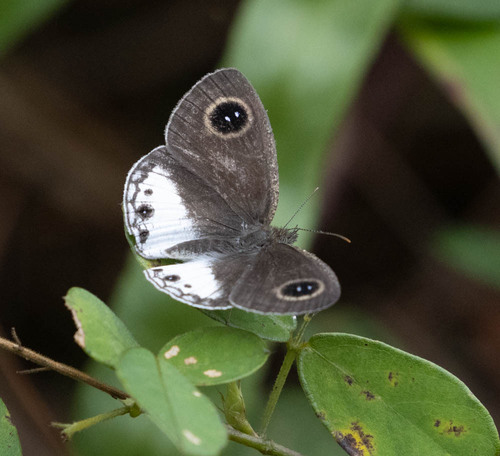
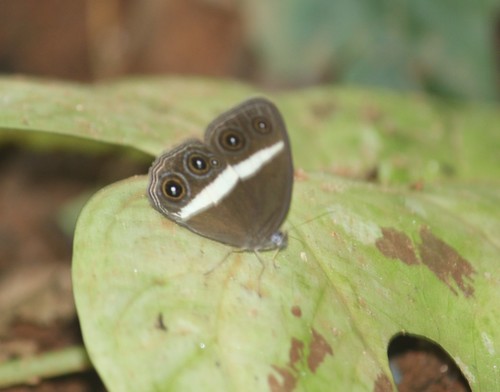
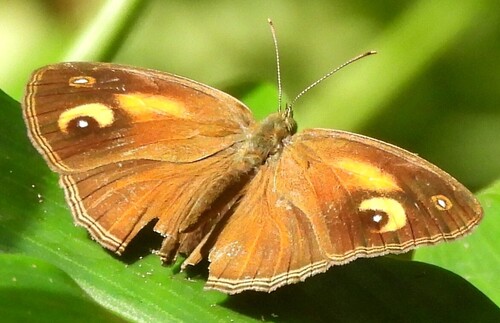
Mycalesis patnia, the glad-eye bushbrown, is a satyrid butterfly found in southern India and Sri Lanka. Upperside: The male has a dark umber-brown ground colour slightly suffused with ochraceous. Forewings and hindwings with bright ochraceous-yellow, slender sub-terminal and terminal lines; cilia pale brown. Forewing with a large median and a much smaller subapical white-centred black ocellus, each with an orange-yellow iris, the upper portion of the iris round the median ocellus very broad, the lower incomplete and a more or less triangular orange-yellow discal patch. Hindwing uniform, with two very small fulvous-ringed black ocelli.

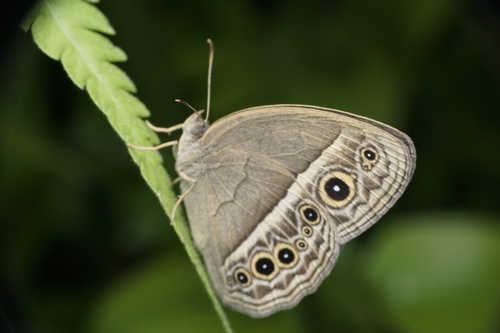
Underside of male deep ochraceous yellow, subterminal and terminal line as on the upperside; forewing and hindwing crossed near base by a darker ochraceous-yellow line, followed by a silvery discal band, beyond which there are two ocelli as on the upperside, but each encircled also by an outer silvery ring; and on the hindwing a curved series of seven similar ocelli having a silvery band bordering them on both sides, the third and fourth ocelli from tornus together and the apical ocellus by itself placed on a brighter ochraceous patch... Wikipedia →
Global Distribution

Parks Where Found

# Park Country Daily sighting probability
1 Periyar National Park 🇮🇳 India
~40%
2 Sinharaja Forest Reserve 🇱🇰 Sri Lanka
~40%

Cities Where Found

# City Country Daily sighting probability
1 Kozhikode 🇮🇳 India
~20%

Before you go

What are the chances of seeing a Glad-Eye Bushbrown in Sinharaja Forest Reserve?

Likely

About 40% of wildlife watchers report a Glad-Eye Bushbrown sighting in Sinharaja Forest Reserve on a given day, based on 39 verified sightings from GBIF citizen-science data from 2019 to 2026. It is the 6th most-seen of the 117 insects we can rate there. Over three days the chance rises to about 80%, and over a week to over 90%, if each day is a fresh chance.

When is the best time to see a Glad-Eye Bushbrown in Sinharaja Forest Reserve?

March

In that month about 50% of wildlife watchers report a Glad-Eye Bushbrown in Sinharaja Forest Reserve on a given day, against under 5% in July, the lowest month. That is one of Sinharaja Forest Reserve's driest months, with about 150 mm of rain against 490 mm in November.

What time of day is best to see a Glad-Eye Bushbrown?

Between 9 am and noon

Across all the parks we cover, that three-hour window holds the most Glad-Eye Bushbrown sightings with a recorded time, and nearly all of them come between 6 am and 6 pm: it is a daytime animal.

Is Sinharaja Forest Reserve the best place to see a Glad-Eye Bushbrown?

Among the best

Of the 2 parks where we can rate Glad-Eye Bushbrown sightings, Sinharaja Forest Reserve ranks 2nd at about 40%, level with the leaders once rounded. The best odds are in Periyar National Park (India, about 40%).

Which relatives of the Glad-Eye Bushbrown live in Sinharaja Forest Reserve?

Same genus: Mycalesis

The closest relatives of the Glad-Eye Bushbrown that you can see in Sinharaja Forest Reserve (genus Mycalesis, Bushbrowns) are Dark-Branded Bushbrown (about 10%) and Cingalese Bushbrown (about 10%), with each one's daily chance of a sighting.

Where does the Glad-Eye Bushbrown sighting chance come from?

GBIF citizen-science records

It is estimated from how often the Glad-Eye Bushbrown is recorded against all the insects logged in Sinharaja Forest Reserve (39 verified sightings from 2019 to 2026), calibrated against known sighting rates. Figures are rounded to the nearest 10% because citizen-science data supports honest approximations, not decimals, and months with records from fewer than five people show "—". How it works.

← Back to Sinharaja Forest Reserve