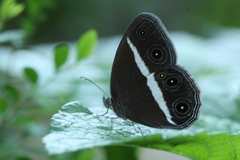
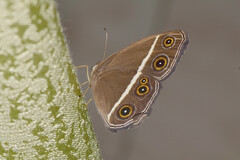
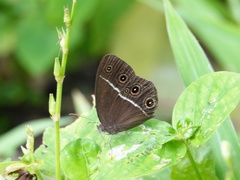
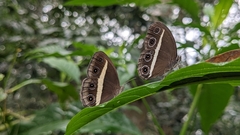
Smooth-Eyed Bushbrown

Smooth-Eyed Bushbrown

Orsotriaena medus

Daily sighting probability ~20% · Possible
at Sinharaja Forest Reserve

In 3 days ~50% in a week ~80%

10 Verified sightings at Sinharaja Forest Reserve From 2019 to 2026
46 In all 5 parks
September Best month
☀️ Diurnal When it's spotted

About the Smooth-Eyed Bushbrown

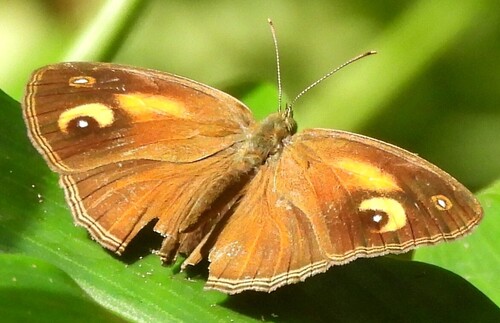
Orsotriaena medus is a butterfly found in south Asia, southeast Asia, and Australia. It is the only species in the genus Orsotriaena, first described by Hans Daniel Johan Wallengren in 1858. The butterfly has historically been called the nigger referring to its dark brown colour, but it has been renamed in Australian faunal works to smooth-eyed bushbrown, medus brown in India, and dark grass-brown in Southeast Asia.

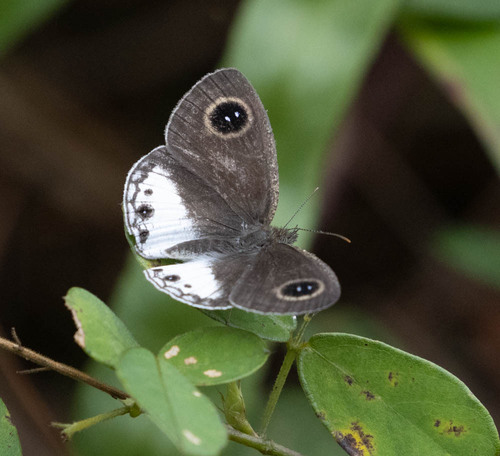
Orsotriaena medus is a medium-sized butterfly with wingspan of 45 to 55 mm (1.8 to 2.2 in). The butterfly is dark brown above with a thin marginal pale border. The upper hindwing having a thin submarginal line. There are no eyespots on the upperside of the wings.

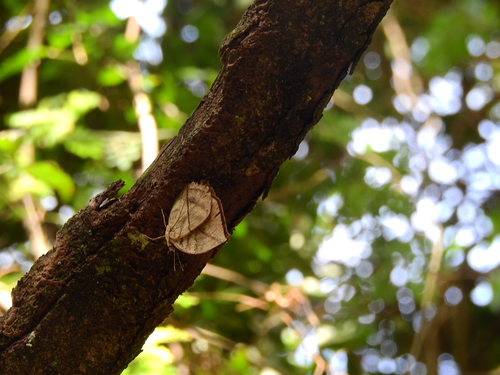
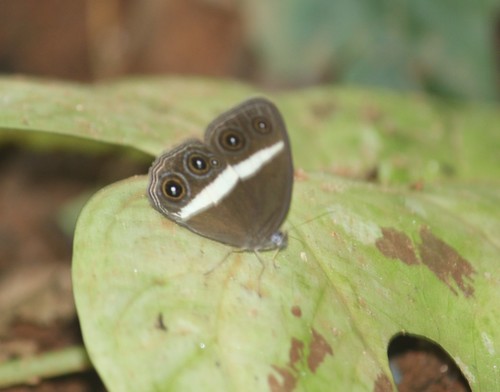
Below, the butterfly has a white discal band which runs across both wings. It has five eyespots on the underside of the wings. In the forewing, it has two eyespots, with the anterior eyespot slightly smaller. In the hindwing, it has two eyespots on the apical region and a separate ocellus in the tornal (hindmost) region. The uppermost of the eyespots in the hindwing are greatly smaller, while the remaining two are more or less of equal sizes.

The eggs... Wikipedia →
Global Distribution

Parks Where Found

# Park Country Daily sighting probability
1 Namdapha National Park 🇮🇳 India
~40%
2 Sinharaja Forest Reserve 🇱🇰 Sri Lanka
~20%
3 Chitwan National Park 🇳🇵 Nepal
~20%
4 Taman Negara National Park 🇲🇾 Malaysia
~20%
5 Khao Sok National Park 🇹🇭 Thailand
~10%

Cities Where Found

# City Country Daily sighting probability
1 Yogyakarta 🇮🇩 Indonesia
~30%
2 Kozhikode 🇮🇳 India
~20%
3 Tasikmalaya 🇮🇩 Indonesia
~20%
4 Jakarta 🇮🇩 Indonesia
~10%
5 Kochi 🇮🇳 India
~10%
6 Singapore 🇸🇬 Singapore
~10%
7 Kuala Lumpur 🇲🇾 Malaysia
~10%

Before you go

What are the chances of seeing a Smooth-Eyed Bushbrown in Sinharaja Forest Reserve?

Possible

About 20% of wildlife watchers report a Smooth-Eyed Bushbrown sighting in Sinharaja Forest Reserve on a given day, based on 10 verified sightings from GBIF citizen-science data from 2019 to 2026. It is the 42nd most-seen of the 117 insects we can rate there. Over three days the chance rises to about 50%, and over a week to about 80%, if each day is a fresh chance.

When is the best time to see a Smooth-Eyed Bushbrown in Sinharaja Forest Reserve?

September and December–January

In those months about 30% of wildlife watchers report a Smooth-Eyed Bushbrown in Sinharaja Forest Reserve on a given day, against under 5% in February, May–August and October, the lowest months.

What time of day is best to see a Smooth-Eyed Bushbrown?

Between 8 and 11 am

Across all the parks we cover, that three-hour window holds the most Smooth-Eyed Bushbrown sightings with a recorded time, and about 8 in 10 of them come between 6 am and 6 pm: it is a daytime animal.

Is Sinharaja Forest Reserve the best place to see a Smooth-Eyed Bushbrown?

2nd of 5

Of the 5 parks where we can rate Smooth-Eyed Bushbrown sightings, Sinharaja Forest Reserve ranks 2nd at about 20%. The best odds are in Namdapha National Park (India, about 40%). All parks ranked.

Which relatives of the Smooth-Eyed Bushbrown live in Sinharaja Forest Reserve?

Same family: Nymphalidae

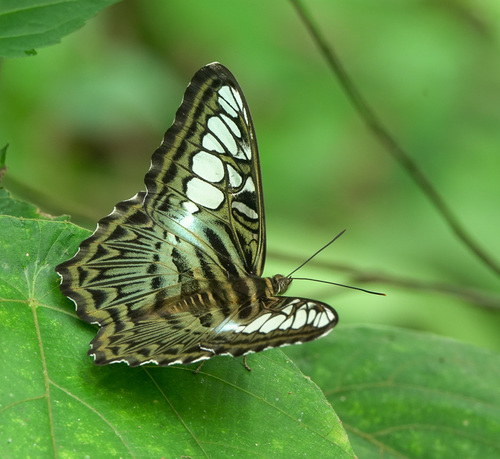
The closest relatives of the Smooth-Eyed Bushbrown that you can see in Sinharaja Forest Reserve (family Nymphalidae, Brush-footed Butterflies) are Glad-Eye Bushbrown (about 40%), Clipper (about 40%) and Ceylon Tree Nymph (about 30%), with each one's daily chance of a sighting.

Where does the Smooth-Eyed Bushbrown sighting chance come from?

GBIF citizen-science records

It is estimated from how often the Smooth-Eyed Bushbrown is recorded against all the insects logged in Sinharaja Forest Reserve (10 verified sightings from 2019 to 2026), calibrated against known sighting rates. Figures are rounded to the nearest 10% because citizen-science data supports honest approximations, not decimals, and months with records from fewer than five people show "—". How it works.

← Back to Sinharaja Forest Reserve