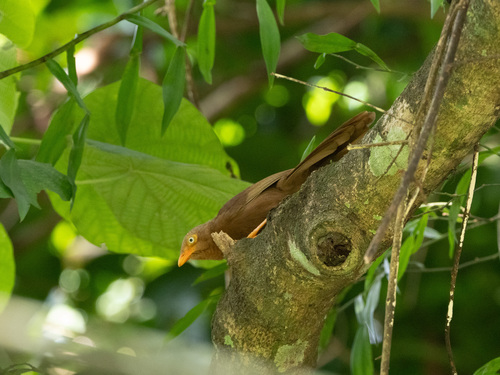
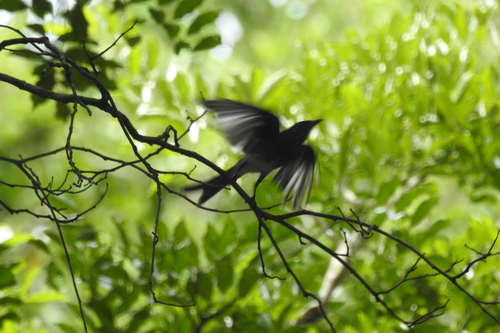
Sri Lanka Wood Pigeon

Sri Lanka Wood Pigeon

Columba torringtoniae

Silhouette: Steven Traver · PhyloPic

LCNTVUVulnerableENCR Endemic
Daily sighting probability ~10% · With luck
at Sinharaja Forest Reserve

In 3 days ~20% in a week ~40%

105 Verified sightings at Sinharaja Forest Reserve From 2019 to 2026
425 In all 2 parks
April Best month
🌅 Crepuscular When it's spotted

About the Sri Lanka Wood Pigeon

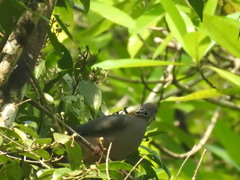
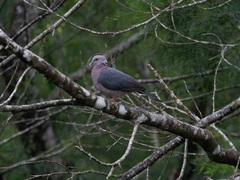
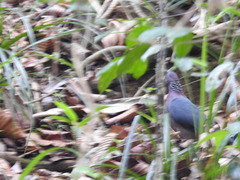
The Sri Lankan wood pigeon or Ceylon wood pigeon (Columba torringtoniae) is a pigeon which is an endemic resident breeding bird in the mountains of Sri Lanka. This species nests in damp evergreen woodlands in the central highlands, building a stick nest in a tree and laying a single white egg. Its flight is quick, with the regular beats and an occasional sharp flick of the wings which are characteristic of pigeons in general. Most of its food is vegetable. Normally silent it utters an owl-like hoo call in the breeding season.

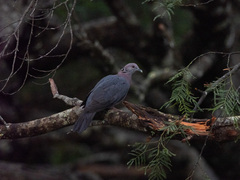
The Sri Lanka wood pigeon is 36 cm in length. Its upperparts and tail are dark grey, and the head and underparts are lilac, becoming paler on the belly. There is a black-and-white chessboard pattern on the nape. This pigeon can be quite easily seen in the woods of the Horton Plains National Park.

The Sri Lanka wood pigeon is endemic to the island of Sri Lanka, where it is found in primary montane forest, generally above 3,000 ft (910 m). This wood-pigeon in a 25c Sri Lankan postal stamp. BirdLife Species Factsheet Wikipedia →

Global Distribution

Parks Where Found

# Park Country Daily sighting probability
1 Horton Plains National Park 🇱🇰 Sri Lanka
~50%
2 Sinharaja Forest Reserve 🇱🇰 Sri Lanka
~10%

Before you go

What are the chances of seeing a Sri Lanka Wood Pigeon in Sinharaja Forest Reserve?

With luck

About 10% of wildlife watchers report a Sri Lanka Wood Pigeon sighting in Sinharaja Forest Reserve on a given day, based on 105 verified sightings from GBIF citizen-science data from 2019 to 2026. It is the 87th most-seen of the 156 birds we can rate there. Over three days the chance rises to about 20%, and over a week to about 40%, if each day is a fresh chance.

When is the best time to see a Sri Lanka Wood Pigeon in Sinharaja Forest Reserve?

April

In that month about 20% of wildlife watchers report a Sri Lanka Wood Pigeon in Sinharaja Forest Reserve on a given day, against under 5% in September to December, the lowest months.

What time of day is best to see a Sri Lanka Wood Pigeon?

Between 2 and 5 am

Across all the parks we cover, that three-hour window holds the most Sri Lanka Wood Pigeon sightings with a recorded time, and about 6 in 10 of them come between 6 pm and 6 am: it is most active around dawn and dusk.

Is Sinharaja Forest Reserve the best place to see a Sri Lanka Wood Pigeon?

2nd of 2

Of the 2 parks where we can rate Sri Lanka Wood Pigeon sightings, Sinharaja Forest Reserve ranks 2nd at about 10%. The best odds are in Horton Plains National Park (Sri Lanka, about 50%).

Which relatives of the Sri Lanka Wood Pigeon live in Sinharaja Forest Reserve?

Same family: Columbidae

The closest relatives of the Sri Lanka Wood Pigeon that you can see in Sinharaja Forest Reserve (family Columbidae, Pigeons and Doves) are Pearl-necked Dove (about 60%), Asian Emerald Dove (about 60%) and Green Imperial-Pigeon (about 60%), with each one's daily chance of a sighting.

Where does the Sri Lanka Wood Pigeon sighting chance come from?

GBIF citizen-science records

It is estimated from how often the Sri Lanka Wood Pigeon is recorded against all the birds logged in Sinharaja Forest Reserve (105 verified sightings from 2019 to 2026), calibrated against known sighting rates. Figures are rounded to the nearest 10% because citizen-science data supports honest approximations, not decimals, and months with records from fewer than five people show "—". How it works.

← Back to Sinharaja Forest Reserve