Yellow-eared Bulbul

Yellow-eared Bulbul

Pycnonotus penicillatus

Silhouette: Andy Wilson · PhyloPic

LCLeast ConcernNTVUENCR Endemic
Daily sighting probability <5% · Rare
at Sinharaja Forest Reserve

In 3 days ~10%

34 Verified sightings at Sinharaja Forest Reserve From 2019 to 2026
653 In all 2 parks
January Best month
🌅 Crepuscular When it's spotted

About the Yellow-eared Bulbul

The yellow-eared bulbul (Pycnonotus penicillatus) is a species of songbird in the bulbul family of passerine birds. It is an endemic resident breeder in the highlands of Sri Lanka. The common name is also used as an alternate name for the yellow-throated bulbul.

The yellow-eared bulbul was formerly classified in the monotypic genus Kelaartia, named after Dr. E.F. Kelaart. Alternate names for the yellow-eared bulbul include the Ceylon bulbul, Sri Lanka bulbul and yellow-tufted bulbul.

The yellow eared-bulbul is endemic to Sri Lanka and is the least common of the bulbuls found in Sri Lanka. This is a bird of jungle and wooded farmland. Despite its restricted range, it is quite readily found at sites such as Horton Plains, Piduruthalagala peak, Moonplains and Victoria Park in Nuwara Eliya and has been frequently sighted in rocky hills.

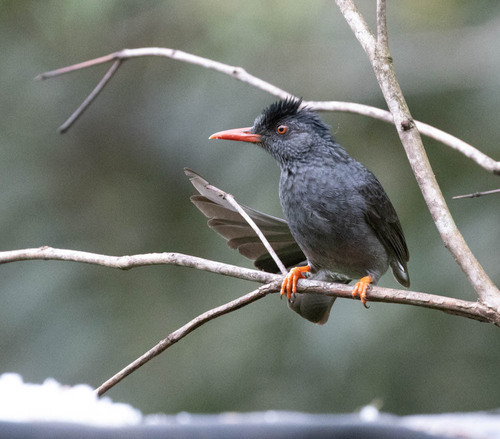
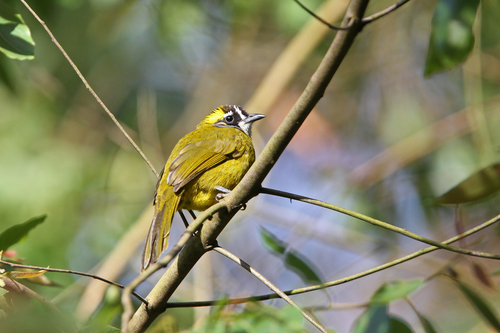
The yellow-eared bulbul is about 20 cm (7.9 in) in length, with a long tail. It has olive upperparts and yellowish underparts. The crown of the head is grey, and there are yellow ear tufts and a yellow patch below the eye. There is a white tuft in front of the eye and the throat... Wikipedia →
Sounds

Song0:49

Sri Lanka · 2016

© Peter Boesman · XC311478 · CC BY-NC-ND 4.0

Call0:08

Sri Lanka · 2014

© Hans Matheve · XC211912 · CC BY-NC-ND 4.0

Song1:03

Sri Lanka · 2007

© Jelle Scharringa · XC630936 · CC BY-NC-SA 4.0

Global Distribution

Parks Where Found

# Park Country Daily sighting probability
1 Horton Plains National Park 🇱🇰 Sri Lanka
~90%
2 Sinharaja Forest Reserve 🇱🇰 Sri Lanka
<5%

Before you go

What are the chances of seeing a Yellow-eared Bulbul in Sinharaja Forest Reserve?

Rare

Under 5% of wildlife watchers report a Yellow-eared Bulbul sighting in Sinharaja Forest Reserve on a given day, based on 34 verified sightings from GBIF citizen-science data from 2019 to 2026. It is the 117th most-seen of the 156 birds we can rate there. Over three days the chance rises to about 10%, if each day is a fresh chance.

When is the best time to see a Yellow-eared Bulbul in Sinharaja Forest Reserve?

January

In that month about 10% of wildlife watchers report a Yellow-eared Bulbul in Sinharaja Forest Reserve on a given day, against under 5% in February to December, the lowest months. That is one of Sinharaja Forest Reserve's driest months, with about 170 mm of rain against 490 mm in November.

What time of day is best to see a Yellow-eared Bulbul?

Between 3 and 6 am

Across all the parks we cover, that three-hour window holds the most Yellow-eared Bulbul sightings with a recorded time, and about half of them come between 6 pm and 6 am: it is most active around dawn and dusk.

Is Sinharaja Forest Reserve the best place to see a Yellow-eared Bulbul?

2nd of 2

Of the 2 parks where we can rate Yellow-eared Bulbul sightings, Sinharaja Forest Reserve ranks 2nd at under 5%. The best odds are in Horton Plains National Park (Sri Lanka, about 90%).

Which relatives of the Yellow-eared Bulbul live in Sinharaja Forest Reserve?

Same genus: Pycnonotus

The closest relatives of the Yellow-eared Bulbul that you can see in Sinharaja Forest Reserve (genus Pycnonotus, Typical Bulbuls) are Black-capped Bulbul (about 60%) and White-browed Bulbul (about 30%), with each one's daily chance of a sighting.

Where does the Yellow-eared Bulbul sighting chance come from?

GBIF citizen-science records

It is estimated from how often the Yellow-eared Bulbul is recorded against all the birds logged in Sinharaja Forest Reserve (34 verified sightings from 2019 to 2026), calibrated against known sighting rates. Figures are rounded to the nearest 10% because citizen-science data supports honest approximations, not decimals, and months with records from fewer than five people show "—". How it works.

← Back to Sinharaja Forest Reserve