Early Tooth-Striped

Early Tooth-Striped

Trichopteryx carpinata

Daily sighting probability ~10% · With luck
at Snowdonia National Park

In 3 days ~30% in a week ~50%

11 Verified sightings at Snowdonia National Park From 2019 to 2026
26 In all 2 parks
March Best month
☀️ Diurnal When it's spotted

About the Early Tooth-Striped

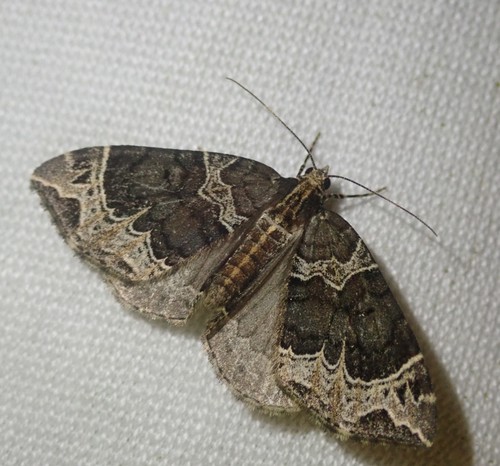
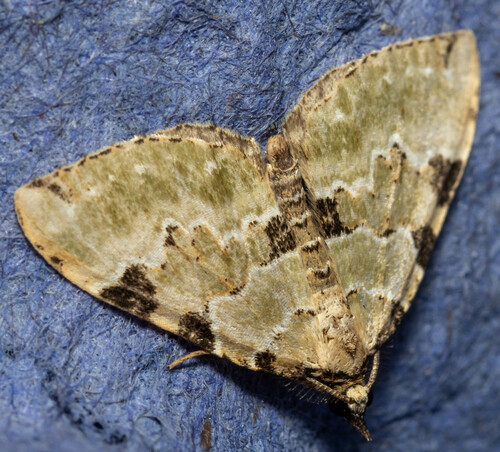
Trichopteryx carpinata, the early tooth-striped, is a moth of the family Geometridae. The species was first described by Moritz Balthasar Borkhausen in 1794. It is found in most of Europe (except Iceland, Greece, Sicily, Sardinia and Croatia), east to the eastern Palearctic realm including the Russian Far East, Siberia, and the Ile District, Kazakhstan.

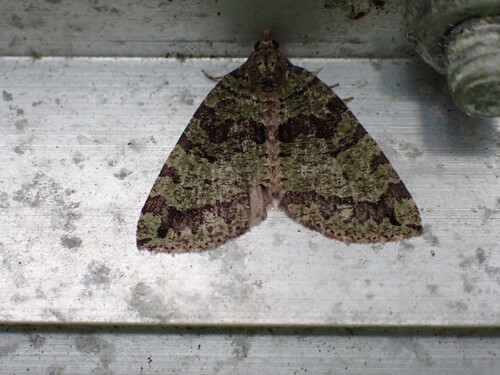
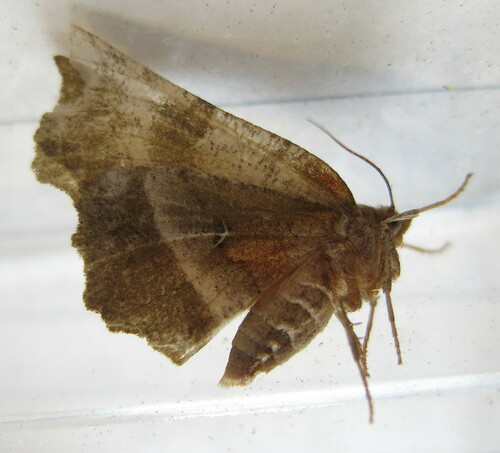
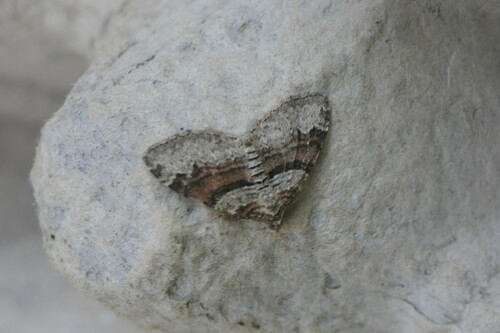
The wingspan is 30–34 mm. "Ground-colour whitish grey, in freshly emerged specimens with a very delicate green tinge; the markings somewhat darker brownish grey, but generally quite weakly expressed. Hindwing whitish, greyer distally, sometimes with one or two fairly well-defined grey lines not far from the distal margin, Male narrower-winged than female. — In ab. fasciata Prout the two central bands are very much darker, sometimes quite deep fuscous, giving the effect of a different species. Frequent in Perthshire. - obscurata Sp. Schneid., described as a local race in Norway, is perhaps transitional towards ab. fasciata, as the bands and lines are said to be more distinct; the ground-colour, however, is also darkened, which is not the case with fasciata. - ab. unifasciata Rbl. is a development of ab. fasciata in which the two bands coalesce in their posterior part, leaving only a pale central part anteriorly, as in polycommata."

The larva is naked, green with narrow white longitudinal stripes. Adults are on wing from April to May. There is one generation per year. The larvae feed on various trees, including the trees Lonicera, Salix and Betula. Wikipedia →

Global Distribution

Parks Where Found

# Park Country Daily sighting probability
1 Snowdonia National Park 🇬🇧 United Kingdom
~10%
2 Cairngorms National Park 🇬🇧 United Kingdom
~10%

Before you go

What are the chances of seeing an Early Tooth-Striped in Snowdonia National Park?

With luck

About 10% of wildlife watchers report an Early Tooth-Striped sighting in Snowdonia National Park on a given day, based on 11 verified sightings from GBIF citizen-science data from 2019 to 2026. It is the 202nd most-seen of the 387 insects we can rate there. Over three days the chance rises to about 30%, and over a week to about 50%, if each day is a fresh chance.

When is the best time to see an Early Tooth-Striped in Snowdonia National Park?

March and April

In those months about 30% of wildlife watchers report an Early Tooth-Striped in Snowdonia National Park on a given day, against under 5% in May to February, the lowest months.

What time of day is best to see an Early Tooth-Striped?

Between 7 and 10 am

Across all the parks we cover, that three-hour window holds the most Early Tooth-Striped sightings with a recorded time, and about 8 in 10 of them come between 6 am and 6 pm: it is a daytime animal.

Is Snowdonia National Park the best place to see an Early Tooth-Striped?

Yes

Of the 2 parks where we can rate Early Tooth-Striped sightings, Snowdonia National Park has the highest daily chance: about 10%. Next come Cairngorms National Park (United Kingdom, about 10%).

Which relatives of the Early Tooth-Striped live in Snowdonia National Park?

Same family: Geometridae

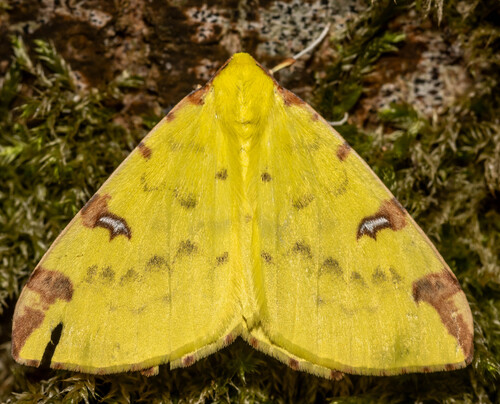
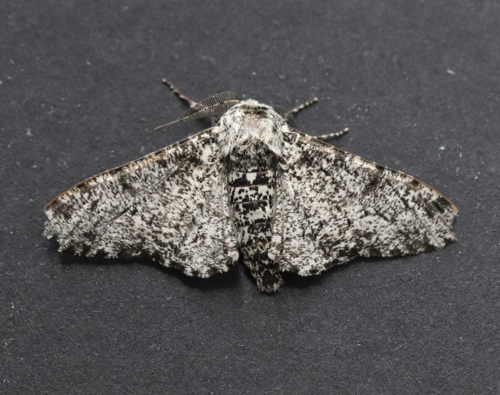
The closest relatives of the Early Tooth-Striped that you can see in Snowdonia National Park (family Geometridae, Geometer Moths) are Brimstone Moth (about 30%), Small Phoenix (about 20%) and Peppered Moth (about 20%), with each one's daily chance of a sighting.

Where does the Early Tooth-Striped sighting chance come from?

GBIF citizen-science records

It is estimated from how often the Early Tooth-Striped is recorded against all the insects logged in Snowdonia National Park (11 verified sightings from 2019 to 2026), calibrated against known sighting rates. Figures are rounded to the nearest 10% because citizen-science data supports honest approximations, not decimals, and months with records from fewer than five people show "—". How it works.

← Back to Snowdonia National Park