Small Phoenix

Small Phoenix

Ecliptopera silaceata

Daily sighting probability ~20% · Possible
at Snowdonia National Park

In 3 days ~50% in a week ~80%

40 Verified sightings at Snowdonia National Park From 2019 to 2026
156 In all 7 parks
August Best month
☀️🌙 Day & Night When it's spotted

About the Small Phoenix

Ecliptopera silaceata, the small phoenix, is a species of moth in the family Geometridae. The species was first described by Michael Denis and Ignaz Schiffermüller in 1775. The distribution includes most of Europe including the British Isles and extends eastwards through Russia and the Altai and the Vyatskoye, as well as north into the Arctic Circle, and south to the Caucasus. It also occurs in North America.

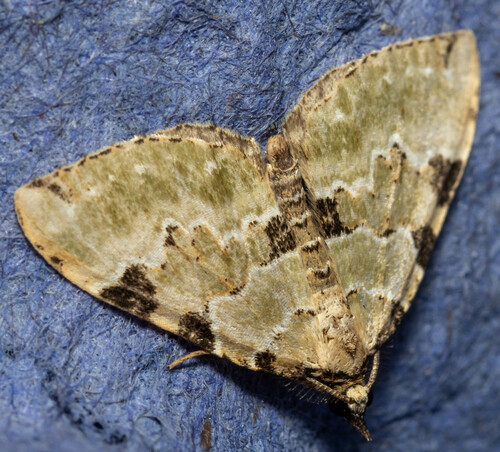
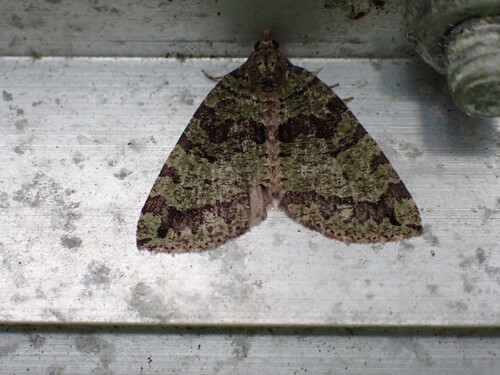
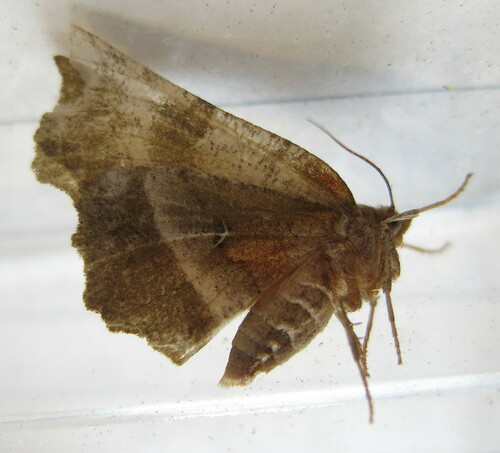
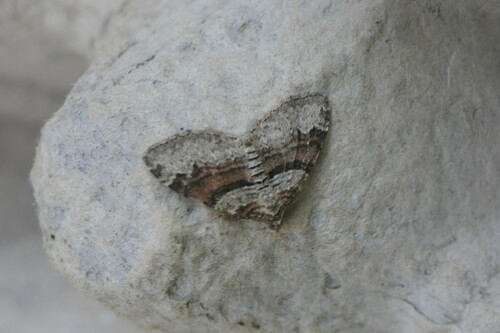
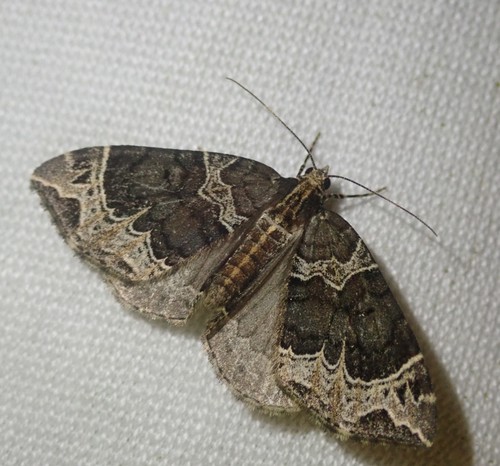
The wingspan is 23–27 mm. The length of the forewings is 13–17 mm. The basal region is dark grey, and is bordered by a light coloured band in which are mostly dark stains. The very wide discal region is black brown, and often shows a nearly elliptical white "drawing" in the middle. The marginal area is brown with several significant arrow patches. Two or three distally facing peaks continue as orange coloured strokes sometimes up to the outer edge. Below the apex, there are dark arch stains and a white wavy line located at the outer edge. The hind wings are white grey and have bright crosslines as well as a little black heart. The colour of head, thorax, and abdomen is brown. Prout

describes some variants. The larva is long and thin, variable in colour, green or flesh-colour, the thoracic and last 4 abdominal segments with a red or blackish mediodorsal line, the middle segments with blackish dots. The venter has a white line, sometimes pink-edged.

The main habitats of the species are semi-shady areas in deciduous, and mixed forests as well as young forest plantations and heaths. The moths fly in two generations from May to July and from August to September. [1]. The larvae feed mainly on willowherbs. The compact, brownish

green pupa hibernates. Wikipedia →
Global Distribution

Parks Where Found

# Park Country Daily sighting probability
1 Snowdonia National Park 🇬🇧 United Kingdom
~20%
2 Mercantour National Park 🇫🇷 France
~10%
3 Wadden Sea National Park 🇩🇪 Germany
~10%
4 Bavarian Forest National Park 🇩🇪 Germany
~10%
5 Cairngorms National Park 🇬🇧 United Kingdom
~10%
6 Great Bear Rainforest 🇨🇦 Canada
~10%
7 Pyrénées National Park 🇫🇷 France
<5%

Cities Where Found

# City Country Daily sighting probability
1 Liverpool 🇬🇧 United Kingdom
~10%
2 Manchester 🇬🇧 United Kingdom
~10%
3 Birmingham 🇬🇧 United Kingdom
~10%
4 London 🇬🇧 United Kingdom
<5%

Before you go

What are the chances of seeing a Small Phoenix in Snowdonia National Park?

Possible

About 20% of wildlife watchers report a Small Phoenix sighting in Snowdonia National Park on a given day, based on 40 verified sightings from GBIF citizen-science data from 2019 to 2026. It is the 36th most-seen of the 387 insects we can rate there. Over three days the chance rises to about 50%, and over a week to about 80%, if each day is a fresh chance.

When is the best time to see a Small Phoenix in Snowdonia National Park?

August

In that month about 40% of wildlife watchers report a Small Phoenix in Snowdonia National Park on a given day, against under 5% in October to March, the lowest months.

What time of day is best to see a Small Phoenix?

Between 6 and 9 am

Across all the parks we cover, that three-hour window holds the most Small Phoenix sightings with a recorded time, and about half of them come between 6 am and 6 pm: it is seen both by day and at night.

Is Snowdonia National Park the best place to see a Small Phoenix?

Yes

Of the 7 parks where we can rate Small Phoenix sightings, Snowdonia National Park has the highest daily chance: about 20%. Next come Mercantour National Park (France, about 10%) and Wadden Sea National Park (Germany, about 10%).

Which relatives of the Small Phoenix live in Snowdonia National Park?

Same family: Geometridae

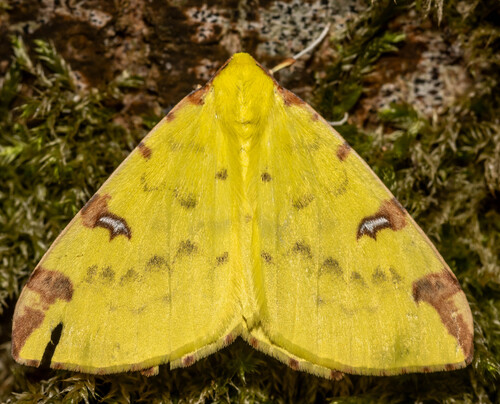
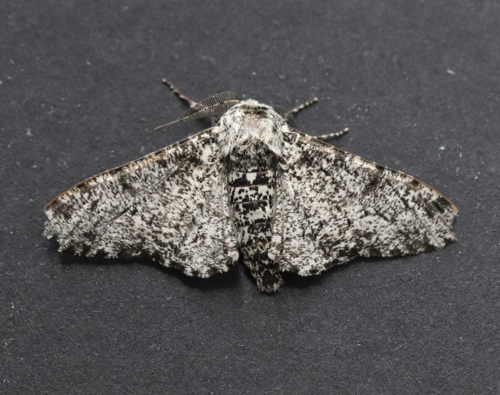
The closest relatives of the Small Phoenix that you can see in Snowdonia National Park (family Geometridae, Geometer Moths) are Brimstone Moth (about 30%), Peppered Moth (about 20%) and Riband Wave (about 20%), with each one's daily chance of a sighting.

Where does the Small Phoenix sighting chance come from?

GBIF citizen-science records

It is estimated from how often the Small Phoenix is recorded against all the insects logged in Snowdonia National Park (40 verified sightings from 2019 to 2026), calibrated against known sighting rates. Figures are rounded to the nearest 10% because citizen-science data supports honest approximations, not decimals, and months with records from fewer than five people show "—". How it works.

← Back to Snowdonia National Park