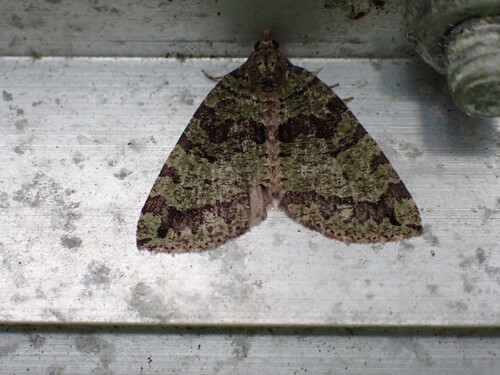
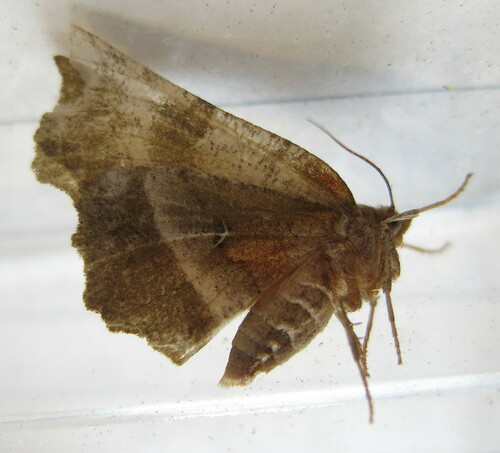
Golden-Rod Pug

Golden-Rod Pug

Eupithecia virgaureata

Daily sighting probability ~10% · With luck
at Snowdonia National Park

In 3 days ~20% in a week ~40%

9 Verified sightings at Snowdonia National Park From 2019 to 2026
9 In 1 park
April Best month
☀️ Diurnal When it's spotted

About the Golden-Rod Pug

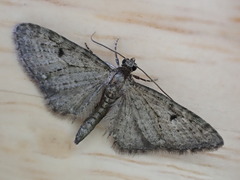
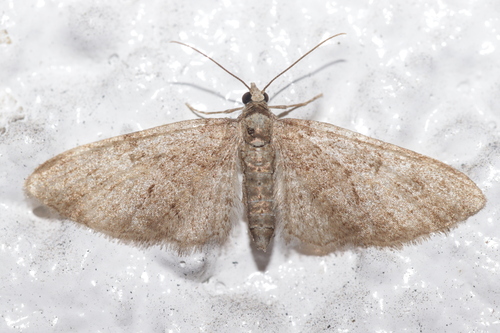
The goldenrod pug (Eupithecia virgaureata) is a moth of the family Geometridae. The species was first described by Henry Doubleday in 1861. It is found throughout the Palearctic region. In the British Isles it is widespread but rather locally distributed.

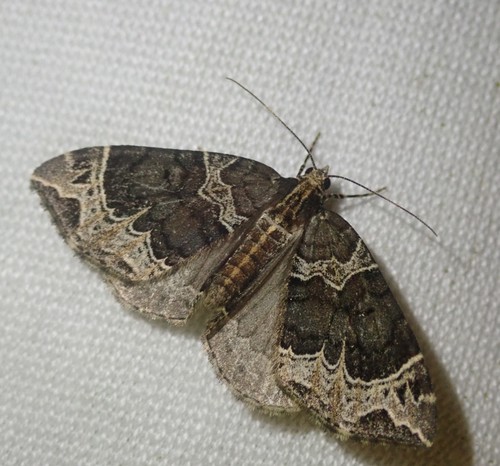
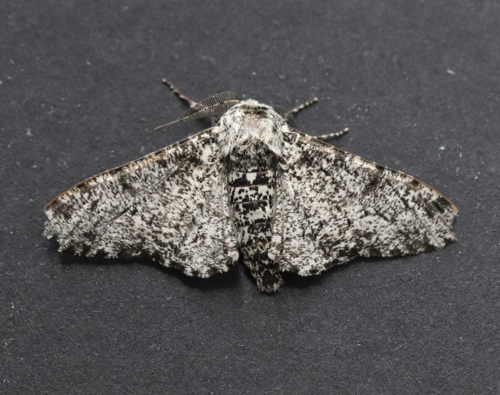
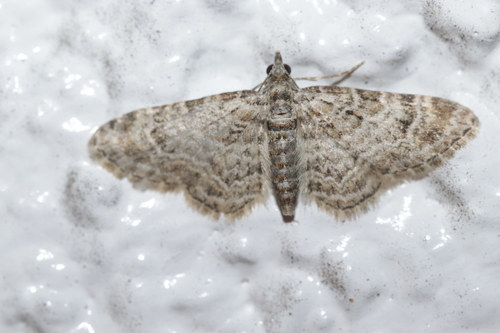
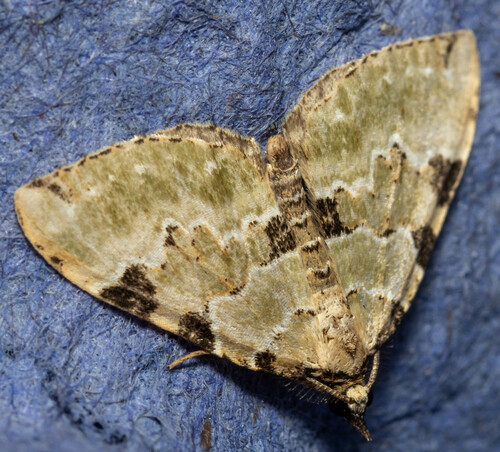
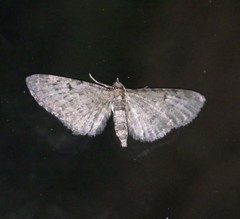
The ground colour of the forewings is pale grey brownish or fuscous, occasionally with an ochreous tinge, darker along the costa, and are marked with distinctive pale fascia and a whitish tornal spot. The forewing patterning is dominated by a conspicuous, dark discal and smaller costal spots. The obtusely angulated dark grey striae are not defined except on the costa. There is a pale interrupted subterminal line. Melanic forms are quite frequent. The wingspan is 17–20 mm.

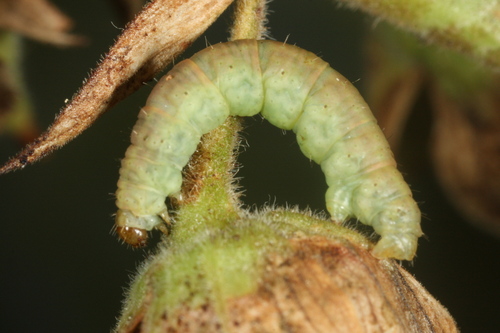
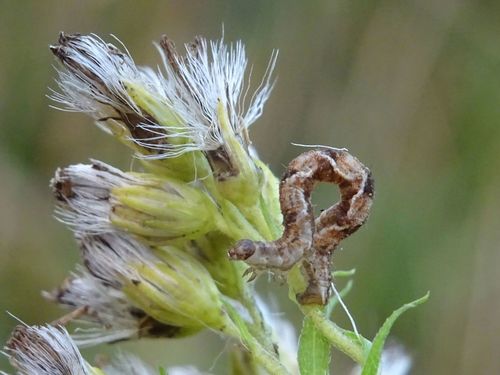
The larva is slender with short brushes, light yellowish brown with white slashes on the sides and a variety of bell-shaped brown spots on the back. Eupithecia subfuscata Eupithecia lariciata The species is difficult to determine without examining the genitalia.

Two broods are produced each year with the moths flying in May and June and again in August.aestiva Dietze, the summer generation, is considerably smaller. The caterpillars exhibit... Wikipedia →
Global Distribution

Parks Where Found

# Park Country Daily sighting probability
1 Snowdonia National Park 🇬🇧 United Kingdom
~10%

More parks will be added in future updates.

Cities Where Found

# City Country Daily sighting probability
1 Liverpool 🇬🇧 United Kingdom
~10%
2 Helsinki 🇫🇮 Finland
<5%

Before you go

What are the chances of seeing a Golden-Rod Pug in Snowdonia National Park?

With luck

About 10% of wildlife watchers report a Golden-Rod Pug sighting in Snowdonia National Park on a given day, based on 9 verified sightings from GBIF citizen-science data from 2019 to 2026. It is the 336th most-seen of the 387 insects we can rate there. Over three days the chance rises to about 20%, and over a week to about 40%, if each day is a fresh chance.

When is the best time to see a Golden-Rod Pug in Snowdonia National Park?

April and May

In those months about 10% of wildlife watchers report a Golden-Rod Pug in Snowdonia National Park on a given day, against under 5% in June to March, the lowest months.

What time of day is best to see a Golden-Rod Pug?

Between 8 and 11 am

Across all the parks we cover, that three-hour window holds the most Golden-Rod Pug sightings with a recorded time, and about 9 in 10 of them come between 6 am and 6 pm: it is a daytime animal.

Where else can you see a Golden-Rod Pug?

Only Snowdonia National Park, in our data

Snowdonia National Park is the only park on Wallace's Line with enough records to rate Golden-Rod Pug sightings: about 10% of wildlife watchers there report one on a given day.

Which relatives of the Golden-Rod Pug live in Snowdonia National Park?

Same genus: Eupithecia

The closest relatives of the Golden-Rod Pug that you can see in Snowdonia National Park (genus Eupithecia, Pug Moths) are Brindled Pug (about 10%) and Foxglove Pug (about 10%), with each one's daily chance of a sighting.

Where does the Golden-Rod Pug sighting chance come from?

GBIF citizen-science records

It is estimated from how often the Golden-Rod Pug is recorded against all the insects logged in Snowdonia National Park (9 verified sightings from 2019 to 2026), calibrated against known sighting rates. Figures are rounded to the nearest 10% because citizen-science data supports honest approximations, not decimals, and months with records from fewer than five people show "—". How it works.

← Back to Snowdonia National Park