Ladder-Backed Hover Fly

Ladder-Backed Hover Fly

Melanostoma scalare

Daily sighting probability ~10% · With luck
at Snowdonia National Park

In 3 days ~20% in a week ~50%

9 Verified sightings at Snowdonia National Park From 2019 to 2026
27 In all 2 parks
April Best month
☀️ Diurnal When it's spotted

About the Ladder-Backed Hover Fly

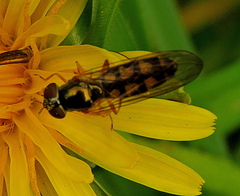
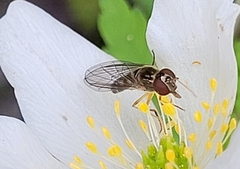
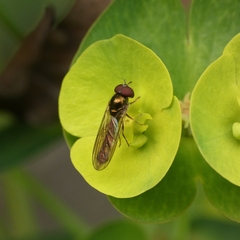
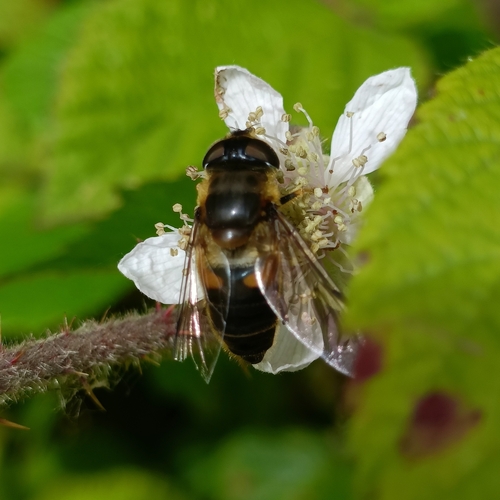
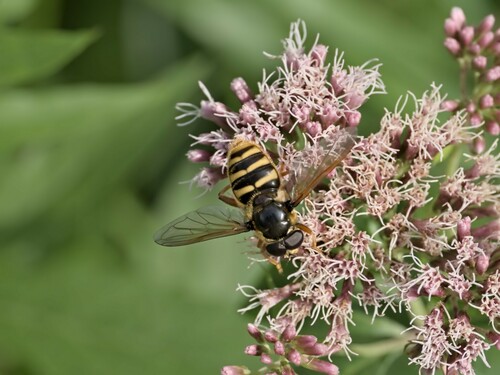
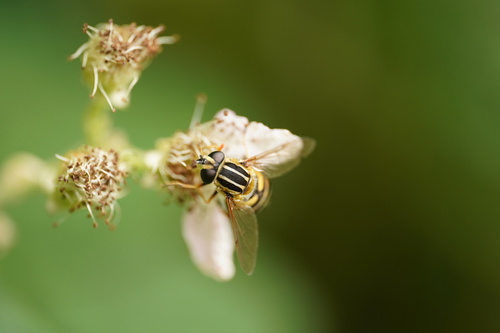
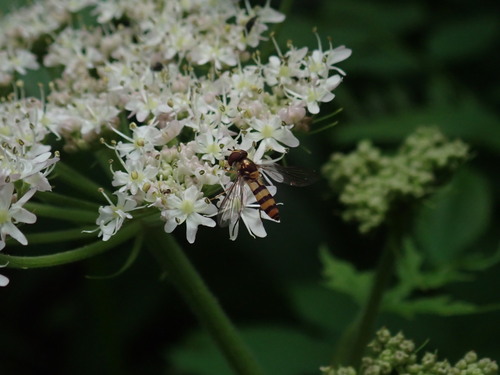
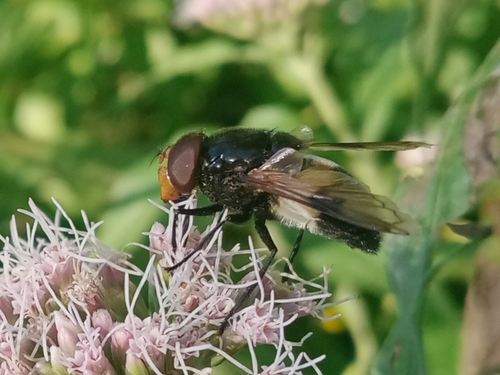
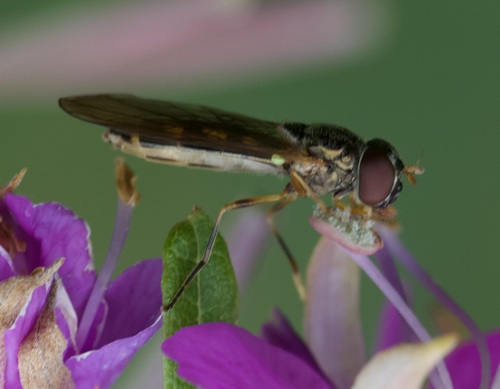
Melanostoma scalare, the chequered hoverfly, is a very common species of hoverfly. The European Melanostoma species are not well understood at present. Van der Goot is the most certain identification work. The male genitalia of M. scalare are figured by Dusek and Laska (1967). Other, more accessible, works are listed below.

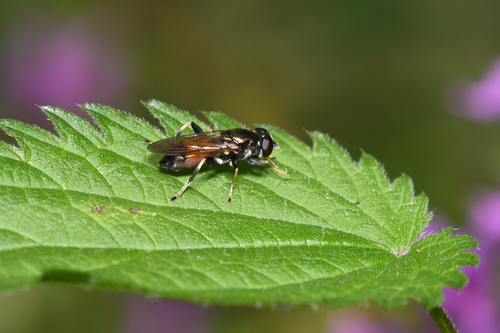
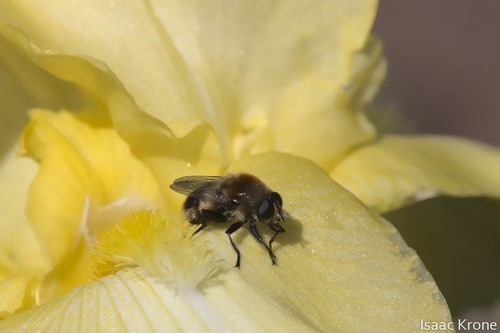
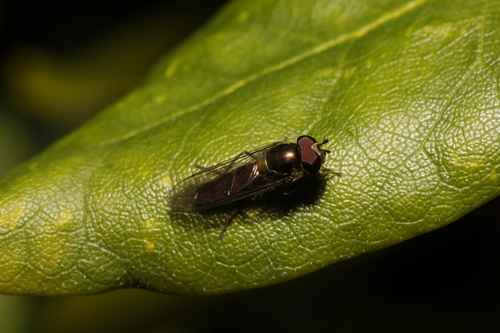
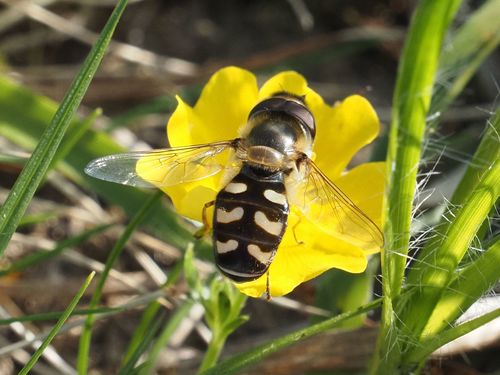
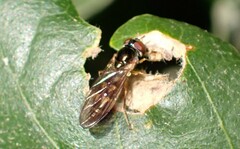
This species is present in most of Europe, the Near East, North Africa, and the eastern parts of the Afrotropical realm south to Zimbabwe and throughout the Indomalayan realm to New Guinea. Melanostoma scalare can reach a length of 7–10 mm (0.28–0.39 in). These hoverflies have a shining black thorax. The males are longer and slimmer than the females. Also, the male's abdomen is much thinner than that of the female. Further, the yellow markings of the male are roundish or diamond-shaped, while those of the female are triangular patches.

Little is known of its biology, but it is suspected to be general predator of small insects in leaf litter. Adults fly from April to November and inhabit gardens, meadows, and flowering bushes where they feed. The larvae are aphidiphagous. Wikipedia →
Global Distribution

Parks Where Found

# Park Country Daily sighting probability
1 Cairngorms National Park 🇬🇧 United Kingdom
~10%
2 Snowdonia National Park 🇬🇧 United Kingdom
~10%

Cities Where Found

# City Country Daily sighting probability
1 Birmingham 🇬🇧 United Kingdom
~20%
2 Liverpool 🇬🇧 United Kingdom
~10%
3 Manchester 🇬🇧 United Kingdom
~10%
4 London 🇬🇧 United Kingdom
~10%
5 Leeds 🇬🇧 United Kingdom
~10%
6 Copenhagen 🇩🇰 Denmark
~10%
7 Dublin 🇮🇪 Ireland
~10%
8 Brussels 🇧🇪 Belgium
~10%
9 Hamburg 🇩🇪 Germany
~10%
10 Rotterdam [The Hague] 🇳🇱 Netherlands
<5%

Before you go

What are the chances of seeing a Ladder-Backed Hover Fly in Snowdonia National Park?

With luck

About 10% of wildlife watchers report a Ladder-Backed Hover Fly sighting in Snowdonia National Park on a given day, based on 9 verified sightings from GBIF citizen-science data from 2019 to 2026. It is the 246th most-seen of the 387 insects we can rate there. Over three days the chance rises to about 20%, and over a week to about 50%, if each day is a fresh chance.

When is the best time to see a Ladder-Backed Hover Fly in Snowdonia National Park?

April

In that month about 20% of wildlife watchers report a Ladder-Backed Hover Fly in Snowdonia National Park on a given day, against under 5% in June–July, September and November–March, the lowest months. That is one of Snowdonia National Park's driest months, with about 95 mm of rain against 240 mm in December.

What time of day is best to see a Ladder-Backed Hover Fly?

Between 9 am and noon

Across all the parks we cover, that three-hour window holds the most Ladder-Backed Hover Fly sightings with a recorded time, and nearly all of them come between 6 am and 6 pm: it is a daytime animal.

Is Snowdonia National Park the best place to see a Ladder-Backed Hover Fly?

Among the best

Of the 2 parks where we can rate Ladder-Backed Hover Fly sightings, Snowdonia National Park ranks 2nd at about 10%, level with the leaders once rounded. The best odds are in Cairngorms National Park (United Kingdom, about 10%).

Which relatives of the Ladder-Backed Hover Fly live in Snowdonia National Park?

Same family: Syrphidae

The closest relatives of the Ladder-Backed Hover Fly that you can see in Snowdonia National Park (family Syrphidae, Hover Flies) are Tapered Drone Fly (about 20%), Marmalade Hover Fly (about 20%) and Common Drone Fly (about 10%), with each one's daily chance of a sighting.

Where does the Ladder-Backed Hover Fly sighting chance come from?

GBIF citizen-science records

It is estimated from how often the Ladder-Backed Hover Fly is recorded against all the insects logged in Snowdonia National Park (9 verified sightings from 2019 to 2026), calibrated against known sighting rates. Figures are rounded to the nearest 10% because citizen-science data supports honest approximations, not decimals, and months with records from fewer than five people show "—". How it works.

← Back to Snowdonia National Park