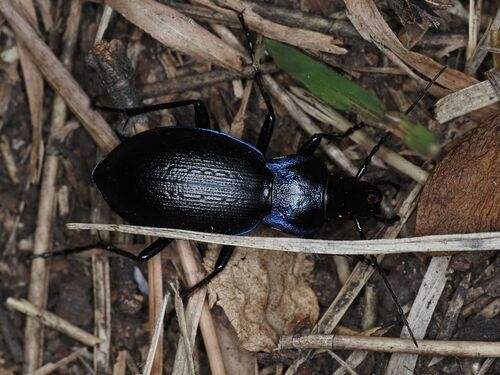
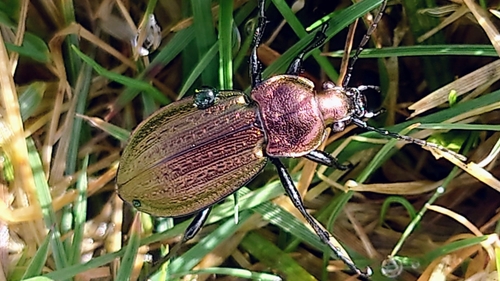
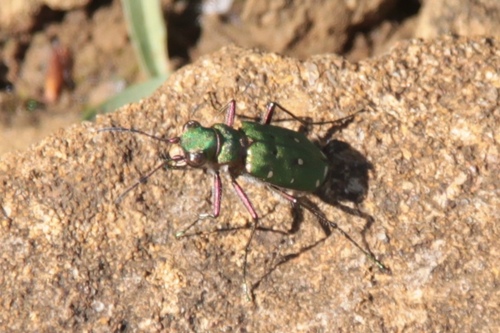
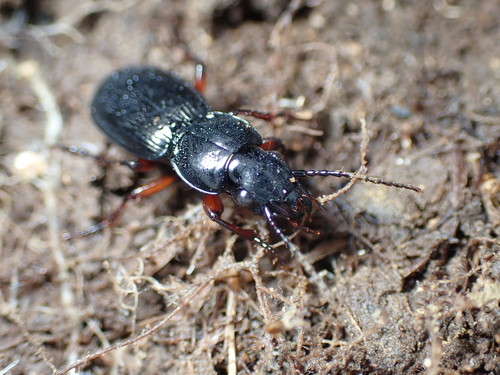
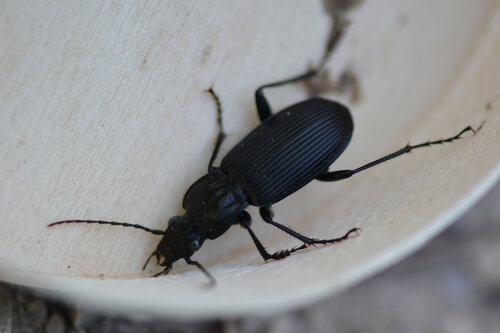
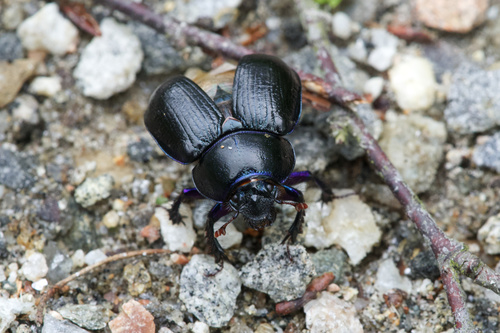

Violet Ground Beetle

Violet Ground Beetle

Carabus violaceus

Daily sighting probability ~10% · With luck
at Snowdonia National Park

In 3 days ~30% in a week ~60%

17 Verified sightings at Snowdonia National Park From 2019 to 2026
86 In all 4 parks
August Best month
☀️ Diurnal When it's spotted

About the Violet Ground Beetle

Carabus violaceus, sometimes called the violet ground beetle, or the rain beetle is a nocturnal species of a beetle, from the family Carabidae. Carabus violaceus was named by Carl Linnaeus, in the 10th edition of Systema Naturæ. The description of C. violaceus was published in the work's first volume, in 1758. Linnaeus gave its habitat as European forests, and described it as a winged beetle with black wing cases with metallic margins and a somewhat purple thorax. Carabus violaceus is classified in the Megodontus subgenus, and is considered a "species complex with numerous forms that display slight morphological differences".

Three subspecies of the Carabus violaceus exist. Besides the nominate subspecies C. violaceus violaceus there is also C. v. purpurascens, which has been subject to some systematic controversy: for the past 80 years or so, some taxonomists have ranked it as a species on its own – Carabus purpurascens – while others still considered it a subspecies. However, recent analyses using morphometrics and genetics have "justified" treating the taxon as a subspecies of Carabus violaceus. The two subspecies are known to hybridize. A third subspecies,... Wikipedia →

Global Distribution

Parks Where Found

# Park Country Daily sighting probability
1 Tatra National Park 🇸🇰 Slovakia
~20%
2 Cairngorms National Park 🇬🇧 United Kingdom
~20%
3 Snowdonia National Park 🇬🇧 United Kingdom
~10%
4 Bavarian Forest National Park 🇩🇪 Germany
~10%

Cities Where Found

# City Country Daily sighting probability
1 Birmingham 🇬🇧 United Kingdom
~10%
2 Manchester 🇬🇧 United Kingdom
~10%
3 Liverpool 🇬🇧 United Kingdom
~10%
4 London 🇬🇧 United Kingdom
<5%
5 Prague 🇨🇿 Czechia
<5%
6 Vienna 🇦🇹 Austria
<5%

Before you go

What are the chances of seeing a Violet Ground Beetle in Snowdonia National Park?

With luck

About 10% of wildlife watchers report a Violet Ground Beetle sighting in Snowdonia National Park on a given day, based on 17 verified sightings from GBIF citizen-science data from 2019 to 2026. It is the 127th most-seen of the 387 insects we can rate there. Over three days the chance rises to about 30%, and over a week to about 60%, if each day is a fresh chance.

When is the best time to see a Violet Ground Beetle in Snowdonia National Park?

May and August

In those months about 20% of wildlife watchers report a Violet Ground Beetle in Snowdonia National Park on a given day, against under 5% in September to April, the lowest months.

What time of day is best to see a Violet Ground Beetle?

Between 10 am and 1 pm

Across all the parks we cover, that three-hour window holds the most Violet Ground Beetle sightings with a recorded time, and about 8 in 10 of them come between 6 am and 6 pm: it is a daytime animal.

Is Snowdonia National Park the best place to see a Violet Ground Beetle?

3rd of 4

Of the 4 parks where we can rate Violet Ground Beetle sightings, Snowdonia National Park ranks 3rd at about 10%. The best odds are in Tatra National Park (Slovakia, about 20%) and Cairngorms National Park (United Kingdom, about 20%).

Which relatives of the Violet Ground Beetle live in Snowdonia National Park?

Same genus: Carabus

The closest relatives of the Violet Ground Beetle that you can see in Snowdonia National Park (genus Carabus, Worm and Slug Hunters) are Rough Violet Ground Beetle (about 10%) and Moorland Ground Beetle (about 10%), with each one's daily chance of a sighting.

Where does the Violet Ground Beetle sighting chance come from?

GBIF citizen-science records

It is estimated from how often the Violet Ground Beetle is recorded against all the insects logged in Snowdonia National Park (17 verified sightings from 2019 to 2026), calibrated against known sighting rates. Figures are rounded to the nearest 10% because citizen-science data supports honest approximations, not decimals, and months with records from fewer than five people show "—". How it works.

← Back to Snowdonia National Park