Gray-backed Storm-Petrel

Gray-backed Storm-Petrel

Garrodia nereis

Silhouette: Sheatherius · PhyloPic

LCLeast ConcernNTVUENCR
Daily sighting probability <5% · Rare
at South Georgia and the South Sandwich Islands

In 3 days ~10% in a week ~20%

26 Verified sightings at South Georgia and the South Sandwich Islands From 2019 to 2026
65 In all 2 parks
April Best month
☀️ Diurnal When it's spotted

About the Gray-backed Storm-Petrel

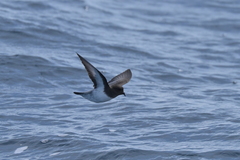
The grey-backed storm petrel (Garrodia nereis) is a species of seabird in the austral storm petrel family Oceanitidae. It is monotypic within the genus Garrodia. It is found in Antarctica, Argentina, Australia, Chile, Falkland Islands, French Southern Territories, New Zealand, Saint Helena, South Africa, and South Georgia and the South Sandwich Islands. Its natural habitat is open seas. It is highly attracted to bright lights, especially in conditions of low visibility.

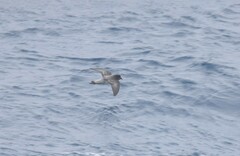
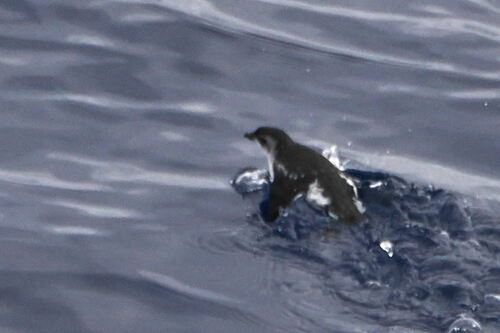
The genus Garrodia was created by William Alexander Forbes in 1881 and named after English zoologist Alfred Henry Garrod, while the specific descriptor is an allusion to the Nereids, the sea nymphs of Greek mythology. Grey-backed storm petrel is a small bird, 21-44 g in weight with a 39–40 cm wingspan. Like others in its family it is dark grey overall with a black head and belly, but it can be distinguished from other storm-petrels in its range by its light grey rump compared to the white rump on others. The Grey-backed petrel has a pale back, black legs, a square tail and a white belly.

The grey-backed storm petrel has a distribution in the subantarctic in three disjunct...

Wikipedia →

Global Distribution

Parks Where Found

# Park Country Daily sighting probability
1 South Georgia and the South Sandwich Islands 🇬🇸 South Georgia and the South Sandwich Islands
<5%
2 Falkland Islands 🇫🇰 Falkland Islands
<5%

Before you go

What are the chances of seeing a Gray-backed Storm-Petrel in South Georgia and the South Sandwich Islands?

Rare

Under 5% of wildlife watchers report a Gray-backed Storm-Petrel sighting in South Georgia and the South Sandwich Islands on a given day, based on 26 verified sightings from GBIF citizen-science data from 2019 to 2026. It is the 31st most-seen of the 37 birds we can rate there. Over three days the chance rises to about 10%, and over a week to about 20%, if each day is a fresh chance.

When is the best time to see a Gray-backed Storm-Petrel in South Georgia and the South Sandwich Islands?

April

In that month about 10% of wildlife watchers report a Gray-backed Storm-Petrel in South Georgia and the South Sandwich Islands on a given day, against under 5% in May–June and September–March, the lowest months. July and August have too few records to rate.

What time of day is best to see a Gray-backed Storm-Petrel?

Between 10 am and 1 pm

Across all the parks we cover, that three-hour window holds the most Gray-backed Storm-Petrel sightings with a recorded time, and about 9 in 10 of them come between 6 am and 6 pm: it is a daytime animal.

Is South Georgia and the South Sandwich Islands the best place to see a Gray-backed Storm-Petrel?

Yes

Of the 2 parks where we can rate Gray-backed Storm-Petrel sightings, South Georgia and the South Sandwich Islands has the highest daily chance: under 5%. Next come Falkland Islands (Falkland Islands, under 5%).

Which relatives of the Gray-backed Storm-Petrel live in South Georgia and the South Sandwich Islands?

Same family: Hydrobatidae

The closest relatives of the Gray-backed Storm-Petrel that you can see in South Georgia and the South Sandwich Islands (family Hydrobatidae, Northern Storm-Petrels) are Wilson's Storm Petrel (about 70%) and Black-bellied Storm-Petrel (about 20%), with each one's daily chance of a sighting.

Where does the Gray-backed Storm-Petrel sighting chance come from?

GBIF citizen-science records

It is estimated from how often the Gray-backed Storm-Petrel is recorded against all the birds logged in South Georgia and the South Sandwich Islands (26 verified sightings from 2019 to 2026), calibrated against known sighting rates. Figures are rounded to the nearest 10% because citizen-science data supports honest approximations, not decimals, and months with records from fewer than five people show "—". How it works.

← Back to South Georgia and the South Sandwich Islands