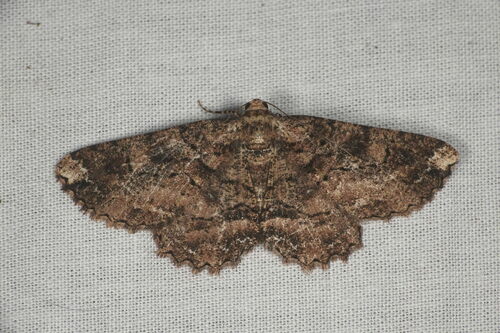
Privet Hawkmoth

Privet Hawkmoth

Psilogramma menephron

Daily sighting probability ~10% · With luck
at Springbrook National Park

In 3 days ~20% in a week ~40%

7 Verified sightings at Springbrook National Park From 2019 to 2026
24 In all 2 parks
February Best month
☀️🌙 Day & Night When it's spotted

About the Privet Hawkmoth

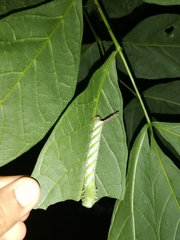
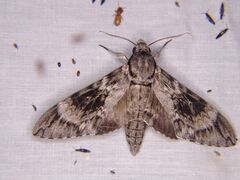
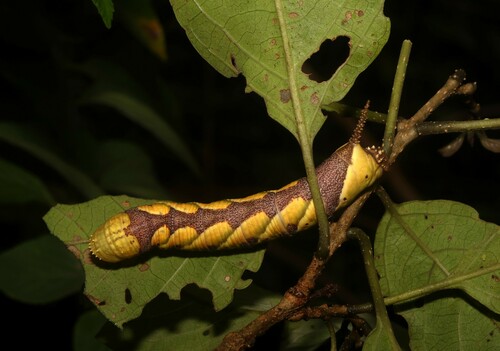
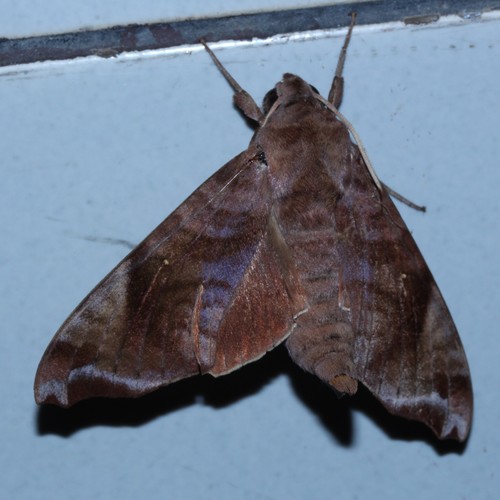
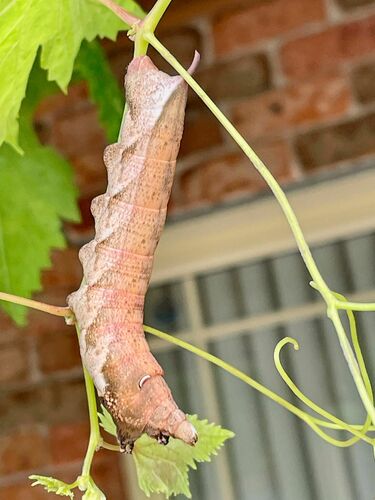
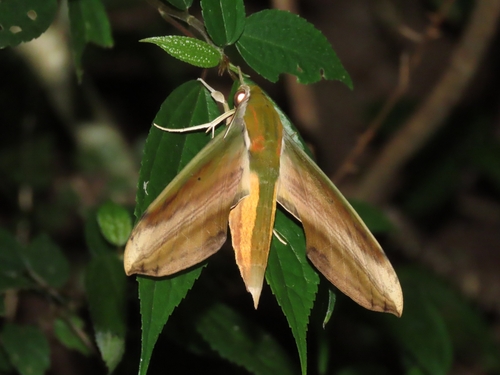
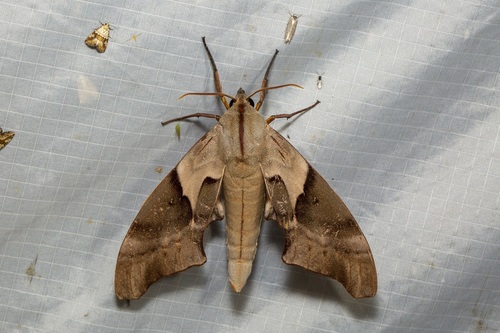
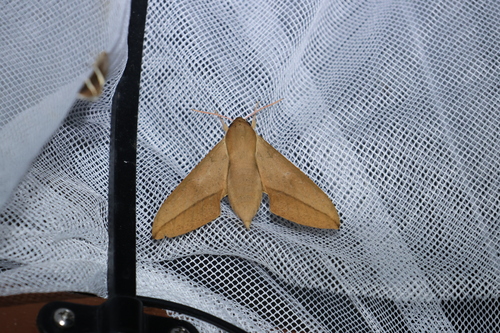
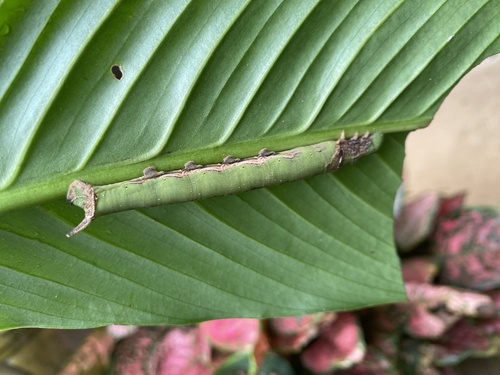
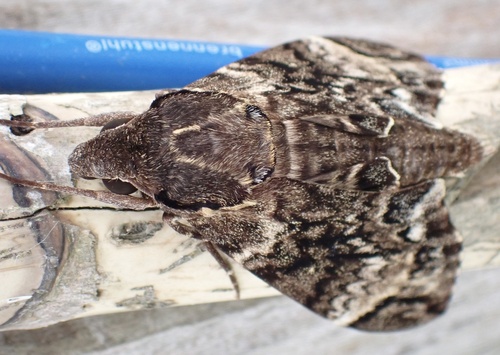
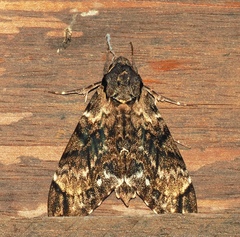
Psilogramma menephron, the privet hawk moth or large brown hawkmoth, is a member of the family Sphingidae. It was described by Pieter Cramer in 1780. It is usually found in Sri Lanka, India (including the Andaman Islands), Nepal, central and southern China, Thailand, Vietnam, Indonesia and the Philippines. Psilogramma casuarinae from eastern Australia was long treated as a synonym but is now thought to be a distinct species. The introduced population on Hawaii was first thought to be P. menephron, but is Psilogramma increta.

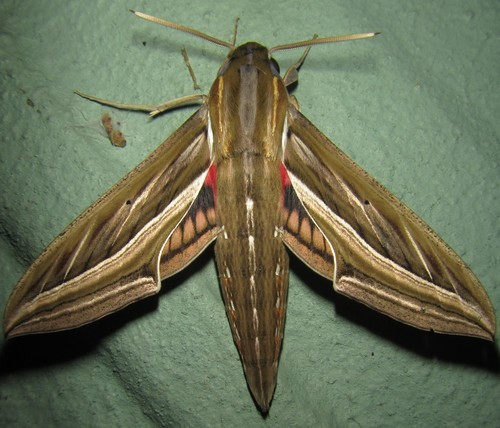
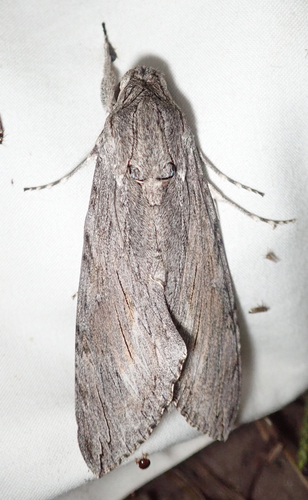
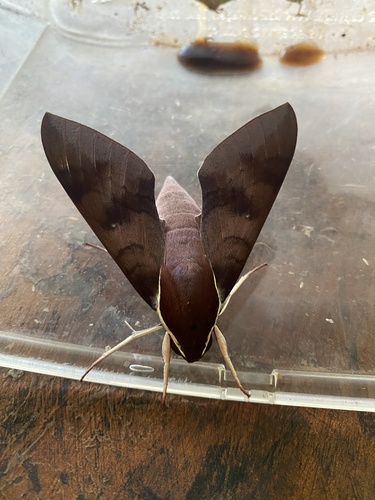
The wingspan is 82–138 mm. Head, thorax, abdomen and forewings are grey. Dark brown bands along the sides of palpi and thorax meet on metathorax, where there are a few blue and yellow scales. A dark line runs down vertex of abdomen and paired more diffused subdorsal lines. Forewings with some dark strigae from the costa. There are two dark streaks in the interspaces below veins 2 and 3 and a dark streak down from the costa before the apex, curved down to vein 6, then upwards and bent back before reaching the apex. Hindwings are brownish with a pale patch with two dark lines across it near the anal angle. Ventral side is much paler with indistinct... Wikipedia →
Global Distribution

Parks Where Found

# Park Country Daily sighting probability
1 Daintree National Park 🇦🇺 Australia
~10%
2 Springbrook National Park 🇦🇺 Australia
~10%

Before you go

What are the chances of seeing a Privet Hawkmoth in Springbrook National Park?

With luck

About 10% of wildlife watchers report a Privet Hawkmoth sighting in Springbrook National Park on a given day, based on 7 verified sightings from GBIF citizen-science data from 2019 to 2026. It is the 312th most-seen of the 429 insects we can rate there. Over three days the chance rises to about 20%, and over a week to about 40%, if each day is a fresh chance.

When is the best time to see a Privet Hawkmoth in Springbrook National Park?

February–March and November–December

In those months about 10% of wildlife watchers report a Privet Hawkmoth in Springbrook National Park on a given day, against under 5% in January and April–October, the lowest months. Those are among Springbrook National Park's wettest months, with about 160 mm of rain a month against 45 mm in August.

What time of day is best to see a Privet Hawkmoth?

Between 8 and 11 pm

Across all the parks we cover, that three-hour window holds the most Privet Hawkmoth sightings with a recorded time, and about 7 in 10 of them come between 6 pm and 6 am: it is seen both by day and at night.

Is Springbrook National Park the best place to see a Privet Hawkmoth?

Among the best

Of the 2 parks where we can rate Privet Hawkmoth sightings, Springbrook National Park ranks 2nd at about 10%, level with the leaders once rounded. The best odds are in Daintree National Park (Australia, about 10%).

Where does the Privet Hawkmoth sighting chance come from?

GBIF citizen-science records

It is estimated from how often the Privet Hawkmoth is recorded against all the insects logged in Springbrook National Park (7 verified sightings from 2019 to 2026), calibrated against known sighting rates. Figures are rounded to the nearest 10% because citizen-science data supports honest approximations, not decimals, and months with records from fewer than five people show "—". How it works.

← Back to Springbrook National Park