Argentine Ant

Argentine Ant

Linepithema humile

Daily sighting probability <5% · Rare
at Table Mountain National Park

In 3 days ~10% in a week ~20%

14 Verified sightings at Table Mountain National Park From 2019 to 2026
23 In all 2 parks
November Best month
☀️ Diurnal When it's spotted

About the Argentine Ant

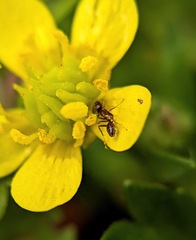
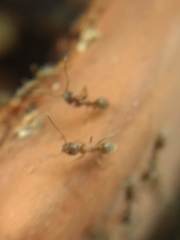
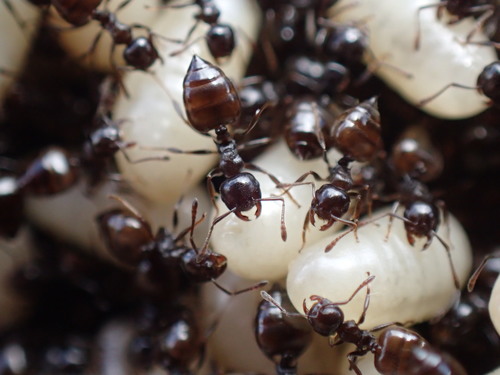
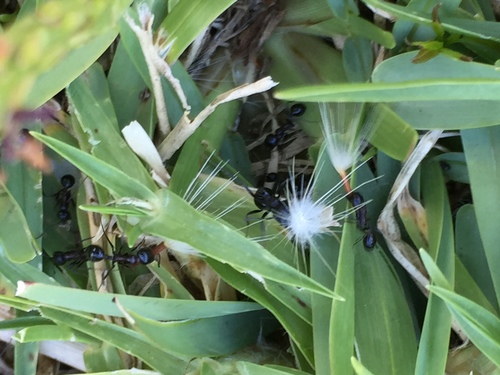
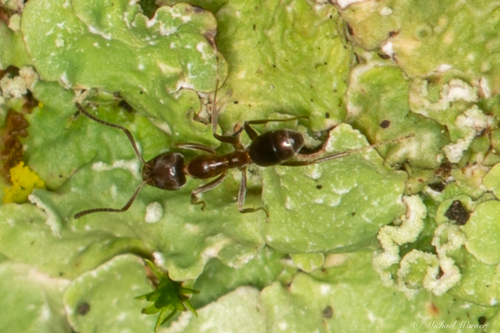
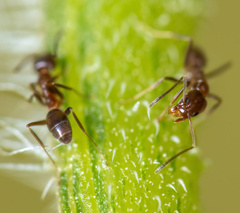
The Argentine ant (Linepithema humile, formerly Iridomyrmex humilis) is an ant native to northern Argentina, Uruguay, Paraguay, Bolivia and southern Brazil. This invasive species was inadvertently introduced by humans on a global scale and has become established in many Mediterranean climate areas, including South Africa, New Zealand, Japan, Easter Island, Australia, the Azores, Europe, Hawaii, and the continental United States. Argentine ants are significant pests within agricultural and urban settings, and are documented to cause substantial harm to communities of native arthropods, vertebrates, and plants within their invaded range.

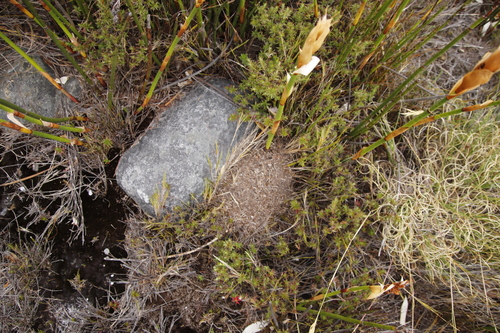
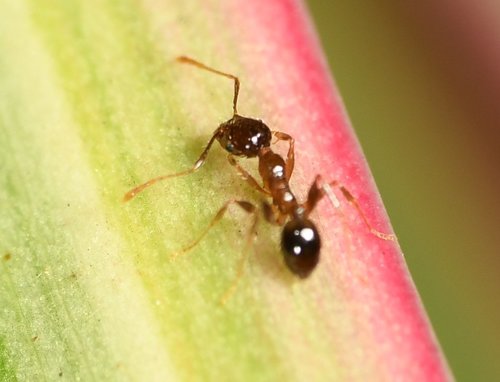
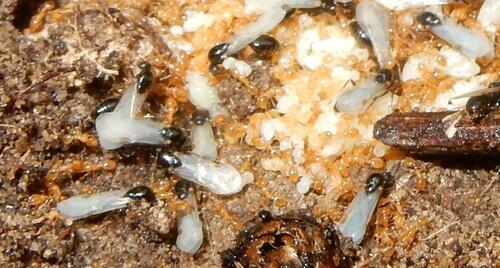
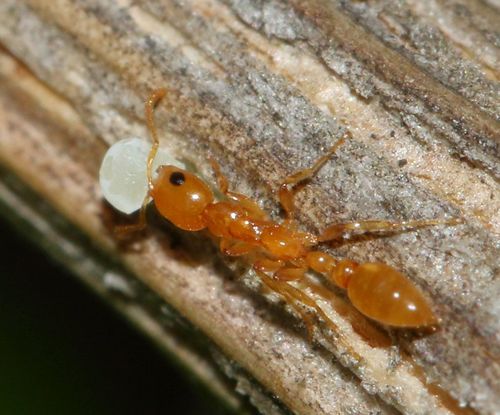
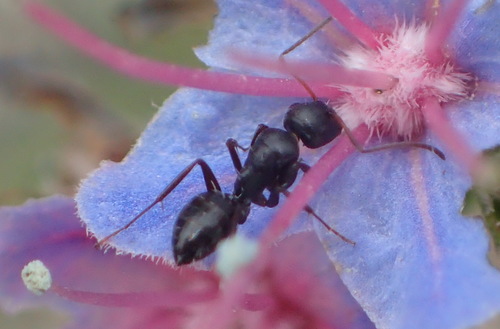
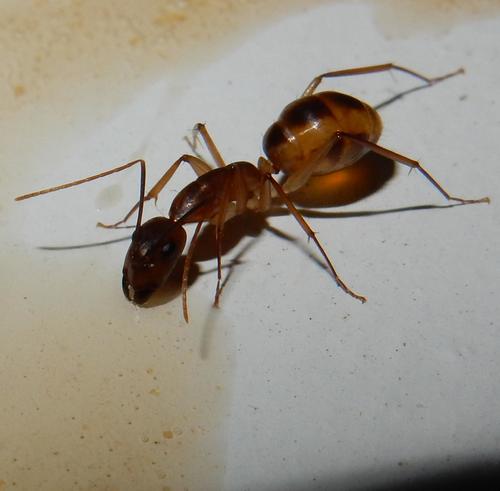
Linepithema humile is a small-bodied (2.2–2.6 mm) ant species, dull light to dark brown in color. Within the invasion zone, ant colonies are large and include many workers and multiple queens. Argentine ants are opportunistic with regard to nesting preferences. Colony nests have been found in the ground, in cracks in concrete walls, in spaces between boards and timbers, even among belongings in human dwellings. In natural areas, they generally nest shallowly in loose leaf litter or beneath small stones, due to their poor ability to dig... Wikipedia →
Global Distribution

Parks Where Found

# Park Country Daily sighting probability
1 Channel Islands National Park 🇺🇸 United States
~10%
2 Table Mountain National Park 🇿🇦 South Africa
<5%

Cities Where Found

# City Country Daily sighting probability
1 Tijuana 🇲🇽 México
~30%
2 Las Vegas 🇺🇸 United States
~20%
3 Quito 🇪🇨 Ecuador
~20%
4 Santiago 🇨🇱 Chile
~20%
5 Los Angeles 🇺🇸 United States
~10%
6 San Francisco 🇺🇸 United States
~10%
7 La Paz 🇧🇴 Bolivia
~10%
8 Mexico City 🇲🇽 México
~10%
9 San Diego 🇺🇸 United States
~10%
10 Barcelona 🇪🇸 Spain
~10%

Before you go

What are the chances of seeing an Argentine Ant in Table Mountain National Park?

Rare

Under 5% of wildlife watchers report an Argentine Ant sighting in Table Mountain National Park on a given day, based on 14 verified sightings from GBIF citizen-science data from 2019 to 2026. It is the 180th most-seen of the 344 insects we can rate there. Over three days the chance rises to about 10%, and over a week to about 20%, if each day is a fresh chance.

When is the best time to see an Argentine Ant in Table Mountain National Park?

November

In that month about 10% of wildlife watchers report an Argentine Ant in Table Mountain National Park on a given day, against under 5% in December to October, the lowest months. That is one of Table Mountain National Park's driest months, with about 25 mm of rain against 110 mm in June.

What time of day is best to see an Argentine Ant?

Between 4 and 7 pm

Across all the parks we cover, that three-hour window holds the most Argentine Ant sightings with a recorded time, and about 8 in 10 of them come between 6 am and 6 pm: it is a daytime animal.

Is Table Mountain National Park the best place to see an Argentine Ant?

2nd of 2

Of the 2 parks where we can rate Argentine Ant sightings, Table Mountain National Park ranks 2nd at under 5%. The best odds are in Channel Islands National Park (United States, about 10%).

Which relatives of the Argentine Ant live in Table Mountain National Park?

Same family: Formicidae

The closest relatives of the Argentine Ant that you can see in Table Mountain National Park (family Formicidae, Ants) are Black Cocktail Ant (about 20%), Small Black Sugar Ant (about 10%) and Black Droptail Ant (about 10%), with each one's daily chance of a sighting.

Where does the Argentine Ant sighting chance come from?

GBIF citizen-science records

It is estimated from how often the Argentine Ant is recorded against all the insects logged in Table Mountain National Park (14 verified sightings from 2019 to 2026), calibrated against known sighting rates. Figures are rounded to the nearest 10% because citizen-science data supports honest approximations, not decimals, and months with records from fewer than five people show "—". How it works.

← Back to Table Mountain National Park