
Berg Adder

Berg Adder

Bitis atropos

Silhouette: Steven Traver · PhyloPic

LCLeast ConcernNTVUENCR
Daily sighting probability ~10% · With luck
at Table Mountain National Park

In 3 days ~10% in a week ~30%

27 Verified sightings at Table Mountain National Park From 2019 to 2026
61 In all 2 parks
May Best month
☀️ Diurnal When it's spotted

About the Berg Adder

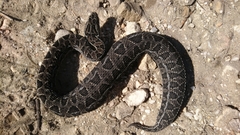
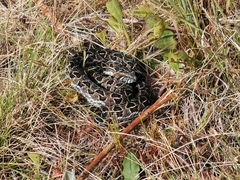
The berg adder (Bitis atropos) is a viper species endemic to mountainous regions in southern Africa. No subspecies are currently recognized. The specific name, atropos, refers to the Greek mythological goddess Atropos, who was one of the Three Fates, the one who cut the thread of life. The type locality given is "America", but this is obviously a mistake. More likely, it is the Cape of Good Hope, according to FitzSimons (1962).

Its common names include berg adder, Cape mountain adder, and mountain adder. The typical adult size of B. atropos is 30–40 cm (about 12–16 in) in total length (body and tail), with some females reaching a maximum total length of 50 cm (20 in) in the wild and 60 cm (24 in) in captivity. B. atropos is found in isolated populations of the mountainous regions of southern Africa. In South Africa, the species is known to occur in the Transvaal, along the Drakensberg escarpment of the eastern and northern Transvaal. Elsewhere in South Africa, it occurs in western Natal, Lesotho, and eastern Free State, and in the southern coastal mountains of western and eastern Cape Province. Spawls and Branch (1995)... Wikipedia →

Global Distribution

Parks Where Found

# Park Country Daily sighting probability
1 Garden Route National Park 🇿🇦 South Africa
~10%
2 Table Mountain National Park 🇿🇦 South Africa
~10%

Before you go

What are the chances of seeing a Berg Adder in Table Mountain National Park?

With luck

About 10% of wildlife watchers report a Berg Adder sighting in Table Mountain National Park on a given day, based on 27 verified sightings from GBIF citizen-science data from 2019 to 2026. It is the 27th most-seen of the 41 reptiles we can rate there. Over three days the chance rises to about 10%, and over a week to about 30%, if each day is a fresh chance.

When is the best time to see a Berg Adder in Table Mountain National Park?

April–June, October and December–January

In those months about 10% of wildlife watchers report a Berg Adder in Table Mountain National Park on a given day, against under 5% in February–March, July–September and November, the lowest months.

What time of day is best to see a Berg Adder?

Between 10 am and 1 pm

Across all the parks we cover, that three-hour window holds the most Berg Adder sightings with a recorded time, and nearly all of them come between 6 am and 6 pm: it is a daytime animal.

Is Table Mountain National Park the best place to see a Berg Adder?

Among the best

Of the 2 parks where we can rate Berg Adder sightings, Table Mountain National Park ranks 2nd at about 10%, level with the leaders once rounded. The best odds are in Garden Route National Park (South Africa, about 10%).

Where does the Berg Adder sighting chance come from?

GBIF citizen-science records

It is estimated from how often the Berg Adder is recorded against all the reptiles logged in Table Mountain National Park (27 verified sightings from 2019 to 2026), calibrated against known sighting rates. Figures are rounded to the nearest 10% because citizen-science data supports honest approximations, not decimals, and months with records from fewer than five people show "—". How it works.

← Back to Table Mountain National Park