Cape Reed Snake

Cape Reed Snake

Amplorhinus multimaculatus

Silhouette: SeismicShrimp · PhyloPic

LCLeast ConcernNTVUENCR
Daily sighting probability <5% · Rare
at Table Mountain National Park

In 3 days ~10% in a week ~30%

20 Verified sightings at Table Mountain National Park From 2019 to 2026
20 In 1 park
March Best month
☀️ Diurnal When it's spotted

About the Cape Reed Snake

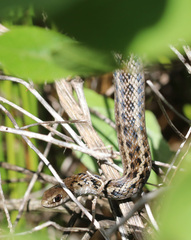
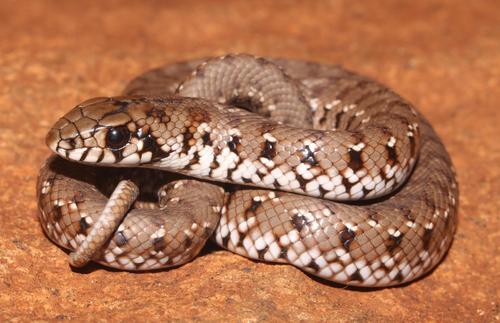
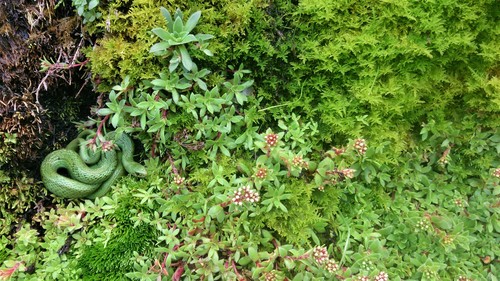
Amplorhinus multimaculatus, commonly known as the many-spotted snake or the Cape reed snake, is a species of mildly venomous snake in the family Pseudoxyrhophiidae. The species, which is native to southern Africa, is monotypic (only one species in the genus) in the genus Amplorhinus.

A. multimaculatus is found in Mozambique, South Africa, and Zimbabwe. The preferred natural habitats of A. multimaculatus are freshwater wetlands, grassland, shrubland, and forest. A small species, A. multimaculatus may attain a snout-to-vent length (SVL) of about 45 cm (18 in).

A. multimaculatus preys on frogs and lizards. A. multimaculatus is viviparous. Usually four to eight young are born in late summer. Each neonate measures 12.5–20 cm (4.9–7.9 in) in total length (including tail). If a human is bitten by A. multimaculatus, the venom may cause localized swelling, inflammation, and pain. The venom is delivered by enlarged grooved teeth at the rear of the mouth.

Boulenger GA (1896). Catalogue of the Snakes in the British Museum (Natural History). Volume III., Containing... Wikipedia →
Global Distribution

Parks Where Found

# Park Country Daily sighting probability
1 Table Mountain National Park 🇿🇦 South Africa
<5%

More parks will be added in future updates.

Cities Where Found

# City Country Daily sighting probability
1 Cape Town 🇿🇦 South Africa
<5%

Before you go

What are the chances of seeing a Cape Reed Snake in Table Mountain National Park?

Rare

Under 5% of wildlife watchers report a Cape Reed Snake sighting in Table Mountain National Park on a given day, based on 20 verified sightings from GBIF citizen-science data from 2019 to 2026. It is the 30th most-seen of the 41 reptiles we can rate there. Over three days the chance rises to about 10%, and over a week to about 30%, if each day is a fresh chance.

When is the best time to see a Cape Reed Snake in Table Mountain National Park?

March and October–November

In those months about 10% of wildlife watchers report a Cape Reed Snake in Table Mountain National Park on a given day, against under 5% in April–September and December–February, the lowest months.

What time of day is best to see a Cape Reed Snake?

Between 9 am and noon

Across all the parks we cover, that three-hour window holds the most Cape Reed Snake sightings with a recorded time, and about 9 in 10 of them come between 6 am and 6 pm: it is a daytime animal.

Where else can you see a Cape Reed Snake?

Only Table Mountain National Park, in our data

Table Mountain National Park is the only park on Wallace's Line with enough records to rate Cape Reed Snake sightings: under 5% of wildlife watchers there report one on a given day.

Where does the Cape Reed Snake sighting chance come from?

GBIF citizen-science records

It is estimated from how often the Cape Reed Snake is recorded against all the reptiles logged in Table Mountain National Park (20 verified sightings from 2019 to 2026), calibrated against known sighting rates. Figures are rounded to the nearest 10% because citizen-science data supports honest approximations, not decimals, and months with records from fewer than five people show "—". How it works.

← Back to Table Mountain National Park