Cape Snake Lizard

Cape Snake Lizard

Chamaesaura anguina

Silhouette: SeismicShrimp · PhyloPic

LCLeast ConcernNTVUENCR
Daily sighting probability <5% · Rare
at Table Mountain National Park

In 3 days ~10% in a week ~30%

25 Verified sightings at Table Mountain National Park From 2019 to 2026
33 In all 2 parks
December Best month
☀️ Diurnal When it's spotted

About the Cape Snake Lizard

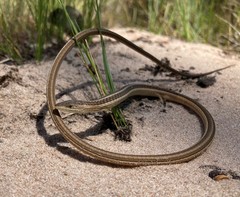
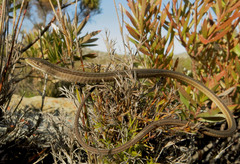
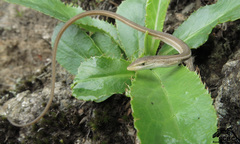
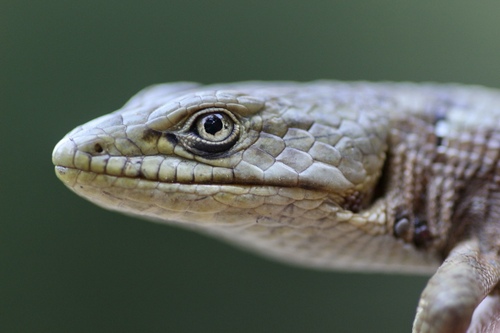
The Cape grass lizard (Chamaesaura anguina), also known as the Cape snake lizard or the highland grass lizard, is a species of lizard in the genus Chamaesaura. It widely found in southern Africa, inhabiting grasslands. In one of the countries it lives in, Eswatini, it is listed as a Near Threatened species.

The Cape grass lizard is ovoviviparous. A discovery has shown females are not breeding at the same time in a year. This lizard has three subspecies. The Cape grass lizard is widely distributed throughout the grasslands of southern Africa. It has been reported in South Africa, Eswatini, Angola, Kenya, Tanzania, Mozambique, the Republic of the Congo, and Uganda. The grasslands that the Cape grass lizard inhabit are often affected by wildfires.

The Cape grass lizard is ovoviviparous, meaning eggs will stay inside the mother until they are ready to hatch. The average clutch size is three to seventeen eggs. A discovery has revealed that females are breeding throughout the year. This adaptation is probably to prevent the total loss of reproductive gain in a year due to fire.

��2... Wikipedia →

Global Distribution

Parks Where Found

# Park Country Daily sighting probability
1 Garden Route National Park 🇿🇦 South Africa
~10%
2 Table Mountain National Park 🇿🇦 South Africa
<5%

Before you go

What are the chances of seeing a Cape Snake Lizard in Table Mountain National Park?

Rare

Under 5% of wildlife watchers report a Cape Snake Lizard sighting in Table Mountain National Park on a given day, based on 25 verified sightings from GBIF citizen-science data from 2019 to 2026. It is the 28th most-seen of the 41 reptiles we can rate there. Over three days the chance rises to about 10%, and over a week to about 30%, if each day is a fresh chance.

When is the best time to see a Cape Snake Lizard in Table Mountain National Park?

March, May, August and November–December

In those months about 10% of wildlife watchers report a Cape Snake Lizard in Table Mountain National Park on a given day, against under 5% in January–February, April, June–July and September–October, the lowest months.

What time of day is best to see a Cape Snake Lizard?

Between 10 am and 1 pm

Across all the parks we cover, that three-hour window holds the most Cape Snake Lizard sightings with a recorded time, and about 9 in 10 of them come between 6 am and 6 pm: it is a daytime animal.

Is Table Mountain National Park the best place to see a Cape Snake Lizard?

2nd of 2

Of the 2 parks where we can rate Cape Snake Lizard sightings, Table Mountain National Park ranks 2nd at under 5%. The best odds are in Garden Route National Park (South Africa, about 10%).

Which relatives of the Cape Snake Lizard live in Table Mountain National Park?

Same family: Cordylidae

The closest relatives of the Cape Snake Lizard that you can see in Table Mountain National Park (family Cordylidae, Girdle-tail Lizards) are Black Girdled Lizard (about 50%) and Cape Crag Lizard (about 10%), with each one's daily chance of a sighting.

Where does the Cape Snake Lizard sighting chance come from?

GBIF citizen-science records

It is estimated from how often the Cape Snake Lizard is recorded against all the reptiles logged in Table Mountain National Park (25 verified sightings from 2019 to 2026), calibrated against known sighting rates. Figures are rounded to the nearest 10% because citizen-science data supports honest approximations, not decimals, and months with records from fewer than five people show "—". How it works.

← Back to Table Mountain National Park