Black-headed Paradise-Flycatcher

Black-headed Paradise-Flycatcher

Terpsiphone rufiventer

Silhouette: PhyloPic

LCLeast ConcernNTVUENCR
Daily sighting probability ~30% · Possible
at Taï National Park

In 3 days ~70% in a week ~90%

18 Verified sightings at Taï National Park From 2019 to 2026
1,002 In all 6 parks
September Best month
☀️ Diurnal When it's spotted

About the Black-headed Paradise-Flycatcher

The red-bellied paradise flycatcher (Terpsiphone rufiventer), also known as the black-headed paradise flycatcher, is a medium-sized passerine bird of the family of monarch flycatchers. It is native to intra-tropical forests of Africa. The male bird is about 17 cm (7 in) long and has a black head, a mainly chestnut body, and a tail with streamers nearly twice as long as the body. The colouring is somewhat variable across the bird's range. Both females and juveniles lack the tail streamers and are a duller brown colour. It is closely related to the African paradise flycatcher, and the two can hybridise.

The red-bellied paradise flycatcher was formally described and illustrated in 1837 by the English zoologist William Swainson under the binomial name Muscipeta rufiventer. Although Swainson was describing birds from West Africa, the type locality has been restricted to Senegal. The specific epithet is Modern Latin meaning "red-bellied" from Latin rufus meaning "ruddy" or "rufous" and venter, ventris meaning "belly". The red-bellied paradise flycatcher is now one of 16 paradise flycatchers placed in the genus Terpsiphone that was introduced in 1827 by the German zoologist... Wikipedia →

Sounds

Call0:15

Ivory Coast · 2023

© Étienne Leroy · XC1161851 · CC BY-NC-SA 4.0

Song0:32

Sierra Leone · 2022

© Brendan Sloan · XC910039 · CC BY-NC-ND 4.0

Alarm call0:37

Ghana · 2023

© Alain Verneau · XC792190 · CC BY-NC-SA 4.0

Global Distribution

Parks Where Found

# Park Country Daily sighting probability
1 Semuliki National Park 🇺🇬 Uganda
~50%
2 Kibale National Park 🇺🇬 Uganda
~40%
3 Taï National Park 🇨🇮 Ivory Coast
~30%
4 Bwindi Impenetrable National Park 🇺🇬 Uganda
<5%
5 Queen Elizabeth National Park 🇺🇬 Uganda
<5%
6 Lake Mburo National Park 🇺🇬 Uganda
<5%

Cities Where Found

# City Country Daily sighting probability
1 Kampala 🇺🇬 Uganda
~20%
2 Serrekunda 🇬🇲 Gambia
~10%
3 Accra 🇬🇭 Ghana
<5%

Before you go

What are the chances of seeing a Black-headed Paradise-Flycatcher in Taï National Park?

Possible

About 30% of wildlife watchers report a Black-headed Paradise-Flycatcher sighting in Taï National Park on a given day, based on 18 verified sightings from GBIF citizen-science data from 2019 to 2026. It is the 7th most-seen of the 74 birds we can rate there. Over three days the chance rises to about 70%, and over a week to about 90%, if each day is a fresh chance.

What time of day is best to see a Black-headed Paradise-Flycatcher?

Between 3 and 6 pm

Across all the parks we cover, that three-hour window holds the most Black-headed Paradise-Flycatcher sightings with a recorded time, and about 9 in 10 of them come between 6 am and 6 pm: it is a daytime animal.

Is Taï National Park the best place to see a Black-headed Paradise-Flycatcher?

3rd of 6

Of the 6 parks where we can rate Black-headed Paradise-Flycatcher sightings, Taï National Park ranks 3rd at about 30%. The best odds are in Semuliki National Park (Uganda, about 50%) and Kibale National Park (Uganda, about 40%).

Which relatives of the Black-headed Paradise-Flycatcher live in Taï National Park?

Same order: Passeriformes

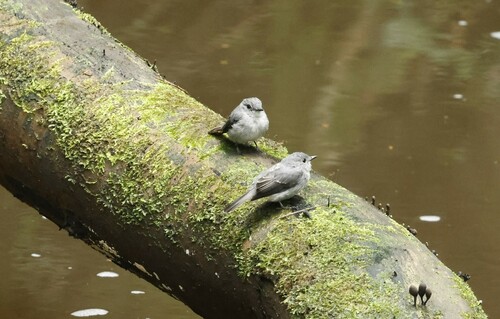
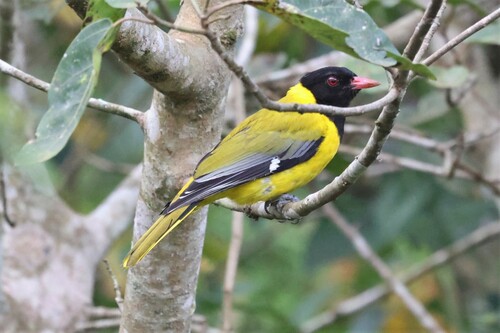
The closest relatives of the Black-headed Paradise-Flycatcher that you can see in Taï National Park (order Passeriformes, Perching Birds) are Cassin's Flycatcher (about 20%), Western Black-headed Oriole (about 20%) and Little Greenbul (about 20%), with each one's daily chance of a sighting.

Where does the Black-headed Paradise-Flycatcher sighting chance come from?

GBIF citizen-science records

It is estimated from how often the Black-headed Paradise-Flycatcher is recorded against all the birds logged in Taï National Park (18 verified sightings from 2019 to 2026), calibrated against known sighting rates. Figures are rounded to the nearest 10% because citizen-science data supports honest approximations, not decimals, and months with records from fewer than five people show "—". How it works.

← Back to Taï National Park