


Completed



Lar Gibbon
Hylobates lar
Silhouette: Kai R. Caspar · PhyloPic
- KingdomAnimalia (Animals)
- PhylumChordata (Chordates)
- ClassMammalia (Mammals)
- OrderPrimates
- FamilyHylobatidae (Gibbons)
- GenusHylobates (Dwarf Gibbons)
- SpeciesHylobates lar (Lar Gibbon)
In 3 days ~70% in a week ~90%
27 Verified sightings at Taman Negara National Park From 2019 to 2026
738 In all 5 parks
August Best month
☀️ Diurnal When it's spotted
About the Lar Gibbon
The lar gibbon (Hylobates lar), also known as the white-handed gibbon, is an endangered primate in the gibbon family, Hylobatidae. It is one of the better-known gibbons and is often kept in captivity. There are five subspecies of lar gibbon:
Yunnan lar gibbon (H. l. yunnanensis) (possibly extinct) The fur coloring of the lar gibbon varies from black and dark-brown to light-brown, sandy colors. The hands and feet are white-colored, likewise a ring of white hair surrounds the black face. Both males and females can be all color variants, and the sexes also hardly differ in size. Gibbons are true brachiators, propelling themselves through the forest by swinging under the branches using their arms. Reflecting this mode of locomotion, the white-handed gibbon has curved fingers, elongated hands, extremely long arms and relatively short legs, giving it an intermembral index of 129.7, one of the highest of the primates. As with all apes, the number of caudal vertebrae has been reduced drastically, resulting... Wikipedia →
Recent sightings of Lar Gibbon in Taman Negara National Park
LIVEiNaturalistGlobal Distribution
Parks Where Found
| # | Park | Country | Daily sighting probability |
|---|---|---|---|
| 1 | Khao Yai National Park | 🇹🇭 Thailand | |
| 2 | Kaeng Krachan National Park | 🇹🇭 Thailand | |
| 3 | Gunung Leuser National Park | 🇮🇩 Indonesia | |
| 4 | Taman Negara National Park | 🇲🇾 Malaysia | |
| 5 | Khao Sok National Park | 🇹🇭 Thailand |
Zoos & Centres Where Found
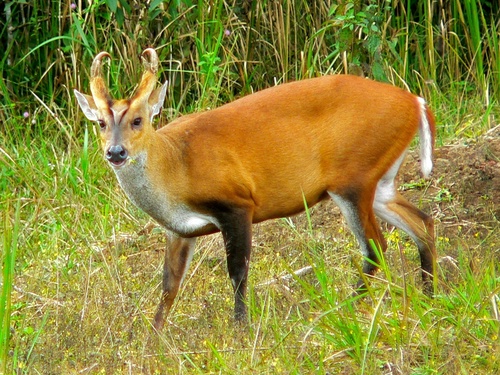
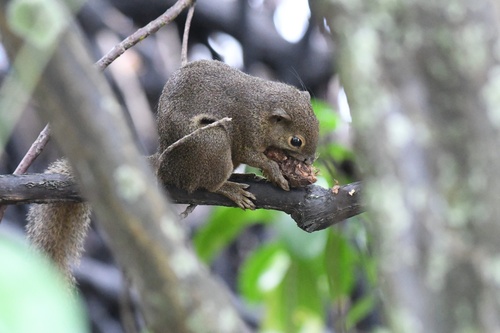
Closest Relatives at Taman Negara National Park






Before you go
What are the chances of seeing a Lar Gibbon in Taman Negara National Park?
Possible
About 30% of wildlife watchers report a Lar Gibbon sighting in Taman Negara National Park on a given day, based on 27 verified sightings from GBIF citizen-science data from 2019 to 2026. It is the 5th most-seen of the 22 mammals we can rate there. Over three days the chance rises to about 70%, and over a week to about 90%, if each day is a fresh chance.
When is the best time to see a Lar Gibbon in Taman Negara National Park?
August and October
In those months about 50% of wildlife watchers report a Lar Gibbon in Taman Negara National Park on a given day, against under 5% in December and January, the lowest months.
What time of day is best to see a Lar Gibbon?
Between 8 and 11 am
Across all the parks we cover, that three-hour window holds the most Lar Gibbon sightings with a recorded time, and about 8 in 10 of them come between 6 am and 6 pm: it is a daytime animal.
Is Taman Negara National Park the best place to see a Lar Gibbon?
4th of 5
Of the 5 parks where we can rate Lar Gibbon sightings, Taman Negara National Park ranks 4th at about 30%. The best odds are in Khao Yai National Park (Thailand, about 70%), Kaeng Krachan National Park (Thailand, about 50%) and Gunung Leuser National Park (Indonesia, about 40%). All parks ranked.
Which relatives of the Lar Gibbon live in Taman Negara National Park?
Same order: Primates
The closest relatives of the Lar Gibbon that you can see in Taman Negara National Park (order Primates) are Crab-eating Macaque (about 60%), Dusky Leaf-monkey (about 30%) and White-thighed Surili (about 30%), with each one's daily chance of a sighting.
Where does the Lar Gibbon sighting chance come from?
GBIF citizen-science records
It is estimated from how often the Lar Gibbon is recorded against all the mammals logged in Taman Negara National Park (27 verified sightings from 2019 to 2026), calibrated against known sighting rates. Figures are rounded to the nearest 10% because citizen-science data supports honest approximations, not decimals, and months with records from fewer than five people show "—". How it works.
