


Completed

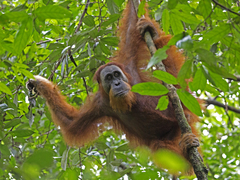


Sumatran Orangutan
Pongo abelii
Silhouette: Gareth Monger · PhyloPic
- KingdomAnimalia (Animals)
- PhylumChordata (Chordates)
- ClassMammalia (Mammals)
- OrderPrimates
- FamilyHominidae (Great Apes)
- GenusPongo (Orangutans)
- SpeciesPongo abelii (Sumatran Orangutan)
In 3 days >90%
354 Verified sightings at Gunung Leuser National Park From 2019 to 2026
354 In 1 park
June Best month
☀️ Diurnal When it's spotted





About the Sumatran Orangutan
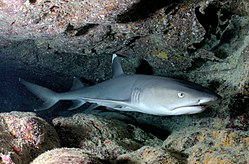
The Sumatran orangutan (Pongo abelii) is one of the three species of orangutans. Critically endangered, and found only in the north of the Indonesian island of Sumatra, it is rarer than the Bornean orangutan but more common than the recently identified Tapanuli orangutan, also found in Sumatra.
Male Sumatran orangutans grow to about 1.7 m (5.6 ft) tall and 90 kg (200 lb), while females are smaller, averaging 90 cm (3.0 ft) and 45 kg (99 lb). Compared to the Bornean species, Sumatran orangutans are thinner and have longer faces; their hair is longer and has a paler red color.
Fossil orangutans in Sumatra from the Pleistocene had similar diets to present day Sumatran orangutans, consisting mainly of soft fruit as evidenced by dental microwear. Compared with the Bornean orangutan, the Sumatran orangutan tends to be more frugivorous and especially insectivorous. Preferred fruits include figs and jackfruits. It will also eat bird eggs and small vertebrates. Sumatran orangutans spend far less time feeding on the inner bark of trees.
Wild Sumatran orangutans in the Suaq Balimbing swamp have been observed using tools. An orangutan... Wikipedia →
Recent sightings of Sumatran Orangutan in Gunung Leuser National Park
LIVEiNaturalistGlobal Distribution
Parks Where Found
| # | Park | Country | Daily sighting probability |
|---|---|---|---|
| 1 | Gunung Leuser National Park | 🇮🇩 Indonesia |
More parks will be added in future updates.
Zoos & Centres Where Found
| # | Zoo / Centre | Country | |
|---|---|---|---|
| 1 | San Diego Zoo | 🇺🇸 United States | |
| 2 | Pairi Daiza | 🇧🇪 Belgium | |
| 3 | Basel Zoo | 🇨🇭 Switzerland | |
| 4 | Denver Zoo | 🇺🇸 United States | |
| 5 | Cincinnati Zoo and Botanical Garden | 🇺🇸 United States | |
| 6 | Lisbon Oceanarium | 🇵🇹 Portugal | |
| 7 | Dvůr Králové Zoo | 🇨🇿 Czechia | |
| 8 | výzkumný chov jelenů | 🇨🇿 Czechia | |
| 9 | San Diego Zoo Safari Park | 🇺🇸 United States | |
| 10 | Taman Safari Indonesia | 🇮🇩 Indonesia | |
| 11 | Toronto Zoo | 🇨🇦 Canada | |
| 12 | Columbus Zoo and Aquarium | 🇺🇸 United States | |
| 13 | 西霞口神雕山野生動物世界 | 🇨🇳 China | |
| 14 | Shanghai Zoo | 🇨🇳 China | |
| 15 | Sedgwick County Zoo | 🇺🇸 United States | |
| 16 | Chester Zoo | 🇬🇧 United Kingdom | |
| 17 | Safari World | 🇹🇭 Thailand | |
| 18 | Cheyenne Mountain Zoo | 🇺🇸 United States | |
| 19 | Birmingham Zoo | 🇺🇸 United States | |
| 20 | Leofoo Village Theme Park | 🇹🇼 Taiwan | |
| 21 | Louisville Zoo | 🇺🇸 United States | |
| 22 | Audubon Zoo | 🇺🇸 United States | |
| 23 | Oklahoma City Zoo and Botanical Garden | 🇺🇸 United States | |
| 24 | Saint Louis Zoo | 🇺🇸 United States | |
| 25 | ABQ BioPark: Zoo, Aquarium, Botanic Garden | 🇺🇸 United States | |
| 26 | Woodland Park Zoo | 🇺🇸 United States | |
| 27 | National Zoo of Malaysia | 🇲🇾 Malaysia | |
| 28 | Fort Worth Zoo | 🇺🇸 United States | |
| 29 | Indianapolis Zoo | 🇺🇸 United States | |
| 30 | Memphis Zoo | 🇺🇸 United States | |
| 31 | Fort Wayne Children's Zoo | 🇺🇸 United States | |
| 32 | Melbourne Zoo | 🇦🇺 Australia | |
| 33 | Gembira Loka Zoo | 🇮🇩 Indonesia | |
| 34 | Langenberg Wildlife Park | 🇨🇭 Switzerland | |
| 35 | Fresno Chaffee Zoo | 🇺🇸 United States | |
| 36 | Zoo Atlanta | 🇺🇸 United States | |
| 37 | Central Park Zoo & Resort | 🇮🇩 Indonesia | |
| 38 | Łódź Zoo | 🇵🇱 Poland | |
| 39 | Jersey Zoo | 🇯🇪 Jersey | |
| 40 | Зоопарк ХІІ Місяців | 🇺🇦 Ukraine | |
| 41 | Bandung Zoo | 🇮🇩 Indonesia | |
| 42 | El Paso Zoo | 🇺🇸 United States | |
| 43 | Apenheul Primate Park | 🇳🇱 Netherlands | |
| 44 | Gladys Porter Zoo | 🇺🇸 United States | |
| 45 | Sydney Zoo | 🇦🇺 Australia | |
| 46 | Topeka Zoo | 🇺🇸 United States | |
| 47 | Kebon Kewan Semarang | 🇮🇩 Indonesia | |
| 48 | Touroparc Zoo | 🇫🇷 France | |
| 49 | Sacramento Zoo | 🇺🇸 United States | |
| 50 | Santillana Zoo | 🇪🇸 Spain |
Closest Relatives at Gunung Leuser National Park






Before you go
What are the chances of seeing a Sumatran Orangutan in Gunung Leuser National Park?
Very likely
About 80% of wildlife watchers report a Sumatran Orangutan sighting in Gunung Leuser National Park on a given day, based on 354 verified sightings from GBIF citizen-science data from 2019 to 2026. It is the most-seen of the 19 mammals we can rate there. Over three days the chance rises to over 90%, if each day is a fresh chance.
When is the best time to see a Sumatran Orangutan in Gunung Leuser National Park?
January, April–July and September
In those months about 90% of wildlife watchers report a Sumatran Orangutan in Gunung Leuser National Park on a given day, against about 70% in October, the lowest month.
What time of day is best to see a Sumatran Orangutan?
Between 10 am and 1 pm
Across all the parks we cover, that three-hour window holds the most Sumatran Orangutan sightings with a recorded time, and about 8 in 10 of them come between 6 am and 6 pm: it is a daytime animal.
Where else can you see a Sumatran Orangutan?
Only Gunung Leuser National Park, in our data
Gunung Leuser National Park is the only park on Wallace's Line with enough records to rate Sumatran Orangutan sightings: about 80% of wildlife watchers there report one on a given day.
Which relatives of the Sumatran Orangutan live in Gunung Leuser National Park?
Same order: Primates
The closest relatives of the Sumatran Orangutan that you can see in Gunung Leuser National Park (order Primates) are Thomas’s Langur (about 80%), Crab-eating Macaque (about 70%) and Southern Pig-tailed Macaque (about 60%), with each one's daily chance of a sighting.
Where does the Sumatran Orangutan sighting chance come from?
GBIF citizen-science records
It is estimated from how often the Sumatran Orangutan is recorded against all the mammals logged in Gunung Leuser National Park (354 verified sightings from 2019 to 2026), calibrated against known sighting rates. Figures are rounded to the nearest 10% because citizen-science data supports honest approximations, not decimals, and months with records from fewer than five people show "—". How it works.
