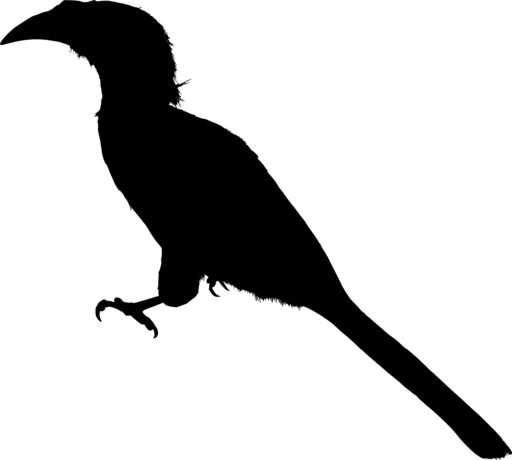
Knobbed Hornbill

Knobbed Hornbill

Rhyticeros cassidix

Silhouette: Charles J. Sharp and T. Michael Keesey · PhyloPic

LCNTVUVulnerableENCR Endemic
Daily sighting probability ~70% · Very likely
at Tangkoko Nature Reserve

In 3 days >90%

812 Verified sightings at Tangkoko Nature Reserve From 2019 to 2026
812 In 1 park
September Best month
☀️ Diurnal When it's spotted

About the Knobbed Hornbill

The knobbed hornbill (Rhyticeros cassidix), also known as Sulawesi wrinkled hornbill, is a colourful hornbill native to Indonesia. The species is sometimes placed in the genus Aceros. The knobbed hornbill is the faunal symbol of South Sulawesi province.

The knobbed hornbill is a large black hornbill with a yellow bill, white tail feathers, pale blue skin around eye, blackish feet and bare dark blue throat. Like other hornbills, the species is sexually dimorphic. The male has a rufous/buff face and neck, orange-red eyes, and a high red casque on the top of his bill. The female has a black face and neck, a yellow casque, and brownish eyes.

An Indonesian endemic, the knobbed hornbill is found in Sulawesi, Buton, Lembeh, Togian and Muna Island. It inhabits evergreen forest at an elevation of up to 1,800 m and also makes use of secondary forest, woodland and plantations for foraging.

As with other hornbills, the knobbed hornbill is believed to be monogamous. Its diet consists mainly of fruits, but it will also take insects and small vertebrates. Breeding season spans 27–30 weeks and appears to be triggered by a dramatic reduction... Wikipedia →

Sounds

Call0:38

Indonesia · 1997

© Teus Luijendijk · XC611787 · CC BY-NC-ND 4.0

Flight call0:39

Indonesia · 2011

© Frank Lambert · XC89759 · CC BY-NC-ND 4.0

Call0:12

Indonesia · 2018

© Marc Anderson · XC415136 · CC BY-NC-ND 4.0

Global Distribution

Parks Where Found

# Park Country Daily sighting probability
1 Tangkoko Nature Reserve 🇮🇩 Indonesia
~70%

More parks will be added in future updates.

Zoos & Centres Where Found

# Zoo / Centre Country
1 Busch Gardens Tampa 🇺🇸 United States In captivity
2 SeaWorld San Diego 🇺🇸 United States In captivity
3 Walsrode World Bird Park 🇩🇪 Germany In captivity
4 Minnesota Zoo 🇺🇸 United States In captivity
5 Bronx Zoo 🇺🇸 United States In captivity
6 St. Augustine Alligator Farm Zoological Park 🇺🇸 United States In captivity
7 Johor Zoo 🇲🇾 Malaysia In captivity
8 Sunken Gardens 🇺🇸 United States In captivity
9 Bangkok Aquarium 🇹🇭 Thailand In captivity
10 Batu Secret Zoo 🇮🇩 Indonesia In captivity
11 Lembang Park & Zoo 🇮🇩 Indonesia In captivity
12 Vogelpark Bali 🇮🇩 Indonesia In captivity

Before you go

What are the chances of seeing a Knobbed Hornbill in Tangkoko Nature Reserve?

Very likely

About 70% of wildlife watchers report a Knobbed Hornbill sighting in Tangkoko Nature Reserve on a given day, based on 812 verified sightings from GBIF citizen-science data from 2019 to 2026. It is the 4th most-seen of the 138 birds we can rate there. Over three days the chance rises to over 90%, if each day is a fresh chance.

When is the best time to see a Knobbed Hornbill in Tangkoko Nature Reserve?

July and September

In those months about 80% of wildlife watchers report a Knobbed Hornbill in Tangkoko Nature Reserve on a given day, against about 50% in November and December, the lowest months.

What time of day is best to see a Knobbed Hornbill?

Between 7 and 10 am

Across all the parks we cover, that three-hour window holds the most Knobbed Hornbill sightings with a recorded time, and about 8 in 10 of them come between 6 am and 6 pm: it is a daytime animal.

Where else can you see a Knobbed Hornbill?

Only Tangkoko Nature Reserve, in our data

Tangkoko Nature Reserve is the only park on Wallace's Line with enough records to rate Knobbed Hornbill sightings: about 70% of wildlife watchers there report one on a given day.

Where does the Knobbed Hornbill sighting chance come from?

GBIF citizen-science records

It is estimated from how often the Knobbed Hornbill is recorded against all the birds logged in Tangkoko Nature Reserve (812 verified sightings from 2019 to 2026), calibrated against known sighting rates. Figures are rounded to the nearest 10% because citizen-science data supports honest approximations, not decimals, and months with records from fewer than five people show "—". How it works.

← Back to Tangkoko Nature Reserve