



Completed

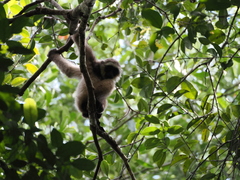

Bornean White-bearded Gibbon
Hylobates albibarbis
Silhouette: Kai R. Caspar · PhyloPic
- KingdomAnimalia (Animals)
- PhylumChordata (Chordates)
- ClassMammalia (Mammals)
- OrderPrimates
- FamilyHylobatidae (Gibbons)
- GenusHylobates (Dwarf Gibbons)
- SpeciesHylobates albibarbis (Bornean White-bearded Gibbon)
In 3 days ~90% in a week >90%
33 Verified sightings at Tanjung Puting National Park From 2019 to 2026
33 In 1 park
December Best month
☀️🌙 Day & Night When it's spotted
About the Bornean White-bearded Gibbon
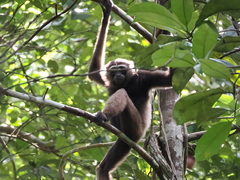
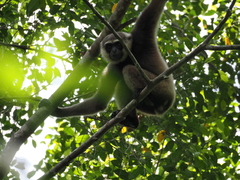
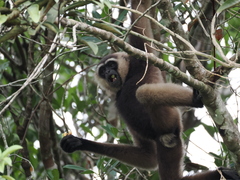
The Bornean white-bearded gibbon (Hylobates albibarbis), also known as the Bornean agile gibbon or southern gibbon, is a species of gibbon endemic to southern Borneo. It is an endangered species, due to the ongoing logging of tropical forests between the Kapuas and Barito rivers. Additional issues of concern to the endangerment of white-bearded gibbons also threaten other arboreal primates.
The white-bearded gibbon is very similar to other gibbons in their behaviour and their frugivorous diet. The Bornean white-bearded gibbon was formerly considered a subspecies of the agile gibbon but based on recent DNA research, some now classify it as a separate species.
The Bornean white-bearded gibbon is commonly seen with grey or dark brown fur, a black face, and white beard. Similar to other gibbons, these gibbons are a smaller ape that is tailless. They tend to live in small family groups consisting of a male, female, and their offspring. They express pair-bonding relationships and they do not make nests. Their mode of transportation is called brachiation, where they swing from branches to get around. They have been documented to swing up to 15 meters (49... Wikipedia →
Sounds
Begging call0:06
Indonesia · 2024
© yasinchumaedi · XC1099340 · CC BY-NC-SA 4.0
Recording0:12
Indonesia · 2025
© Hugo Cleenewerck · iNaturalist · CC BY-NC 4.0
Recent sightings of Bornean White-bearded Gibbon in Tanjung Puting National Park
LIVEiNaturalistGlobal Distribution
Parks Where Found
| # | Park | Country | Daily sighting probability |
|---|---|---|---|
| 1 | Tanjung Puting National Park | 🇮🇩 Indonesia |
More parks will be added in future updates.
Closest Relatives at Tanjung Puting National Park






Before you go
What are the chances of seeing a Bornean White-bearded Gibbon in Tanjung Puting National Park?
Likely
About 60% of wildlife watchers report a Bornean White-bearded Gibbon sighting in Tanjung Puting National Park on a given day, based on 33 verified sightings from GBIF citizen-science data from 2019 to 2026. It is the 4th most-seen of the 9 mammals we can rate there. Over three days the chance rises to about 90%, and over a week to over 90%, if each day is a fresh chance.
When is the best time to see a Bornean White-bearded Gibbon in Tanjung Puting National Park?
December
In that month about 80% of wildlife watchers report a Bornean White-bearded Gibbon in Tanjung Puting National Park on a given day, against about 20% in February and November, the lowest months.
What time of day is best to see a Bornean White-bearded Gibbon?
Between 1 and 4 pm
Across all the parks we cover, that three-hour window holds the most Bornean White-bearded Gibbon sightings with a recorded time, and about 7 in 10 of them come between 6 am and 6 pm: it is seen both by day and at night.
Where else can you see a Bornean White-bearded Gibbon?
Only Tanjung Puting National Park, in our data
Tanjung Puting National Park is the only park on Wallace's Line with enough records to rate Bornean White-bearded Gibbon sightings: about 60% of wildlife watchers there report one on a given day.
Which relatives of the Bornean White-bearded Gibbon live in Tanjung Puting National Park?
Same order: Primates
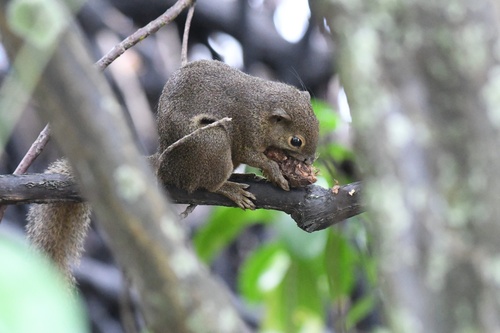
The closest relatives of the Bornean White-bearded Gibbon that you can see in Tanjung Puting National Park (order Primates) are Bornean Orangutan (about 80%), Proboscis Monkey (about 80%) and Crab-eating Macaque (about 70%), with each one's daily chance of a sighting.
Where does the Bornean White-bearded Gibbon sighting chance come from?
GBIF citizen-science records
It is estimated from how often the Bornean White-bearded Gibbon is recorded against all the mammals logged in Tanjung Puting National Park (33 verified sightings from 2019 to 2026), calibrated against known sighting rates. Figures are rounded to the nearest 10% because citizen-science data supports honest approximations, not decimals, and months with records from fewer than five people show "—". How it works.
