


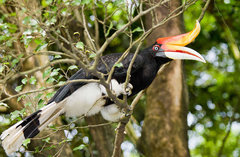

Completed


Proboscis Monkey
Nasalis larvatus
Silhouette: PhyloPic
- KingdomAnimalia (Animals)
- PhylumChordata (Chordates)
- ClassMammalia (Mammals)
- OrderPrimates
- FamilyCercopithecidae (Old World Monkeys)
- GenusNasalis (Proboscis Monkeys)
- SpeciesNasalis larvatus (Proboscis Monkey)
In 3 days >90%
130 Verified sightings at Tanjung Puting National Park From 2019 to 2026
1,357 In all 4 parks
July Best month
🌅 Crepuscular When it's spotted
About the Proboscis Monkey
The proboscis monkey or long-nosed monkey (Nasalis larvatus) is an arboreal Old World monkey with an unusually large nose (or proboscis), a reddish-brown skin color and a long tail. It is endemic to the Southeast Asian island of Borneo and is found mostly in mangrove forests and on the coastal areas of the island.
This species co-exists with the Bornean orangutan and monkeys such as the silvery lutung. It belongs in the monotypic genus Nasalis. The proboscis monkey belongs to the subfamily Colobinae of the Old World monkeys. However, the difference between the subspecies is small, and not all authorities recognise N. l. orientalis.
The genus name Nasalis comes from the Latin word nasus meaning "nose". This animal was made known to Westerners by Baron Friedrich von Wurmb in 1781, he later sent specimens of it to Stamford Raffles in Europe. The proboscis monkey is a large species, being one of the largest monkey species native to Asia. Only the Tibetan macaque... Wikipedia →
Recent sightings of Proboscis Monkey in Tanjung Puting National Park
LIVEiNaturalistGlobal Distribution
Parks Where Found
| # | Park | Country | Daily sighting probability |
|---|---|---|---|
| 1 | Tanjung Puting National Park | 🇮🇩 Indonesia | |
| 2 | Kinabatangan Wildlife Sanctuary | 🇲🇾 Malaysia | |
| 3 | Bako National Park | 🇲🇾 Malaysia | |
| 4 | Sepilok | 🇲🇾 Malaysia |
Zoos & Centres Where Found
| # | Zoo / Centre | Country | |
|---|---|---|---|
| 1 | Taman Safari Bali (Bali Safari) | 🇮🇩 Indonesia | |
| 2 | Sepilok Orang Utan Rehabilitation Centre | 🇲🇾 Malaysia | |
| 3 | Bronx Zoo | 🇺🇸 United States | |
| 4 | Chimelong Safari Park | 🇨🇳 China | |
| 5 | Lok Kawi Wildlife Park | 🇲🇾 Malaysia | |
| 6 | Surabaya Zoo | 🇮🇩 Indonesia | |
| 7 | Johor Zoo | 🇲🇾 Malaysia | |
| 8 | Taman Safari Indonesia 2 | 🇮🇩 Indonesia | |
| 9 | The Green Connection | 🇲🇾 Malaysia |
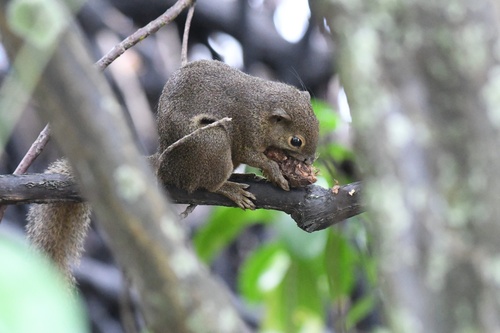
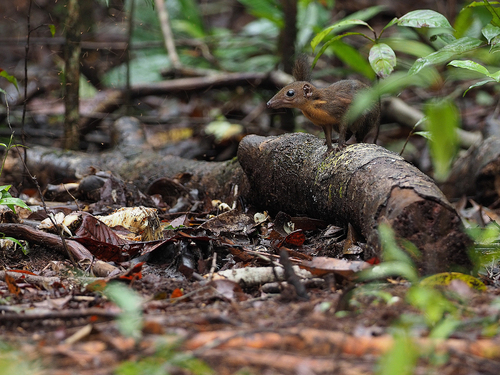
Closest Relatives at Tanjung Puting National Park






Before you go
What are the chances of seeing a Proboscis Monkey in Tanjung Puting National Park?
Very likely
About 80% of wildlife watchers report a Proboscis Monkey sighting in Tanjung Puting National Park on a given day, based on 130 verified sightings from GBIF citizen-science data from 2019 to 2026. It is the 2nd most-seen of the 9 mammals we can rate there. Over three days the chance rises to over 90%, if each day is a fresh chance.
When is the best time to see a Proboscis Monkey in Tanjung Puting National Park?
April, July and November
In those months about 90% of wildlife watchers report a Proboscis Monkey in Tanjung Puting National Park on a given day, against about 60% in December, the lowest month.
What time of day is best to see a Proboscis Monkey?
Between 10 am and 1 pm
Across all the parks we cover, that three-hour window holds the most Proboscis Monkey sightings with a recorded time, and about 6 in 10 of them come between 6 am and 6 pm: it is most active around dawn and dusk.
Is Tanjung Puting National Park the best place to see a Proboscis Monkey?
Yes
Of the 4 parks where we can rate Proboscis Monkey sightings, Tanjung Puting National Park has the highest daily chance: about 80%. Next come Kinabatangan Wildlife Sanctuary (Malaysia, about 80%) and Bako National Park (Malaysia, about 80%). All parks ranked.
Which relatives of the Proboscis Monkey live in Tanjung Puting National Park?
Same family: Cercopithecidae
The closest relatives of the Proboscis Monkey that you can see in Tanjung Puting National Park (family Cercopithecidae, Old World Monkeys) are Crab-eating Macaque (about 70%) and Silvered Leaf Monkey (about 40%), with each one's daily chance of a sighting.
Where does the Proboscis Monkey sighting chance come from?
GBIF citizen-science records
It is estimated from how often the Proboscis Monkey is recorded against all the mammals logged in Tanjung Puting National Park (130 verified sightings from 2019 to 2026), calibrated against known sighting rates. Figures are rounded to the nearest 10% because citizen-science data supports honest approximations, not decimals, and months with records from fewer than five people show "—". How it works.
