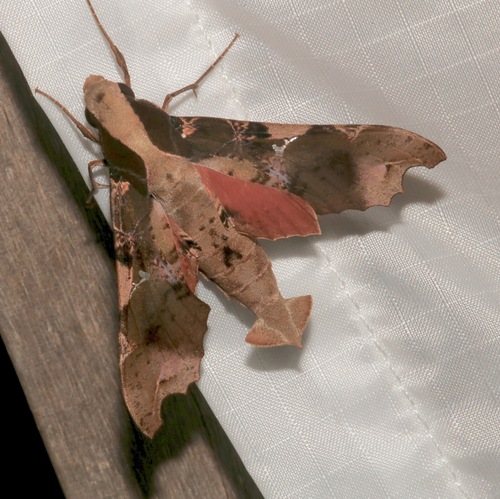
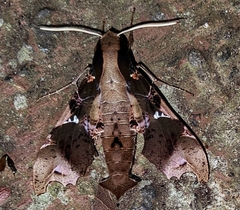
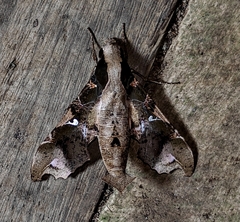
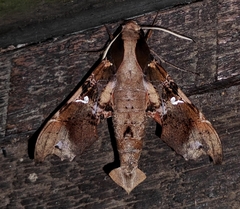
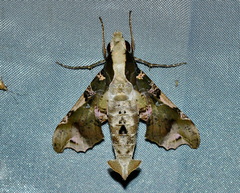
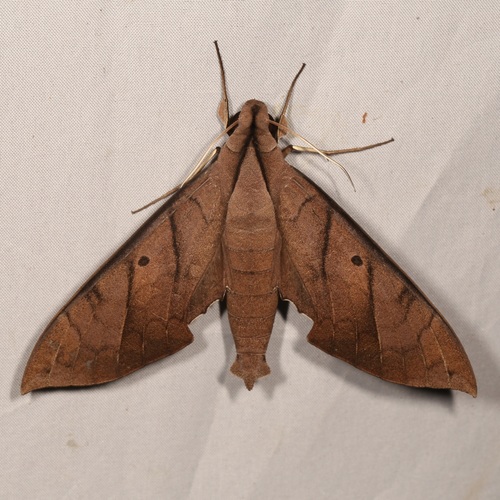
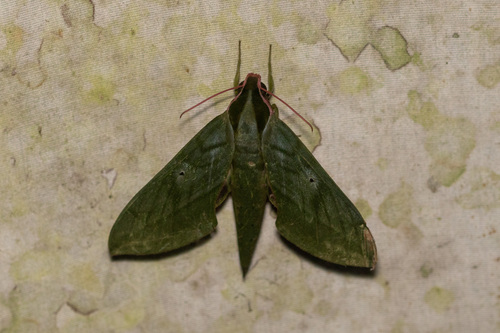
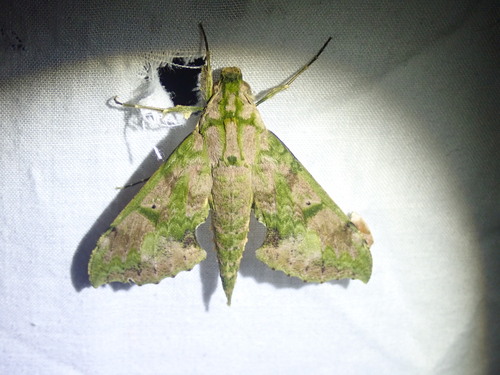
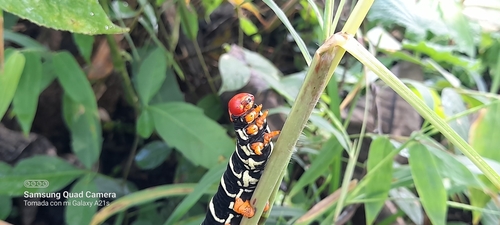
Callionima denticulata

Callionima denticulata

Callionima denticulata

Daily sighting probability ~10% · With luck
at Tapantí-Macizo de la Muerte National Park

In 3 days ~10% in a week ~30%

6 Verified sightings at Tapantí-Macizo de la Muerte National Park From 2019 to 2026
19 In all 2 parks
March Best month
🌙 Nocturnal When it's spotted

About the Callionima denticulata

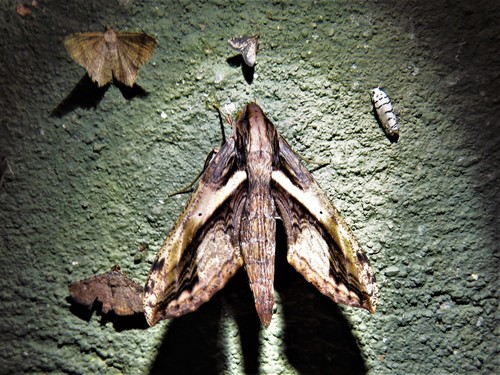
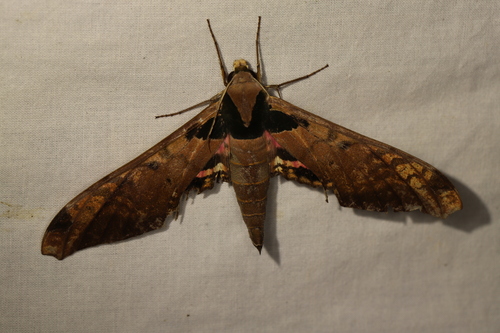
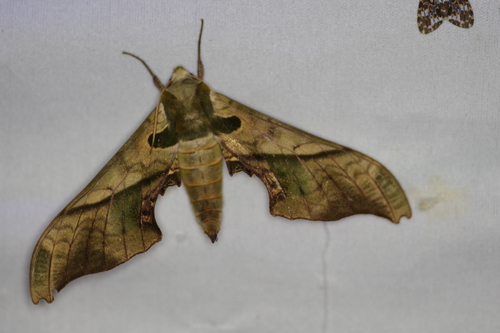
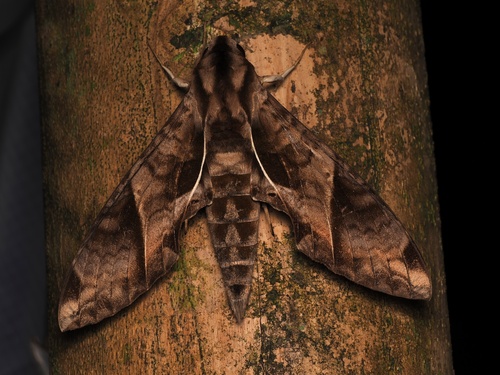
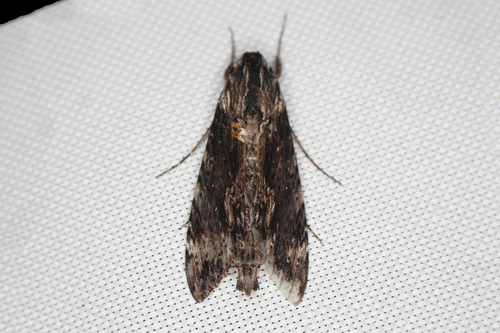
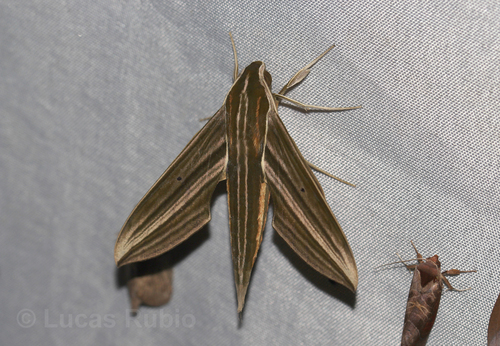
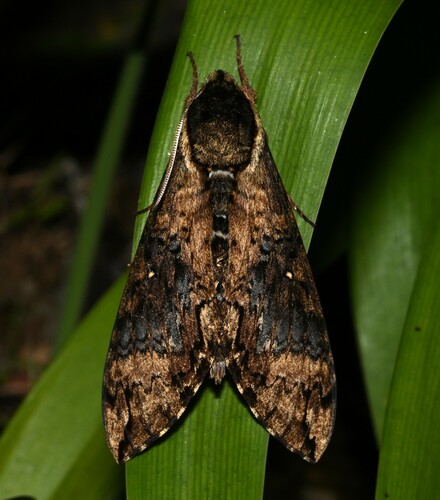
Callionima denticulata is a species of moth in the family Sphingidae, which is known from Panama, Mexico, Costa Rica, Nicaragua, Bolivia, Peru and western Venezuela. It was originally described by Schaus as Calliomma denticulata, in 1895.

The wingspan is 59–72 mm. Adults are on wing year round in Costa Rica. It is extremely similar to Callionima pan pan, but the forewing apex is strongly truncate, the outer margin strongly excavate below the apex and markedly dentate. The basal half of the forewing underside is distinctly orange, contrasting with the greyish-brown distal part. The hindwing upperside is as in Callionima pan pan, but the black anal spot is at least 1.5 mm wide.

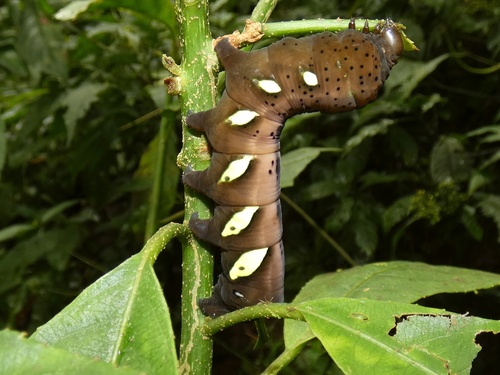
The larvae feed on Tabernaemontana alba and probably other Apocynaceae species. They are green with reddish orange spiracles and a longitudinal, dotted black line down the back and an orange, thick anal horn. Wikipedia →

Global Distribution

Parks Where Found

# Park Country Daily sighting probability
1 Monteverde Cloud Forest Reserve 🇨🇷 Costa Rica
~10%
2 Tapantí-Macizo de la Muerte National Park 🇨🇷 Costa Rica
~10%

Before you go

What are the chances of seeing a Callionima denticulata in Tapantí-Macizo de la Muerte National Park?

With luck

About 10% of wildlife watchers report a Callionima denticulata sighting in Tapantí-Macizo de la Muerte National Park on a given day, based on 6 verified sightings from GBIF citizen-science data from 2019 to 2026. It is the 158th most-seen of the 187 insects we can rate there. Over three days the chance rises to about 10%, and over a week to about 30%, if each day is a fresh chance.

When is the best time to see a Callionima denticulata in Tapantí-Macizo de la Muerte National Park?

February and March

In those months about 10% of wildlife watchers report a Callionima denticulata in Tapantí-Macizo de la Muerte National Park on a given day, against under 5% in April to January, the lowest months. Those are among Tapantí-Macizo de la Muerte National Park's driest months, with about 170 mm of rain a month against 570 mm in October.

What time of day is best to see a Callionima denticulata?

Between 6 and 9 pm

Across all the parks we cover, that three-hour window holds the most Callionima denticulata sightings with a recorded time, and about 9 in 10 of them come between 6 pm and 6 am: it is mostly seen at night.

Is Tapantí-Macizo de la Muerte National Park the best place to see a Callionima denticulata?

Among the best

Of the 2 parks where we can rate Callionima denticulata sightings, Tapantí-Macizo de la Muerte National Park ranks 2nd at about 10%, level with the leaders once rounded. The best odds are in Monteverde Cloud Forest Reserve (Costa Rica, about 10%).

Which relatives of the Callionima denticulata live in Tapantí-Macizo de la Muerte National Park?

Same family: Sphingidae

The closest relatives of the Callionima denticulata that you can see in Tapantí-Macizo de la Muerte National Park (family Sphingidae, Sphinx Moths) are Darceta Sphinx (about 10%), Xylophanes belti (about 10%) and Xylophanes zurcheri (about 10%), with each one's daily chance of a sighting.

Where does the Callionima denticulata sighting chance come from?

GBIF citizen-science records

It is estimated from how often the Callionima denticulata is recorded against all the insects logged in Tapantí-Macizo de la Muerte National Park (6 verified sightings from 2019 to 2026), calibrated against known sighting rates. Figures are rounded to the nearest 10% because citizen-science data supports honest approximations, not decimals, and months with records from fewer than five people show "—". How it works.

← Back to Tapantí-Macizo de la Muerte National Park