Tetrio Sphinx

Tetrio Sphinx

Pseudosphinx tetrio

Daily sighting probability ~10% · With luck
at Tapantí-Macizo de la Muerte National Park

In 3 days ~20% in a week ~40%

11 Verified sightings at Tapantí-Macizo de la Muerte National Park From 2019 to 2026
196 In all 18 parks
February Best month
☀️ Diurnal When it's spotted

About the Tetrio Sphinx

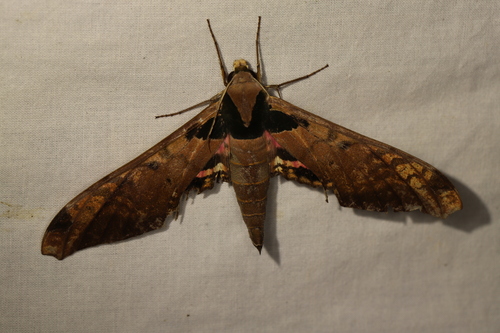
Pseudosphinx is a monotypic genus of moth in the family Sphingidae first described by Hermann Burmeister in 1856. Its only species, Pseudosphinx tetrio, was first described by Carl Linnaeus in 1771. Its common names include tetrio sphinx, giant gray sphinx, frangipani hornworm, and plumeria caterpillar. In the island of Martinique it is best known as Rasta caterpillar (chenille rasta, in French) because of its colors which are reminiscent of the ones found in Rastafarian clothing and accessories. It is native to the tropical and subtropical Americas from the southern and southwestern United States to Brazil. The occasional individual has been recorded as far north as the northeastern United States.

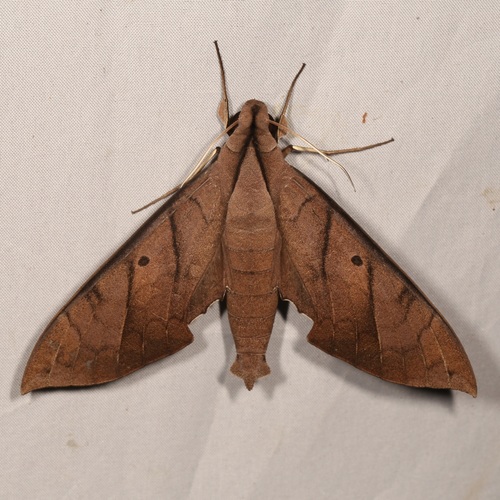
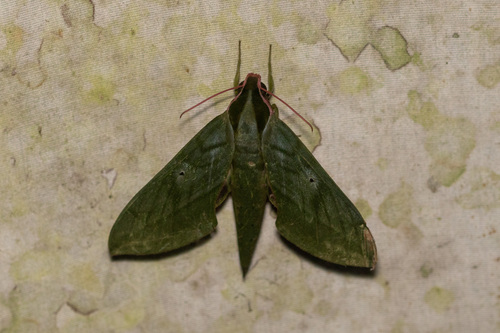
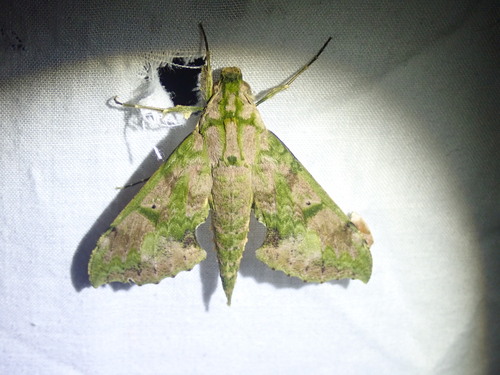
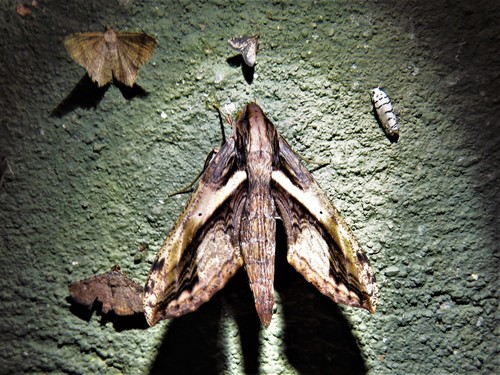
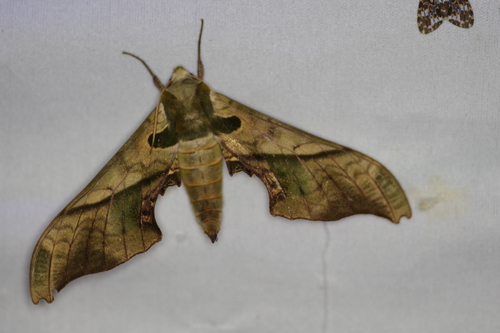
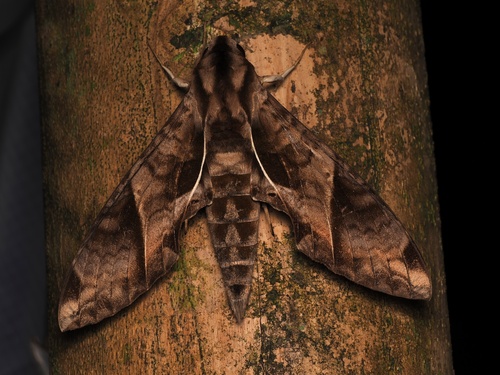
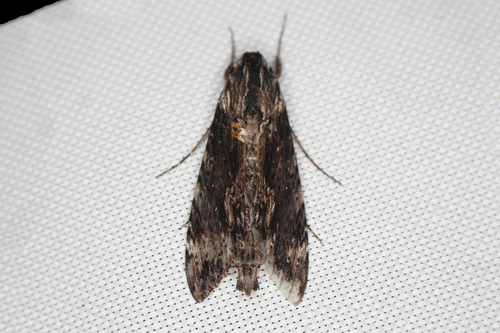
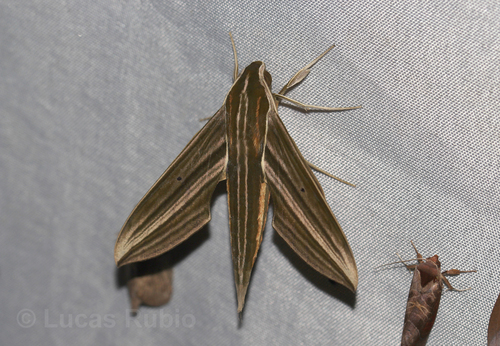
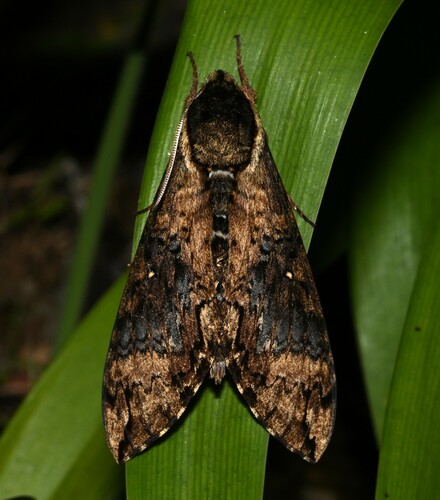
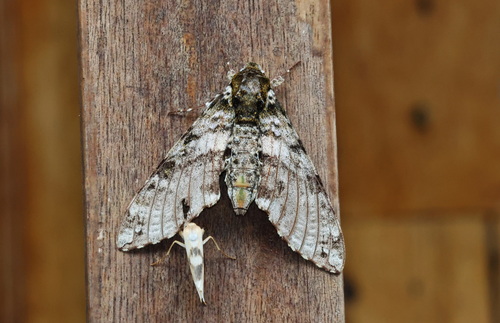
The adult moth is brown with gray and white markings, and the hindwing is a darker brown. The female may be lighter in tone. The body has gray, white, and black bands. The wingspan is 12.7 to 14 centimeters, and the female is generally slightly larger than the male.

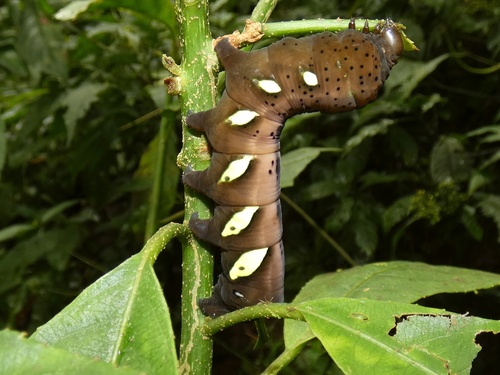
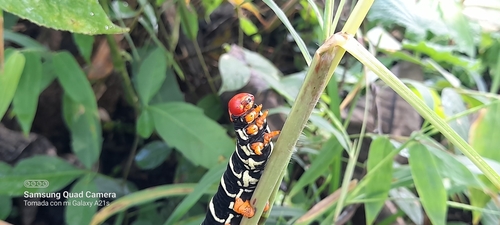
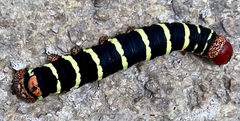
The larva is a caterpillar which may exceed 15 centimeters in length. It is black with aposematic yellow bands and a red-orange head. Toward the posterior end is an orange bump with a black horn roughly 2 centimeters... Wikipedia →
Global Distribution

Parks Where Found

# Park Country Daily sighting probability
1 Jaragua National Park 🇩🇴 Dominican Republic
~40%
2 Marino Ballena National Park 🇨🇷 Costa Rica
~20%
3 Cabo Blanco Absolute Nature Reserve 🇨🇷 Costa Rica
~20%
4 Bastimentos Island National Marine Park 🇵🇦 Panama
~20%
5 Tayrona National Natural Park 🇨🇴 Colombia
~20%
6 Caroni Swamp 🇹🇹 Trinidad and Tobago
~20%
7 Main Ridge Forest Reserve 🇹🇹 Trinidad and Tobago
~20%
8 Piedras Blancas National Park 🇨🇷 Costa Rica
~20%
9 Yasuní National Park 🇪🇨 Ecuador
~10%
10 Corcovado National Park 🇨🇷 Costa Rica
~10%
11 Farallones de Cali National Natural Park 🇨🇴 Colombia
~10%
12 Tambopata National Reserve 🇵🇪 Peru
~10%
13 La Amistad International Park (Panama) 🇵🇦 Panama
~10%
14 Tapantí-Macizo de la Muerte National Park 🇨🇷 Costa Rica
~10%
15 Manu National Park 🇵🇪 Peru
~10%
16 Tijuca National Park 🇧🇷 Brazil
~10%
17 Parque Natural Metropolitano 🇵🇦 Panama
~10%
18 Soberanía National Park 🇵🇦 Panama
~10%

Cities Where Found

# City Country Daily sighting probability
1 Santo Domingo 🇩🇴 Dominican Republic
~30%
2 São Luís 🇧🇷 Brazil
~30%
3 João Pessoa 🇧🇷 Brazil
~20%
4 Manaus 🇧🇷 Brazil
~20%
5 Cali 🇨🇴 Colombia
~20%
6 Guayaquil 🇪🇨 Ecuador
~20%
7 Belém 🇧🇷 Brazil
~20%
8 Puebla 🇲🇽 México
~10%
9 Panama City 🇵🇦 Panama
~10%
10 Bogota 🇨🇴 Colombia
~10%

Before you go

What are the chances of seeing a Tetrio Sphinx in Tapantí-Macizo de la Muerte National Park?

With luck

About 10% of wildlife watchers report a Tetrio Sphinx sighting in Tapantí-Macizo de la Muerte National Park on a given day, based on 11 verified sightings from GBIF citizen-science data from 2019 to 2026. It is the 71st most-seen of the 187 insects we can rate there. Over three days the chance rises to about 20%, and over a week to about 40%, if each day is a fresh chance.

When is the best time to see a Tetrio Sphinx in Tapantí-Macizo de la Muerte National Park?

February

In that month about 20% of wildlife watchers report a Tetrio Sphinx in Tapantí-Macizo de la Muerte National Park on a given day, against under 5% in March–May and July–December, the lowest months. That is one of Tapantí-Macizo de la Muerte National Park's driest months, with about 160 mm of rain against 570 mm in October.

What time of day is best to see a Tetrio Sphinx?

Between 3 and 6 pm

Across all the parks we cover, that three-hour window holds the most Tetrio Sphinx sightings with a recorded time, and about 8 in 10 of them come between 6 am and 6 pm: it is a daytime animal.

Which relatives of the Tetrio Sphinx live in Tapantí-Macizo de la Muerte National Park?

Same family: Sphingidae

The closest relatives of the Tetrio Sphinx that you can see in Tapantí-Macizo de la Muerte National Park (family Sphingidae, Sphinx Moths) are Darceta Sphinx (about 10%), Xylophanes belti (about 10%) and Xylophanes zurcheri (about 10%), with each one's daily chance of a sighting.

Where does the Tetrio Sphinx sighting chance come from?

GBIF citizen-science records

It is estimated from how often the Tetrio Sphinx is recorded against all the insects logged in Tapantí-Macizo de la Muerte National Park (11 verified sightings from 2019 to 2026), calibrated against known sighting rates. Figures are rounded to the nearest 10% because citizen-science data supports honest approximations, not decimals, and months with records from fewer than five people show "—". How it works.

← Back to Tapantí-Macizo de la Muerte National Park