Cocoa Tussock Moth

Cocoa Tussock Moth

Orgyia postica

Daily sighting probability ~60% · Likely
at Taroko National Park

In 3 days ~90% in a week >90%

332 Verified sightings at Taroko National Park From 2019 to 2026
332 In 1 park
December Best month
☀️ Diurnal When it's spotted

About the Cocoa Tussock Moth

Orgyia postica, the cocoa tussock moth or hevea tussock moth, is a species of moth of the subfamily Lymantriinae of the family Erebidae found in the Oriental tropics of India, Sri Lanka, Myanmar, Borneo, Java, New Guinea, and Taiwan. It was described by Francis Walker in 1855.

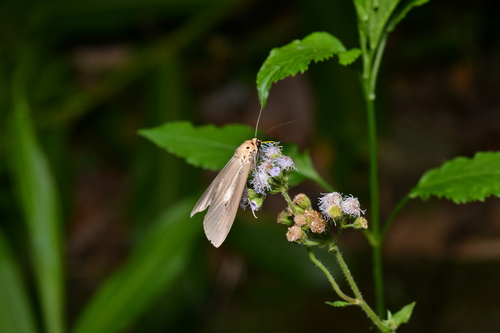
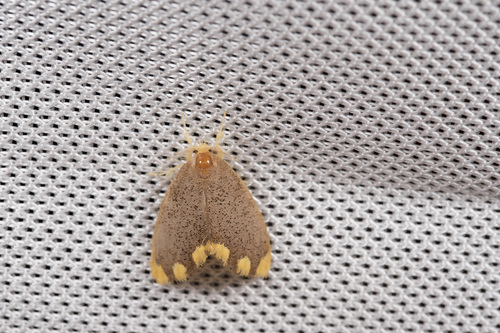
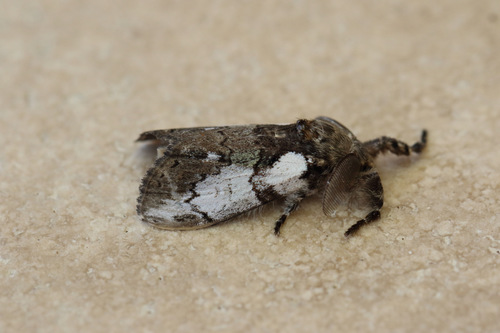
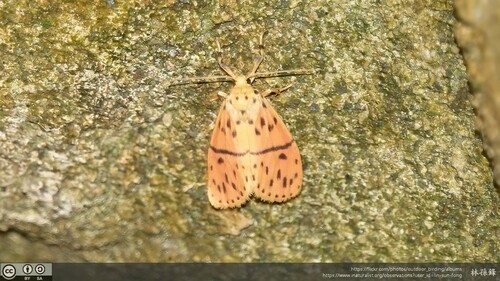
The wingspan is 20–30 mm for males. In the male, the head, thorax, and abdomen are brownish. Forewings are brown with an indistinct oblique sub-basal line. Waved antemedial and postmedial lines approach each other at the lower angle of the cell. The area between them is slightly tinged with bluish grey and has a waved dark line edged with white on each side of the discocellulars. Two indistinct, waved submarginal lines are present. The apex is slightly tinged with grey and has some subapical dark streaks. Hindwings are dark brown. The female is wingless.

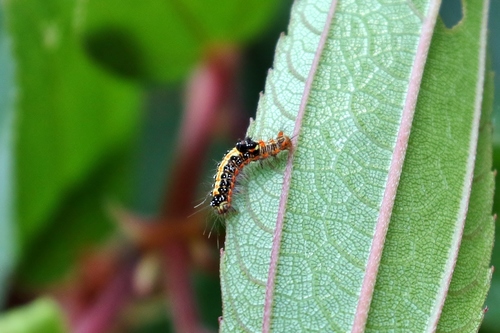
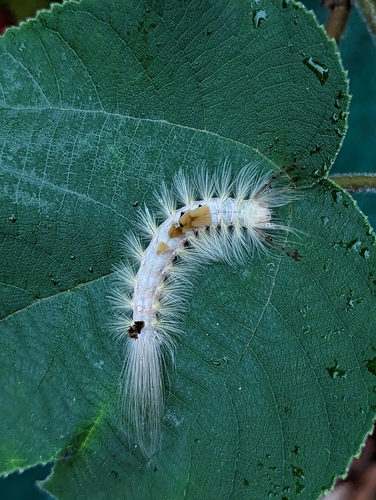
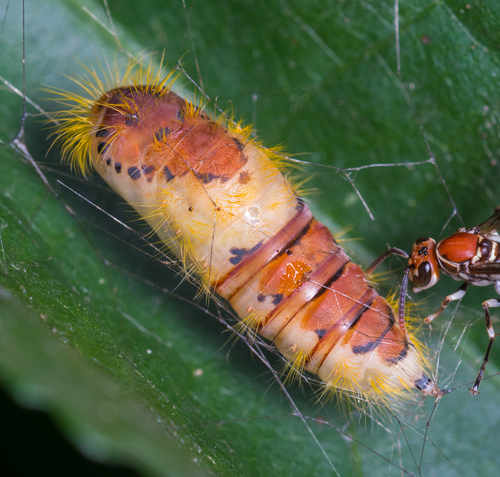
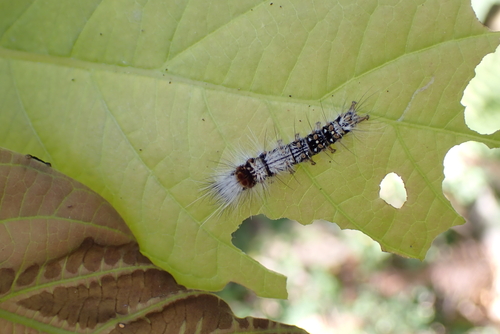
Larvae are yellowish and clothed sparsely with brown hair. One dorsal and two lateral brown bands are seen. Paired tufts of hair are on the first and eleventh somites, projecting forward and backward. Lateral tufts of grey hair project from the fourth and fifth somites. Dorsal tufts of yellow hair are on the fourth to seventh somites. The head... Wikipedia →
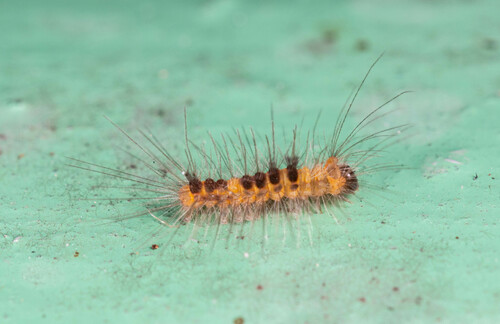
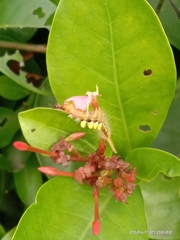
Global Distribution

Parks Where Found

# Park Country Daily sighting probability
1 Taroko National Park 🇹🇼 Taiwan
~60%

More parks will be added in future updates.

Cities Where Found

# City Country Daily sighting probability
1 Taipei 🇹🇼 Taiwan
~20%
2 Taichung 🇹🇼 Taiwan
~20%
3 Hong Kong 🇨🇳 China
~10%
4 Tuen Mun 🇨🇳 China
~10%
5 Naha 🇯🇵 Japan
~10%
6 Kaohsiung 🇹🇼 Taiwan
~10%
7 Tainan 🇹🇼 Taiwan
~10%
8 Manila 🇵🇭 Philippines
~10%
9 Bengaluru 🇮🇳 India
~10%
10 Guangzhou 🇨🇳 China
<5%

Before you go

What are the chances of seeing a Cocoa Tussock Moth in Taroko National Park?

Likely

About 60% of wildlife watchers report a Cocoa Tussock Moth sighting in Taroko National Park on a given day, based on 332 verified sightings from GBIF citizen-science data from 2019 to 2026. It is the 2nd most-seen of the 447 insects we can rate there. Over three days the chance rises to about 90%, and over a week to over 90%, if each day is a fresh chance.

When is the best time to see a Cocoa Tussock Moth in Taroko National Park?

December and January

In those months about 80% of wildlife watchers report a Cocoa Tussock Moth in Taroko National Park on a given day, against about 30% in July and September, the lowest months.

What time of day is best to see a Cocoa Tussock Moth?

Between 1 and 4 pm

Across all the parks we cover, that three-hour window holds the most Cocoa Tussock Moth sightings with a recorded time, and nearly all of them come between 6 am and 6 pm: it is a daytime animal.

Where else can you see a Cocoa Tussock Moth?

Only Taroko National Park, in our data

Taroko National Park is the only park on Wallace's Line with enough records to rate Cocoa Tussock Moth sightings: about 60% of wildlife watchers there report one on a given day.

Which relatives of the Cocoa Tussock Moth live in Taroko National Park?

Same family: Erebidae

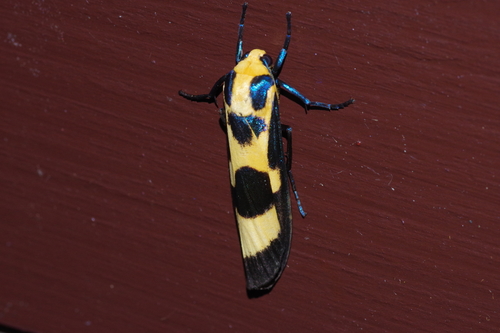
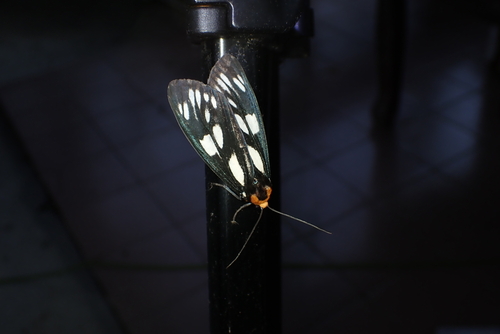
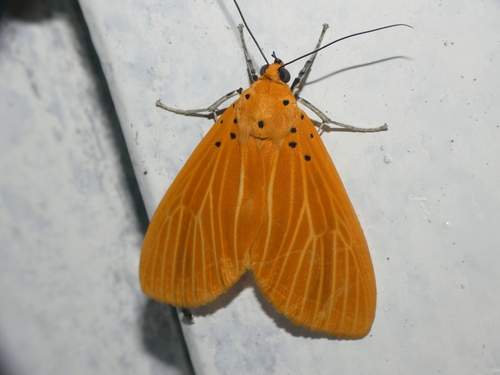
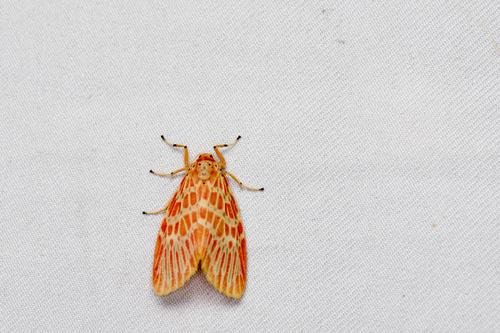
The closest relatives of the Cocoa Tussock Moth that you can see in Taroko National Park (family Erebidae, Underwing, Tiger, Tussock, and Allied Moths) are Taiwan Yellow Tussock Moth (about 50%), Chrysaeglia magnifica (about 40%) and Asota heliconia (about 40%), with each one's daily chance of a sighting.

Where does the Cocoa Tussock Moth sighting chance come from?

GBIF citizen-science records

It is estimated from how often the Cocoa Tussock Moth is recorded against all the insects logged in Taroko National Park (332 verified sightings from 2019 to 2026), calibrated against known sighting rates. Figures are rounded to the nearest 10% because citizen-science data supports honest approximations, not decimals, and months with records from fewer than five people show "—". How it works.

← Back to Taroko National Park