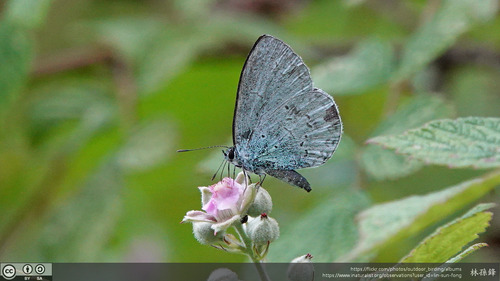
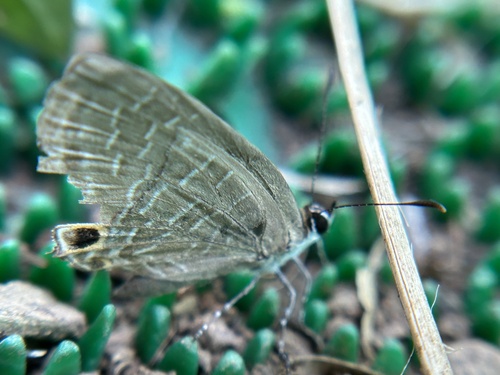
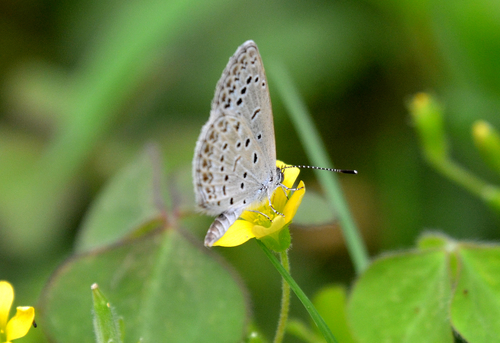
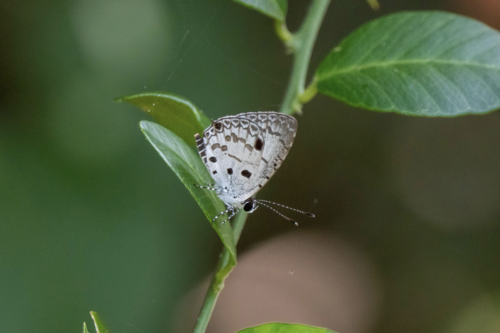
Cornelian
Daily sighting probability ~10% · With luck
at Taroko National Park

In 3 days ~20% in a week ~40%

7 Verified sightings at Taroko National Park From 2019 to 2026
7 In 1 park
November Best month
☀️ Diurnal When it's spotted

About the Cornelian

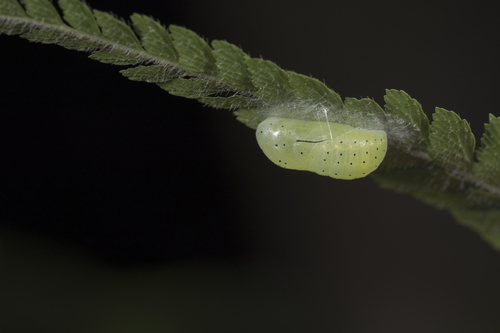
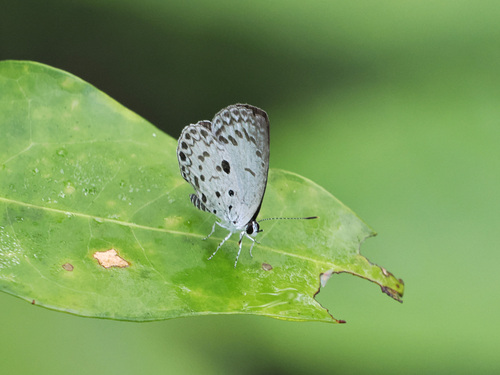
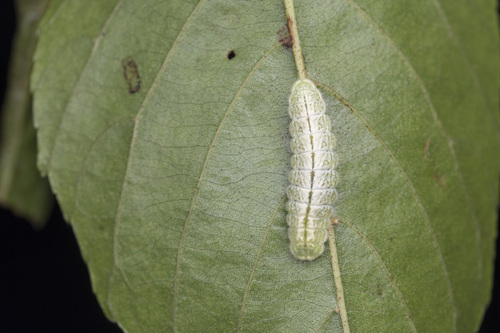
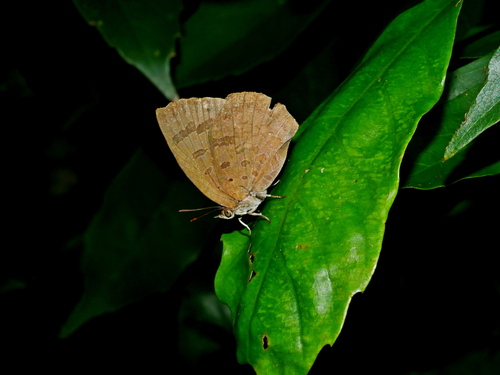
Deudorix epijarbas, the cornelian or hairy line blue, is a species of lycaenid or blue butterfly found in south and southeast Asia from India to Fiji, including the Philippines, and also the tropical coast of Queensland in Australia. The species was first described by Frederic Moore in 1857.

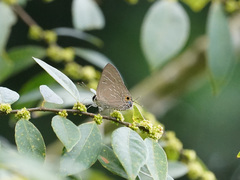
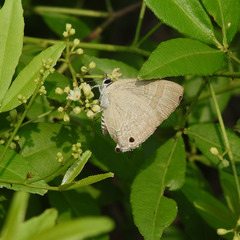
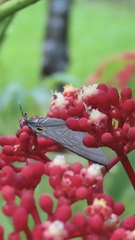
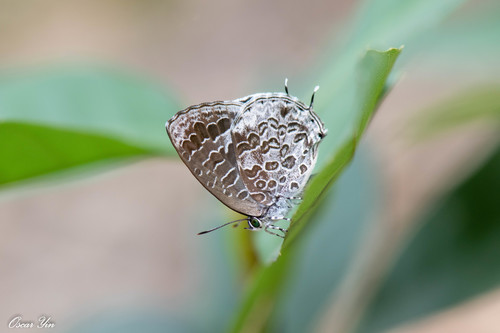
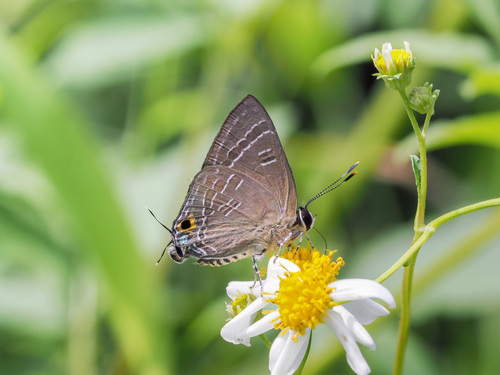
Male. Upperside scarlet-red. Forewing with broad black costal and outer marginal borders, the costal band has its inner margin somewhat curved, being limited by the median vein, consequently it is broadest at the apex, its inner edge on the outer margin is uneven, and at the hinder angle the black band is continued for a short distance along the hinder margin; the rest of the hinder margin is narrowly suffused with black, and so is the sub-median vein. Hindwing with the costa, base and abdominal area suffused with lilackish, the abdominal fold brown, outer marginal line finely black, anal lobe black with a small red mark in it; tail black, tipped with white, the veins often more or less finely black. Antennae black, ringed with white, club with a red tip and with a white streak on the underside below it. Underside greyish-brown, markings indicated by their white edges. Forewing... Wikipedia →
Global Distribution

Parks Where Found

# Park Country Daily sighting probability
1 Taroko National Park 🇹🇼 Taiwan
~10%

More parks will be added in future updates.

Cities Where Found

# City Country Daily sighting probability
1 Singapore 🇸🇬 Singapore
~10%
2 Salem 🇮🇳 India
~10%
3 Taipei 🇹🇼 Taiwan
~10%
4 Jakarta 🇮🇩 Indonesia
~10%
5 Tuen Mun 🇨🇳 China
~10%
6 Bengaluru 🇮🇳 India
~10%
7 Mumbai 🇮🇳 India
~10%
8 Hong Kong 🇨🇳 China
<5%

Before you go

What are the chances of seeing a Cornelian in Taroko National Park?

With luck

About 10% of wildlife watchers report a Cornelian sighting in Taroko National Park on a given day, based on 7 verified sightings from GBIF citizen-science data from 2019 to 2026. It is the 379th most-seen of the 447 insects we can rate there. Over three days the chance rises to about 20%, and over a week to about 40%, if each day is a fresh chance.

When is the best time to see a Cornelian in Taroko National Park?

November

In that month about 20% of wildlife watchers report a Cornelian in Taroko National Park on a given day, against under 5% in April–June, August–September and December–February, the lowest months.

What time of day is best to see a Cornelian?

Between 1 and 4 pm

Across all the parks we cover, that three-hour window holds the most Cornelian sightings with a recorded time, and nearly all of them come between 6 am and 6 pm: it is a daytime animal.

Where else can you see a Cornelian?

Only Taroko National Park, in our data

Taroko National Park is the only park on Wallace's Line with enough records to rate Cornelian sightings: about 10% of wildlife watchers there report one on a given day.

Which relatives of the Cornelian live in Taroko National Park?

Same family: Lycaenidae

The closest relatives of the Cornelian that you can see in Taroko National Park (family Lycaenidae, Gossamer-winged Butterflies) are Burmese Bushblue (about 20%), Common Line Blue (about 20%) and Celastrina oreas (about 10%), with each one's daily chance of a sighting.

Where does the Cornelian sighting chance come from?

GBIF citizen-science records

It is estimated from how often the Cornelian is recorded against all the insects logged in Taroko National Park (7 verified sightings from 2019 to 2026), calibrated against known sighting rates. Figures are rounded to the nearest 10% because citizen-science data supports honest approximations, not decimals, and months with records from fewer than five people show "—". How it works.

← Back to Taroko National Park