Phimenes flavopictus

Phimenes flavopictus

Phimenes flavopictus

Daily sighting probability ~10% · With luck
at Taroko National Park

In 3 days ~30% in a week ~50%

11 Verified sightings at Taroko National Park From 2019 to 2026
18 In all 2 parks
August Best month
☀️ Diurnal When it's spotted

About the Phimenes flavopictus

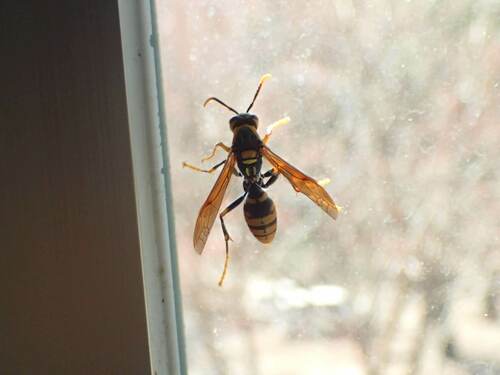
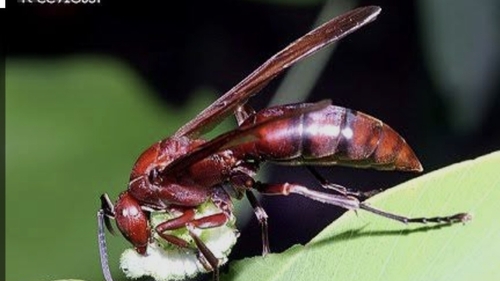
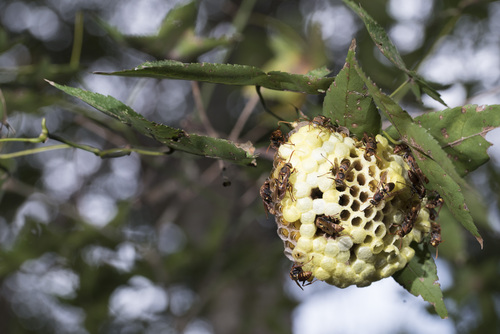
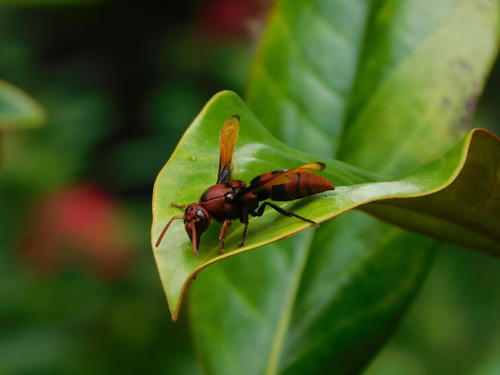
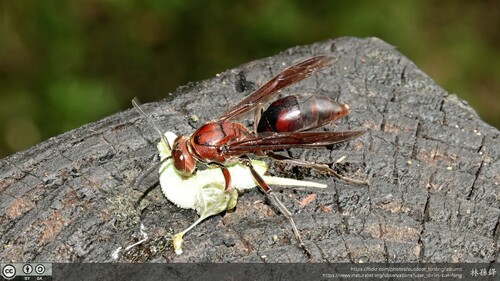
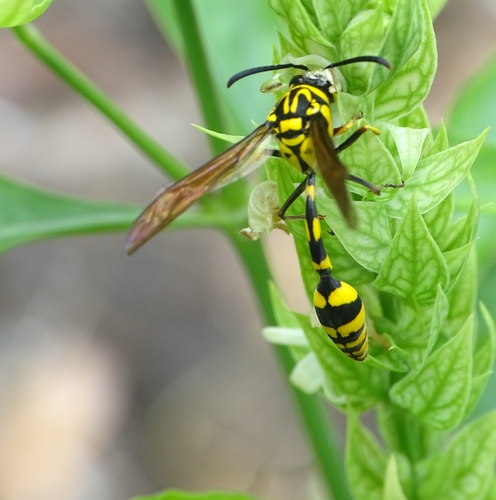
Phimenes flavopictus is a species of potter wasp found in India, Sri Lanka, Nepal, China, Myanmar, Thailand, Malaysia, Singapore, and Indonesia. Females build rounded mud chambers, or pots, for their eggs which are provisioned with caterpillars.

Considerable variation in the distribution and patterns of yellow and black are seen across their range, particularly in South East Asia. In South Asia, there are two other species that are in the same genus. In P. flavopictus, the second gastral tergite has two yellow spots at the base on the black background forming a broken band. Towards the apex the bands are more narrowly interrupted. A related species P. andamanicum is found on the Andamans that has the thorax (mesosoma) nearly all black while P. nicobaricum has the second tergite all yellow. The species was described by Blanchard under the genus Eumenes in 1849 although many authors have assumed that the publication was made in 1845. Wikipedia →
Global Distribution

Parks Where Found

# Park Country Daily sighting probability
1 Gunung Leuser National Park 🇮🇩 Indonesia
~10%
2 Taroko National Park 🇹🇼 Taiwan
~10%

Cities Where Found

# City Country Daily sighting probability
1 Bengaluru 🇮🇳 India
~20%
2 Nashik 🇮🇳 India
~10%
3 Tuen Mun 🇨🇳 China
~10%
4 Hong Kong 🇨🇳 China
~10%
5 Colombo [Sri Jayawardenepura Kotte] 🇱🇰 Sri Lanka
~10%
6 Bandung 🇮🇩 Indonesia
~10%
7 Jakarta 🇮🇩 Indonesia
~10%
8 Pune 🇮🇳 India
~10%
9 Kaohsiung 🇹🇼 Taiwan
~10%
10 Taipei 🇹🇼 Taiwan
~10%

Before you go

What are the chances of seeing a Phimenes flavopictus in Taroko National Park?

With luck

About 10% of wildlife watchers report a Phimenes flavopictus sighting in Taroko National Park on a given day, based on 11 verified sightings from GBIF citizen-science data from 2019 to 2026. It is the 181st most-seen of the 447 insects we can rate there. Over three days the chance rises to about 30%, and over a week to about 50%, if each day is a fresh chance.

When is the best time to see a Phimenes flavopictus in Taroko National Park?

June and August

In those months about 20% of wildlife watchers report a Phimenes flavopictus in Taroko National Park on a given day, against under 5% in April, July and September–January, the lowest months.

What time of day is best to see a Phimenes flavopictus?

Between 1 and 4 pm

Across all the parks we cover, that three-hour window holds the most Phimenes flavopictus sightings with a recorded time, and about 9 in 10 of them come between 6 am and 6 pm: it is a daytime animal.

Is Taroko National Park the best place to see a Phimenes flavopictus?

Among the best

Of the 2 parks where we can rate Phimenes flavopictus sightings, Taroko National Park ranks 2nd at about 10%, level with the leaders once rounded. The best odds are in Gunung Leuser National Park (Indonesia, about 10%).

Which relatives of the Phimenes flavopictus live in Taroko National Park?

Same family: Eumenidae

The closest relatives of the Phimenes flavopictus that you can see in Taroko National Park (family Eumenidae) are Rothney's Paper Wasp (about 20%), Giant Brown Paper Wasp (about 20%) and Polistes takasagonus (about 10%), with each one's daily chance of a sighting.

Where does the Phimenes flavopictus sighting chance come from?

GBIF citizen-science records

It is estimated from how often the Phimenes flavopictus is recorded against all the insects logged in Taroko National Park (11 verified sightings from 2019 to 2026), calibrated against known sighting rates. Figures are rounded to the nearest 10% because citizen-science data supports honest approximations, not decimals, and months with records from fewer than five people show "—". How it works.

← Back to Taroko National Park