
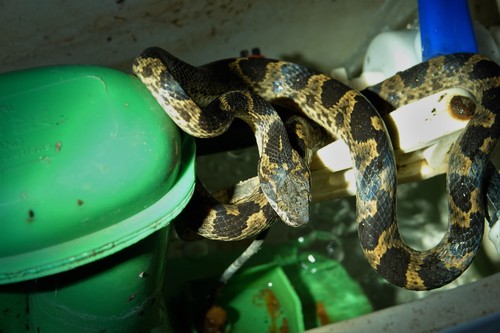
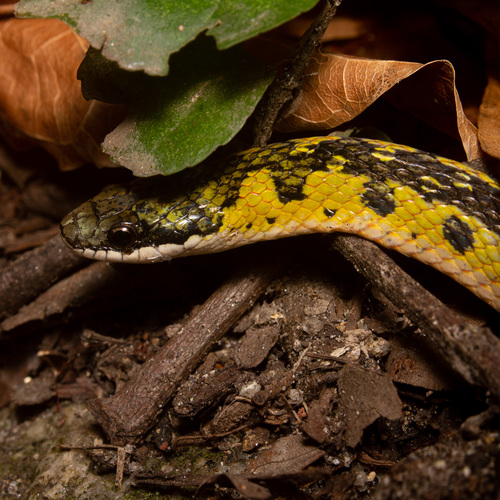
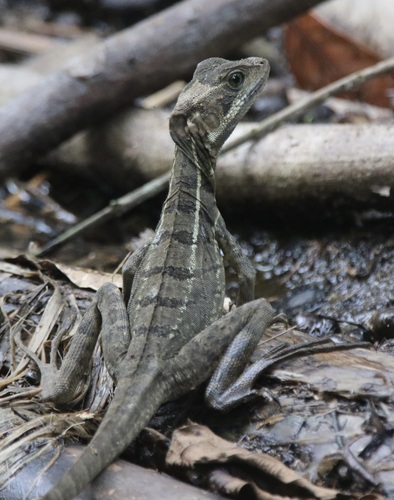
Neuwied's False Boa

Neuwied's False Boa

Pseudoboa neuwiedii

Silhouette: Alex Slavenko · PhyloPic

LCLeast ConcernNTVUENCR
Daily sighting probability ~10% · With luck
at Tayrona National Natural Park

In 3 days ~40% in a week ~70%

5 Verified sightings at Tayrona National Natural Park From 2019 to 2026
14 In all 2 parks
June Best month
☀️🌙 Day & Night When it's spotted

About the Neuwied's False Boa

Pseudoboa neuwiedii, commonly known as the dark-headed red false boa or Neuwied's false boa, is a species of snake in the subfamily Dipsadinae of the family Colubridae. The species is native to northern South America. Pseudoboa neuwiedii is found on the mainland of South America from Colombia to The Guianas, and in Brazil along the Amazon River, as well as in Grenada, and Trinidad and Tobago.

The specific name, neuwiedii, is in honor of German naturalist Prince Maximilian of Wied-Neuwied. Pseudoboa neuwiedii grows to a maximum total length (tail included) of 1 m (39 in). Dorsally, it is reddish brown, either uniform or with some scattered small black spots. The top of the head and neck are black or dark brown. There may or may not be a yellowish crossband or collar across the temples and occiput. Ventrally, it is yellowish. This snake is venomous, but due the anatomy of its teeth it has difficulty in inoculating venom, its venom is highly proteolytic and could affect the coagulation by degrading the fibrinogen.

Pseudoboa neuwiedii is a powerful constrictor. Pseudoboa neuwiedii feeds on any animal... Wikipedia →

Global Distribution

Parks Where Found

# Park Country Daily sighting probability
1 Main Ridge Forest Reserve 🇹🇹 Trinidad and Tobago
~30%
2 Tayrona National Natural Park 🇨🇴 Colombia
~10%

Before you go

What are the chances of seeing a Neuwied's False Boa in Tayrona National Natural Park?

With luck

About 10% of wildlife watchers report a Neuwied's False Boa sighting in Tayrona National Natural Park on a given day, based on 5 verified sightings from GBIF citizen-science data from 2019 to 2026. It is the 24th most-seen of the 26 reptiles we can rate there. Over three days the chance rises to about 40%, and over a week to about 70%, if each day is a fresh chance.

When is the best time to see a Neuwied's False Boa in Tayrona National Natural Park?

June–July and October

In those months about 30% of wildlife watchers report a Neuwied's False Boa in Tayrona National Natural Park on a given day, against under 5% in February–May, August–September and November–December, the lowest months. Those are among Tayrona National Natural Park's wettest months, with about 150 mm of rain a month against 5 mm in January.

What time of day is best to see a Neuwied's False Boa?

Between 7 and 10 pm

Across all the parks we cover, that three-hour window holds the most Neuwied's False Boa sightings with a recorded time, and about 6 in 10 of them come between 6 pm and 6 am: it is seen both by day and at night.

Is Tayrona National Natural Park the best place to see a Neuwied's False Boa?

2nd of 2

Of the 2 parks where we can rate Neuwied's False Boa sightings, Tayrona National Natural Park ranks 2nd at about 10%. The best odds are in Main Ridge Forest Reserve (Trinidad and Tobago, about 30%).

Which relatives of the Neuwied's False Boa live in Tayrona National Natural Park?

Same family: Colubridae

The closest relatives of the Neuwied's False Boa that you can see in Tayrona National Natural Park (family Colubridae, Colubrid Snakes) are Venezuelan Cat-eyed Snake (about 40%), Cloudy Snail-eating Snake (about 30%) and Blunthead Tree Snake (about 20%), with each one's daily chance of a sighting.

Where does the Neuwied's False Boa sighting chance come from?

GBIF citizen-science records

It is estimated from how often the Neuwied's False Boa is recorded against all the reptiles logged in Tayrona National Natural Park (5 verified sightings from 2019 to 2026), calibrated against known sighting rates. Figures are rounded to the nearest 10% because citizen-science data supports honest approximations, not decimals, and months with records from fewer than five people show "—". How it works.

← Back to Tayrona National Natural Park