


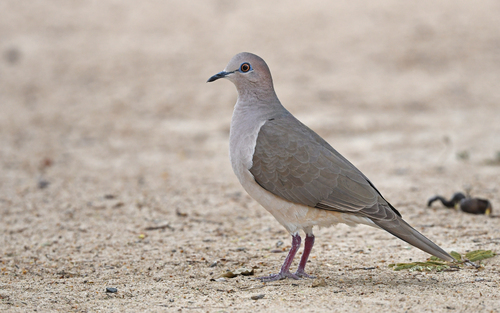


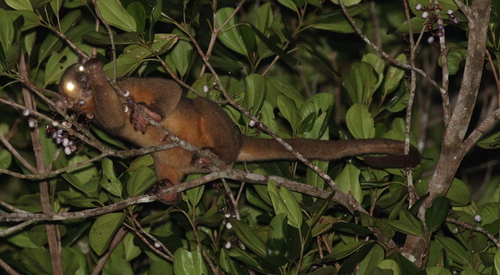


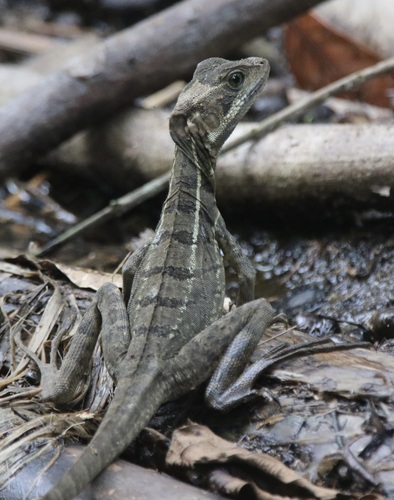


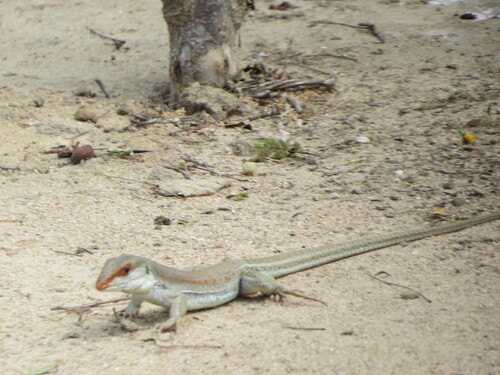





All 5 in 3 days here: ~30%
Tayrona National Natural Park
🇨🇴 Colombia
Caribbean Coast, Colombia 1023 spp. recorded
Tayrona National Natural Park spans 15,000 hectares where the Sierra Nevada de Santa Marta drops to the Caribbean, protecting tropical dry forest, palm-backed beaches, and coral reef. It is one of Colombia's most visited national parks, drawing more than 600,000 visitors a year to its coastal jungle trails.
11.324° N 74.043° W
🦜 Nature

489 Species sighted
45,450 Verified sightings From 2019 to 2026
May Best month
⭐ Iconic Species
📊 Most Spotted
⭐ Iconic Species
📊 Most Spotted
📊 Most Spotted
⭐ Iconic Species
📊 Most Spotted
📊 Most Spotted
📊 Most Spotted
🌙 Most active after dark
+ 610 more species with insufficient data
Challenges you can complete here
Recent sightings in Tayrona National Natural Park
LIVEiNaturalistSighting Calendar
How many species you'd see in a day
51Jan
42Feb
50Mar
47Apr
63May
39Jun
43Jul
44Aug
48Sep
38Oct
49Nov
47Dec
Sighting Zones
Warmer areas are where all species together are recorded most often.
-
Restaurante Portales del Tayrona
Daily sight. prob.vs avg Guayaquil Dwarf Frog~90%+40%
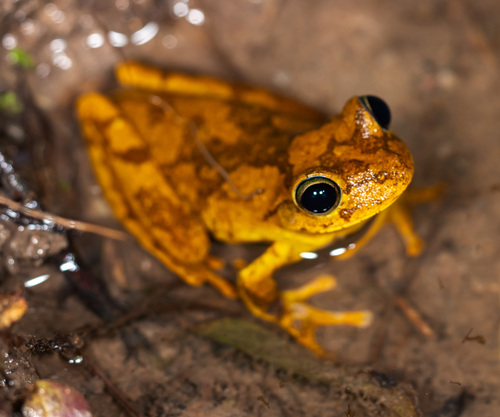
 Yellow-striped Poison Frog~90%+20%
 Giant Marine Toad~90%+30%
 Neotropical Green Anole~80%+40%
 Common Basilisk~80%+40%
 Gaige's Anole~80%+40%
 Common House Gecko~80%+30%
 Colombian Four-eyed Frog~80%+50%
 Magdalena River Tegu~80%+20%
 Rivero's Toad~80%+50%
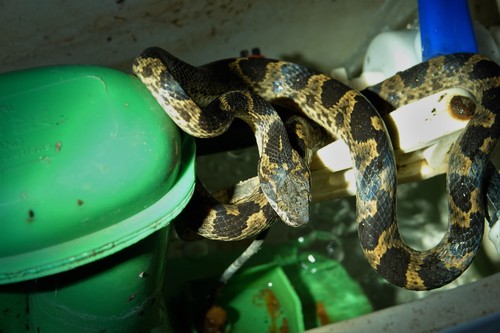
 Venezuelan Cat-eyed Snake~80%+40%
 Green Iguana~80%+10%
-
Arrecifes
Daily sight. prob.vs avg Gaige’s Rainbow Lizard~90%+10%
 White-throated Gecko~80%+20%
 Colombian Red Howler Monkey~80%+10%
- Magdalena River Tegu~70%+20%
- Green Iguana~70%≈
- Yellow-striped Poison Frog~70%≈
 Cope's Ameiva~60%+20%
 Buff-breasted Wren~60%+10%
- Gaige's Anole~60%+10%
 Central American Agouti~50%+20%
 Turniptail Gecko~50%+10%
 Black Vulture~50%-20%
-
Restaurante Las Acacias
Daily sight. prob.vs avg- Giant Marine Toad~70%+10%
- Colombian Red Howler Monkey~70%≈
 Brown-throated Sloth~70%+40%
 Red-tailed Squirrel~70%+30%
- Green Iguana~70%≈
 Blue-gray Tanager~60%-10%
- Common Basilisk~60%+10%
- Common House Gecko~60%+20%
- Gaige’s Rainbow Lizard~60%-20%
- Yellow-striped Poison Frog~50%-20%
- Black Vulture~50%-20%
- Magdalena River Tegu~50%-10%
-
Zona de Camping Playa El Cabo
Daily sight. prob.vs avg- Gaige’s Rainbow Lizard~90%+20%
- Green Iguana~80%+20%
- White-throated Gecko~70%+10%
- Magdalena River Tegu~60%+10%
- Cope's Ameiva~60%+20%
- Giant Marine Toad~50%-10%
 Santa Marta White-fronted Capuchin~50%-10%
 Cotton-headed Tamarin~50%-10%
- Colombian Red Howler Monkey~50%-20%
- Yellow-striped Poison Frog~50%-20%
- Black Vulture~40%-30%
- Common Basilisk~40%-10%
-
Finca Barlovento
Daily sight. prob.vs avg- Green Iguana~90%+20%
- Santa Marta White-fronted Capuchin~80%+10%
- Common House Gecko~60%+20%
- Colombian Red Howler Monkey~60%-10%
- Black Vulture~50%-20%
- Blue-gray Tanager~50%-20%
- Red-tailed Squirrel~50%+20%
- Gaige's Anole~50%+10%
 Crab-eating Fox~50%+30%
- Gaige’s Rainbow Lizard~50%-20%
 Bicolored Wren~40%-20%
 Tropical Kingbird~40%-10%
🏕️ Experience
Essentials
Entrance
Paid
Tourism
High
Typical stay
1–2
daysTrails
Hard
World Heritage
No
Climate
Temp °C Rain mm
JanFebMarAprMayJunJulAugSepOctNovDec
0.0 Excellent
Wallace's Line Score
How good is this park for seeing wildlife? 🦜
Biodiversity
Very goodHow rich is the wildlife?
4.3
Species by taxon
🦅 Birds 668
🐒 Mammals 225
🦎 Reptiles 99
🐸 Amphibians 31
1023 Total Species
828 Global average across 316 parks
31 Threatened 70 Endemic
🔭
Sighting
Very goodHow likely to see animals?
3.9
🎯
Top-12 Avg Probability
65% 📊
Coverage (224 species at ≥5% of 1023 in the inventory)
22% 🔀
Taxon variety in top 12 (4 reptile, 4 bird, 2 mammal, 2 amphibian)
96% 🔭
Species per 10 outings (distinct species a visitor would meet over 10 outings — effort held equal across parks)
134 🌟
Iconic-group species (≥15%) (every species from the 19 iconic groups — monkeys, cats, toucans, macaws, sloths, crocodilians… — not just the 4 highlighted above)
15 ⭐
High-prob species (>40%)
34 🏕️
Experience
Very goodHow easy and pleasant is the visit?
3.6
Climate Pleasant High
Entrance Paid Low
Tourism Medium Medium
Trails Hard Low
World Heritage No —
What visitors say
He helped us spot 3 out of 4 monkey species, an agouti, as well as various birds.
I also saw a snake, Titi monkeys, and a squirrel, and heard howler monkeys off in the distance.
While journeying to the beaches, I heard the rapid, high-pitched notes of the Buff-breasted Wren and the screeches of a Yellow-headed Caracara, which scared a pair of Orange-chinned Parakeets that had been vocalizing and fluttering above me.
We drove a little further up the road and stopped when Cristián spotted our first monkey of the day: a cotton-top tamarin.
Before you go
What animals can you see in Tayrona National Natural Park?
1,023 species
Tayrona National Natural Park has 1,023 recorded vertebrate species. The ones wildlife watchers report most often on a given day are Gaige’s Rainbow Lizard (about 80%), Blue-gray Tanager (about 70%), Colombian Red Howler Monkey (about 70%), Yellow-striped Poison Frog (about 70%) and Black Vulture (about 70%).
When is the best time to visit Tayrona National Natural Park for wildlife?
May and August–September
In those months the park's 12 most-seen species average about 70% on a given day, against about 50% in February and October. Those are among Tayrona National Natural Park's wettest months, with about 130 mm of rain a month against 5 mm in January.
Can you see a Santa Marta White-fronted Capuchin in Tayrona National Natural Park?
Yes
About 70% of wildlife watchers report a Santa Marta White-fronted Capuchin sighting in Tayrona National Natural Park on a given day, based on 246 verified sightings from GBIF citizen-science data from 2019 to 2026. The best time is March and April (about 80%).
Can you see a Cotton-headed Tamarin in Tayrona National Natural Park?
Yes
About 50% of wildlife watchers report a Cotton-headed Tamarin sighting in Tayrona National Natural Park on a given day, based on 163 verified sightings from GBIF citizen-science data from 2019 to 2026. The best time is January, April–May, September and November (about 60%).
Can you see a Green Iguana in Tayrona National Natural Park?
Yes
About 70% of wildlife watchers report a Green Iguana sighting in Tayrona National Natural Park on a given day, based on 104 verified sightings from GBIF citizen-science data from 2019 to 2026. The best time is August and September (about 80%).
Can you see a Colombian Red Howler Monkey in Tayrona National Natural Park?
Yes
About 70% of wildlife watchers report a Colombian Red Howler Monkey sighting in Tayrona National Natural Park on a given day, based on 113 verified sightings from GBIF citizen-science data from 2019 to 2026. The best time is March (about 80%).
Where in Tayrona National Natural Park is wildlife easiest to see?
Around Restaurante Portales del Tayrona
The richest sighting zone is around Restaurante Portales del Tayrona, followed by Arrecifes and Restaurante Las Acacias, ranked by how many of the park's headline animals visitors can expect to see in each. See the zones on the map.
Is Tayrona National Natural Park good for wildlife watching?
4.0 out of 5
On the Wallace's Line Score, Tayrona National Natural Park rates 4.0/5: 113th of 316 parks worldwide and 15th in South America. 41 of its species are reported by about 40% or more of wildlife watchers on a given day.


