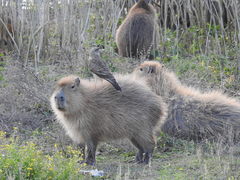
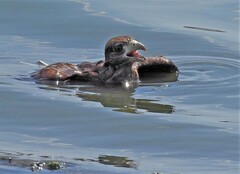
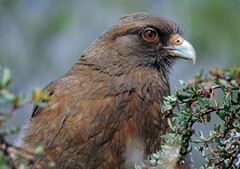
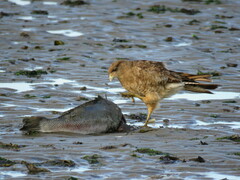
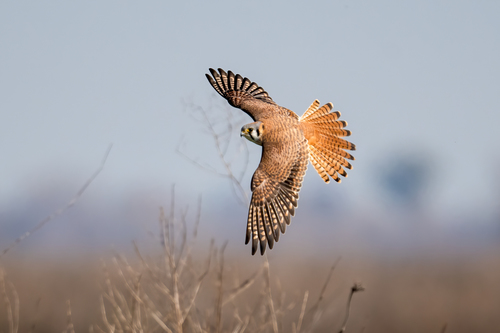
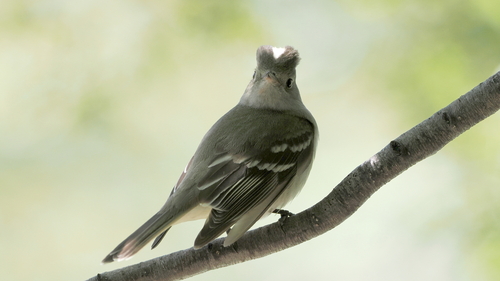
The chimango caracara (Daptrius chimango), also known as chimango or tiuque, is a species of bird of prey in the family Falconidae, the falcons and caracaras. It is found in Argentina, Bolivia, Brazil, Chile, Paraguay, and Uruguay, as a vagrant on the Falkland Islands and has been introduced on Rapa Nui.
The chimango caracara was formally described in 1816 by French ornithologist Louis Vieillot under the binomial name Polyborus chimango. Vieillot based his account on the "Chimango" from Paraguay that had been described by the Spanish naturalist Félix de Azara in 1802. The specific epithet and the common name are from a local Argentinian onomatopoeia word "Chimango" for a caracara. The chimango caracara was formerly placed with the yellow-headed caracara in the genus Milvago. Molecular genetic studies found that Milvago was polyphyletic with the chimango caracara sister to the genus Phalcoboenus and the yellow-headed caracara sister to Daptrius. As the genetic divergence was relatively shallow, the polyphyly was resolved by expanding the genus Daptrius to include the two other genera.