Flying Steamer-Duck

Flying Steamer-Duck

Tachyeres patachonicus

Silhouette: PhyloPic

LCLeast ConcernNTVUENCR
Daily sighting probability ~40% · Likely
at Tierra del Fuego National Park

In 3 days ~80% in a week >90%

462 Verified sightings at Tierra del Fuego National Park From 2019 to 2026
1,205 In all 5 parks
July Best month
☀️ Diurnal When it's spotted

About the Flying Steamer-Duck

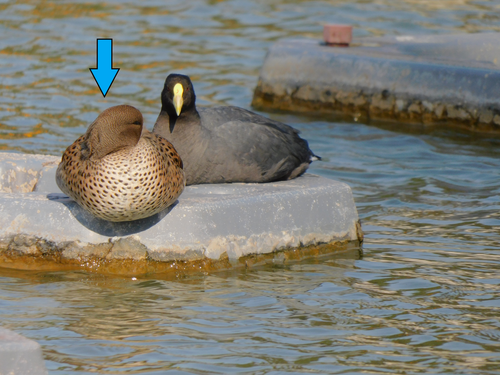
The flying steamer duck (Tachyeres patachonicus), also known as the flying steamer-duck or flying steamerduck, is a species of South American duck in the family Anatidae. The flying steamer duck is one of four steamer ducks, in the genus Tachyeres, which also includes the Fuegian steamer duck (Tachyeres pteneres), the Chubut steamer duck (Tachyeres leucocephalus), and the Falkland steamer duck (Tachyeres brachypterus). The steamer ducks are named for their method of mobility, as the manner in which they use wings and feet to paddle across the water resembles an old-time steam boat. The steamer ducks are members of the Southern Hemisphere shelducks clade Tadorninae. The three flightless species are monophyletic, with the flying steamer ducks splitting off phylogenetically. It is the only steamer duck which can fly, and the only one to occur on inland fresh waters. However, some individual male flying steamer ducks within the species are incapable of flight due to excessive size and wing loadings.

Though they are the smallest of the four Tachyeres species, flying steamer ducks share similar plumage traits with other steamer ducks including... Wikipedia →

Sounds

Call0:13

Chile · 2018

© Peter Boesman · XC450175 · CC BY-NC-ND 4.0

Song0:32

Argentina · 2005

© Santiago Imberti · XC23065 · CC BY-NC-ND 2.5

Alarm call0:10

Argentina · 2018

© Bobby Wilcox · XC417813 · CC BY-NC-SA 4.0

Global Distribution

Parks Where Found

# Park Country Daily sighting probability
1 Tierra del Fuego National Park 🇦🇷 Argentina
~40%
2 Nahuel Huapi National Park 🇦🇷 Argentina
~30%
3 Torres del Paine National Park 🇨🇱 Chile
~20%
4 Península Valdés 🇦🇷 Argentina
~10%
5 Vicente Pérez Rosales National Park 🇨🇱 Chile
~10%

Zoos & Centres Where Found

# Zoo / Centre Country
1 The Green Zoo Wuppertal 🇩🇪 Germany In captivity
2 Philadelphia Zoo 🇺🇸 United States In captivity
3 Aquazoo Friesland 🇳🇱 Netherlands In captivity

Before you go

What are the chances of seeing a Flying Steamer-Duck in Tierra del Fuego National Park?

Likely

About 40% of wildlife watchers report a Flying Steamer-Duck sighting in Tierra del Fuego National Park on a given day, based on 462 verified sightings from GBIF citizen-science data from 2019 to 2026. It is the 20th most-seen of the 78 birds we can rate there. Over three days the chance rises to about 80%, and over a week to over 90%, if each day is a fresh chance.

When is the best time to see a Flying Steamer-Duck in Tierra del Fuego National Park?

July

In that month about 70% of wildlife watchers report a Flying Steamer-Duck in Tierra del Fuego National Park on a given day, against about 20% in May, the lowest month. June has too few records to rate.

What time of day is best to see a Flying Steamer-Duck?

Between 1 and 4 pm

Across all the parks we cover, that three-hour window holds the most Flying Steamer-Duck sightings with a recorded time, and about 8 in 10 of them come between 6 am and 6 pm: it is a daytime animal.

Is Tierra del Fuego National Park the best place to see a Flying Steamer-Duck?

Yes

Of the 5 parks where we can rate Flying Steamer-Duck sightings, Tierra del Fuego National Park has the highest daily chance: about 40%. Next come Nahuel Huapi National Park (Argentina, about 30%) and Torres del Paine National Park (Chile, about 20%).

Where does the Flying Steamer-Duck sighting chance come from?

GBIF citizen-science records

It is estimated from how often the Flying Steamer-Duck is recorded against all the birds logged in Tierra del Fuego National Park (462 verified sightings from 2019 to 2026), calibrated against known sighting rates. Figures are rounded to the nearest 10% because citizen-science data supports honest approximations, not decimals, and months with records from fewer than five people show "—". How it works.

← Back to Tierra del Fuego National Park