
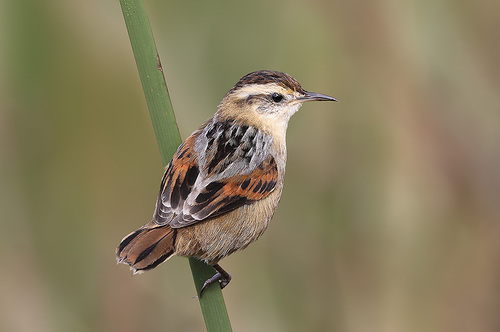
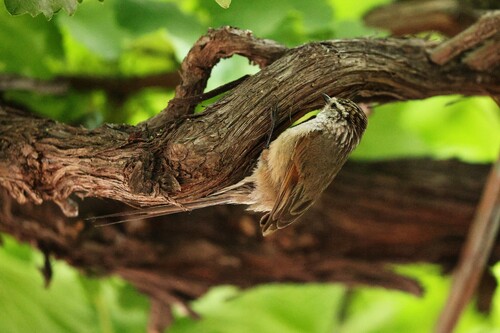
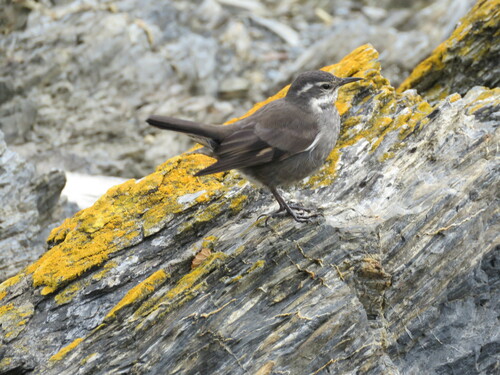
Austral Canastero

Austral Canastero

Asthenes anthoides

Silhouette: Sheatherius · PhyloPic

LCLeast ConcernNTVUENCR
Daily sighting probability <5% · Rare
at Torres del Paine National Park

In 3 days ~10% in a week ~30%

77 Verified sightings at Torres del Paine National Park From 2019 to 2026
88 In all 2 parks
June Best month
☀️ Diurnal When it's spotted

About the Austral Canastero

The austral canastero (Asthenes anthoides) is a species of bird in the Furnariinae subfamily of the ovenbird family Furnariidae. It is found in Argentina and Chile. Before the middle of the twentieth century, the austral canastero was bounced around several genera but since then has almost universally been placed in Asthenes. The austral canastero is monotypic. It and the similar Hudson's canastero (A. hudsoni) are sister species.

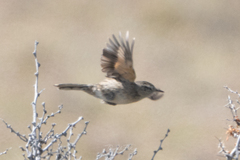
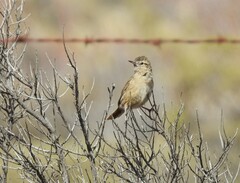
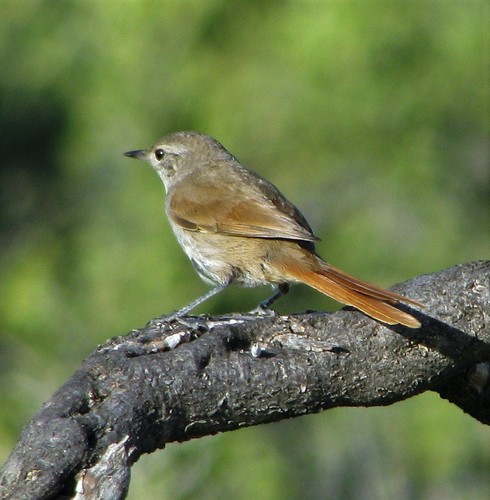
The austral canastero's English name refers to its southern distribution and its specific epithet anthoides refers to its resemblance to pipits of genus Anthus. The austral canastero is 15.5 to 16.5 cm (6.1 to 6.5 in) long and weighs 21 to 23 g (0.74 to 0.81 oz). It is the southernmost canastero, and one of several streaked canasteros that have drab plumages with dark stripes on their upperparts. It has a shorter tail than many other canasteros. The sexes have the same plumage, but there is much individual variation. Adults have a whitish or pale buff supercilium and dark dusky lores on an otherwise sandy brownish face. Their crown, back, and rump are sandy brown with conspicuous blackish streaks. Their wings... Wikipedia →

Sounds

Song0:46

Chile · 2018

© Peter Boesman · XC449831 · CC BY-NC-ND 4.0

Alarm call0:28

Chile · 2017

© Cristian Pinto · XC367208 · CC BY-NC-SA 4.0

Call0:24

Chile · 2015

© Ross Gallardy · XC295920 · CC BY-NC-SA 4.0

Global Distribution

Parks Where Found

# Park Country Daily sighting probability
1 Torres del Paine National Park 🇨🇱 Chile
<5%
2 Nahuel Huapi National Park 🇦🇷 Argentina
<5%

Before you go

What are the chances of seeing an Austral Canastero in Torres del Paine National Park?

Rare

Under 5% of wildlife watchers report an Austral Canastero sighting in Torres del Paine National Park on a given day, based on 77 verified sightings from GBIF citizen-science data from 2019 to 2026. It is the 73rd most-seen of the 106 birds we can rate there. Over three days the chance rises to about 10%, and over a week to about 30%, if each day is a fresh chance.

When is the best time to see an Austral Canastero in Torres del Paine National Park?

June and August

In those months about 20% of wildlife watchers report an Austral Canastero in Torres del Paine National Park on a given day, against under 5% in April, July, September–October and December–February, the lowest months.

What time of day is best to see an Austral Canastero?

Between 10 am and 1 pm

Across all the parks we cover, that three-hour window holds the most Austral Canastero sightings with a recorded time, and about 8 in 10 of them come between 6 am and 6 pm: it is a daytime animal.

Is Torres del Paine National Park the best place to see an Austral Canastero?

Yes

Of the 2 parks where we can rate Austral Canastero sightings, Torres del Paine National Park has the highest daily chance: under 5%. Next come Nahuel Huapi National Park (Argentina, under 5%).

Where does the Austral Canastero sighting chance come from?

GBIF citizen-science records

It is estimated from how often the Austral Canastero is recorded against all the birds logged in Torres del Paine National Park (77 verified sightings from 2019 to 2026), calibrated against known sighting rates. Figures are rounded to the nearest 10% because citizen-science data supports honest approximations, not decimals, and months with records from fewer than five people show "—". How it works.

← Back to Torres del Paine National Park