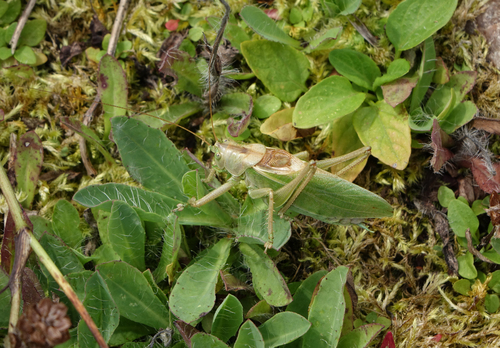
Large Conehead

Large Conehead

Ruspolia nitidula

Daily sighting probability ~10% · With luck
at Triglav National Park

In 3 days ~40% in a week ~70%

13 Verified sightings at Triglav National Park From 2019 to 2026
87 In all 3 parks
November Best month
☀️ Diurnal When it's spotted

About the Large Conehead

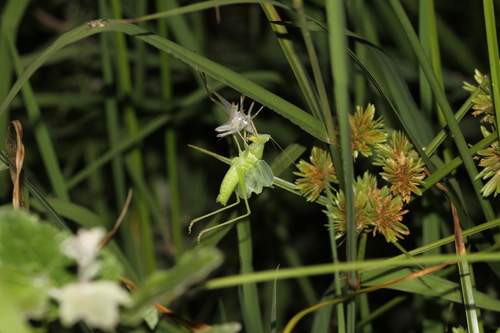
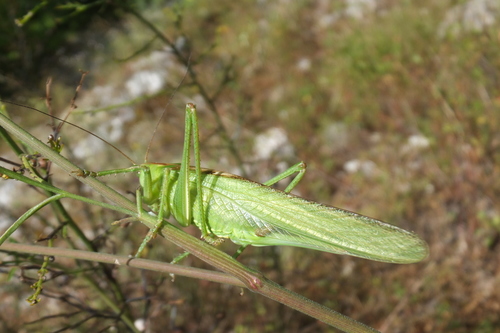
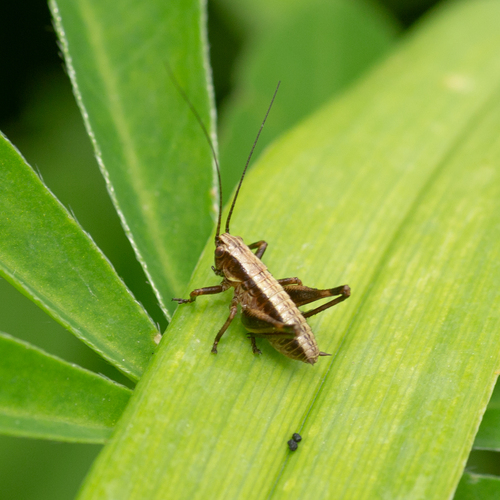
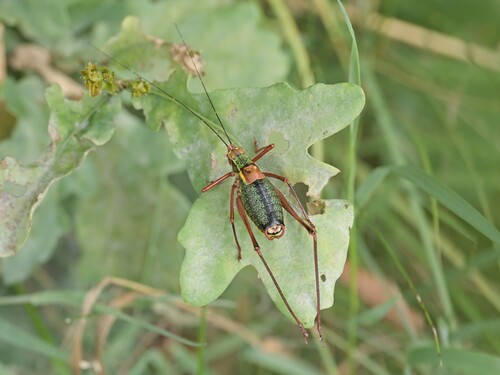
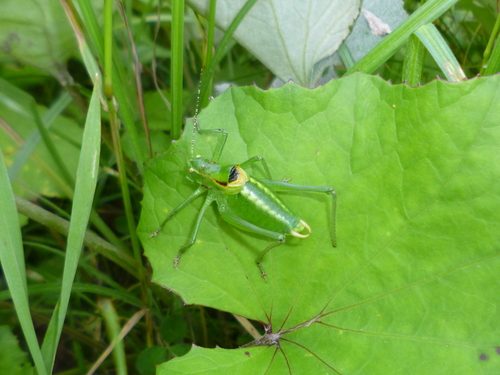
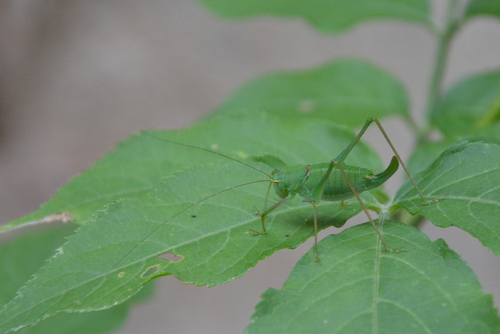
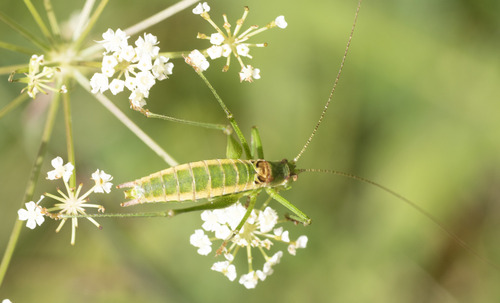
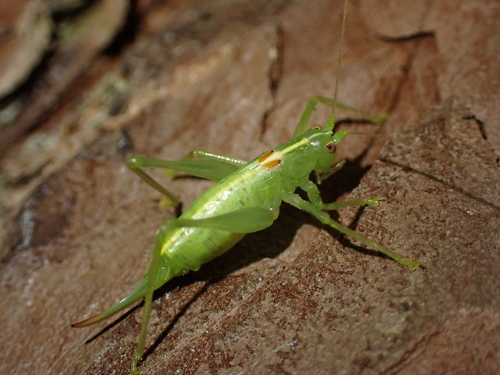
Ruspolia nitidula, the large conehead, is a species of bush cricket belonging to the subfamily Conocephalinae of the family Tettigoniidae. It is found throughout Europe, Africa, and the Palearctic part of Asia. A vernacular name that has been used is "cone-headed grasshopper", although it is not a grasshopper, but rather a bush cricket.

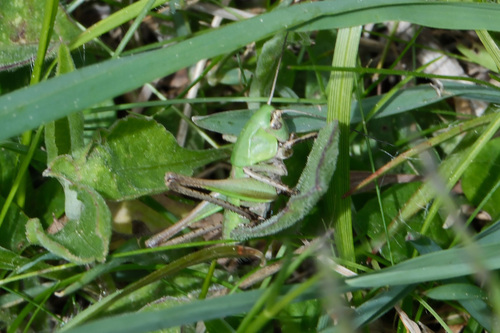
The species is green, large, and slender with a cone-shaped head. The apex of the head has a cream-colored band that goes through it and the eyes. Its size ranges from 32–60 mm (1.3–2.4 in). The wings of both sexes extend further than the abdomen. They are able to produce a high-pitched buzzing sound.

It is native to central and southern Europe where it can be found on riverbanks and other wet areas that have long grass. The species has been expanding northwards in Europe in recent decades. Populations have been established in southern Britain. The species can be found from July to October. It is also native to Africa and the Palearctic part of Asia.

The cricket is commonly eaten in Uganda and the sale of them brings in a large amount of income. The price per unit weight is periodically higher than that... Wikipedia →

Global Distribution

Parks Where Found

# Park Country Daily sighting probability
1 Triglav National Park 🇸🇮 Slovenia
~10%
2 Pyrénées National Park 🇫🇷 France
~10%
3 Cévennes National Park 🇫🇷 France
~10%

Cities Where Found

# City Country Daily sighting probability
1 Milan 🇮🇹 Italy
~10%
2 Porto 🇵🇹 Portugal
~10%
3 Vienna 🇦🇹 Austria
~10%
4 Paris 🇫🇷 France
<5%
5 Lyon 🇫🇷 France
<5%
6 Kyiv 🇺🇦 Ukraine
<5%
7 Lisbon 🇵🇹 Portugal
<5%

Before you go

What are the chances of seeing a Large Conehead in Triglav National Park?

With luck

About 10% of wildlife watchers report a Large Conehead sighting in Triglav National Park on a given day, based on 13 verified sightings from GBIF citizen-science data from 2019 to 2026. It is the 121st most-seen of the 260 insects we can rate there. Over three days the chance rises to about 40%, and over a week to about 70%, if each day is a fresh chance.

When is the best time to see a Large Conehead in Triglav National Park?

November

In that month about 40% of wildlife watchers report a Large Conehead in Triglav National Park on a given day, against under 5% in October and December–June, the lowest months.

What time of day is best to see a Large Conehead?

Between 2 and 5 pm

Across all the parks we cover, that three-hour window holds the most Large Conehead sightings with a recorded time, and about 7 in 10 of them come between 6 am and 6 pm: it is a daytime animal.

Is Triglav National Park the best place to see a Large Conehead?

Yes

Of the 3 parks where we can rate Large Conehead sightings, Triglav National Park has the highest daily chance: about 10%. Next come Pyrénées National Park (France, about 10%) and Cévennes National Park (France, about 10%).

Which relatives of the Large Conehead live in Triglav National Park?

Same family: Tettigoniidae

The closest relatives of the Large Conehead that you can see in Triglav National Park (family Tettigoniidae, Katydids) are Alpine Dark Bush-Cricket (about 40%), Wart-Biter (about 30%) and Great Green Bush-Cricket (about 30%), with each one's daily chance of a sighting.

Where does the Large Conehead sighting chance come from?

GBIF citizen-science records

It is estimated from how often the Large Conehead is recorded against all the insects logged in Triglav National Park (13 verified sightings from 2019 to 2026), calibrated against known sighting rates. Figures are rounded to the nearest 10% because citizen-science data supports honest approximations, not decimals, and months with records from fewer than five people show "—". How it works.

← Back to Triglav National Park