Australian Striped Hawk Moth

Australian Striped Hawk Moth

Hyles livornicoides

Daily sighting probability ~30% · Possible
at Uluru-Kata Tjuta National Park

In 3 days ~70% in a week ~90%

23 Verified sightings at Uluru-Kata Tjuta National Park From 2019 to 2026
28 In all 2 parks
February Best month
☀️ Diurnal When it's spotted

About the Australian Striped Hawk Moth

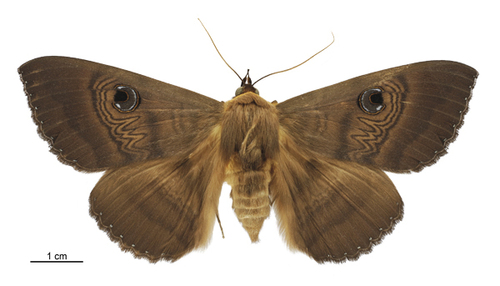
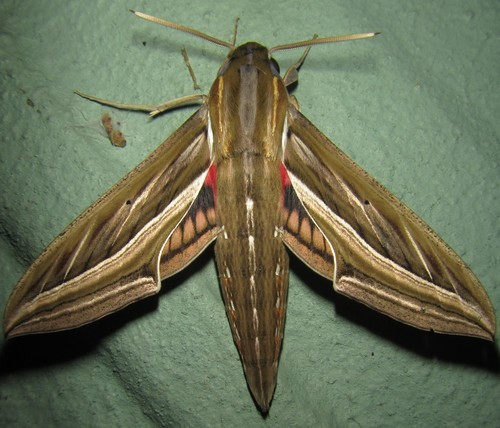
The Australian striped hawk moth (Hyles livornicoides) is a moth of the family Sphingidae first described by the Scottish-born Australian medical practitioner, naturalist, author, philosopher and utopianist; Thomas Pennington Lucas in 1892. H. livornicoides was once a common food source for the Arrente community in Central Australia, however is not consumed anymore due to their sacredness and increasing scarcity. The local name for the caterpillar is 'Ayepe-arenye', often anglicised as 'Yeperenye' or 'Yipirinya'.

H. livornicoides is found in throughout mainland Australia in New South Wales, South Australia, the Northern Territory, Queensland, Victoria, the Australian Capital Territory and Western Australia. Sightings of the moth produce a scattered distribution with few sightings in northern Western Australia, and a high frequency of sightings along a coastal area above the NSW/Queensland border.

In the early stages of its caterpillar form, H. Livornicoides is green with a dark dorsal line, ending at a stumpy black tail spike. During the third and fourth instars, the caterpillar develops black-edged orange eyespots along each side, joined by a pale... Wikipedia →

Global Distribution

Parks Where Found

# Park Country Daily sighting probability
1 Uluru-Kata Tjuta National Park 🇦🇺 Australia
~30%
2 Flinders Ranges National Park 🇦🇺 Australia
~20%

Before you go

What are the chances of seeing an Australian Striped Hawk Moth in Uluru-Kata Tjuta National Park?

Possible

About 30% of wildlife watchers report an Australian Striped Hawk Moth sighting in Uluru-Kata Tjuta National Park on a given day, based on 23 verified sightings from GBIF citizen-science data from 2019 to 2026. It is the 3rd most-seen of the 38 insects we can rate there. Over three days the chance rises to about 70%, and over a week to about 90%, if each day is a fresh chance.

When is the best time to see an Australian Striped Hawk Moth in Uluru-Kata Tjuta National Park?

February

In that month about 70% of wildlife watchers report an Australian Striped Hawk Moth in Uluru-Kata Tjuta National Park on a given day, against under 5% in May to November, the lowest months. That is one of Uluru-Kata Tjuta National Park's driest months, with about 10 mm of rain against 65 mm in January.

What time of day is best to see an Australian Striped Hawk Moth?

Between 9 am and noon

Across all the parks we cover, that three-hour window holds the most Australian Striped Hawk Moth sightings with a recorded time, and about 9 in 10 of them come between 6 am and 6 pm: it is a daytime animal.

Is Uluru-Kata Tjuta National Park the best place to see an Australian Striped Hawk Moth?

Yes

Of the 2 parks where we can rate Australian Striped Hawk Moth sightings, Uluru-Kata Tjuta National Park has the highest daily chance: about 30%. Next come Flinders Ranges National Park (Australia, about 20%).

Where does the Australian Striped Hawk Moth sighting chance come from?

GBIF citizen-science records

It is estimated from how often the Australian Striped Hawk Moth is recorded against all the insects logged in Uluru-Kata Tjuta National Park (23 verified sightings from 2019 to 2026), calibrated against known sighting rates. Figures are rounded to the nearest 10% because citizen-science data supports honest approximations, not decimals, and months with records from fewer than five people show "—". How it works.

← Back to Uluru-Kata Tjuta National Park