Flinders Ranges National Park
🇦🇺 Australia
Oceania, Australia 487 spp. recorded
Flinders Ranges National Park is an ancient mountain sanctuary set within the dry interior of South Australia, defined by dramatic quartzite ridges, deep eroded gorges, and sparse arid vegetation. Unlike the coastal wetlands or tropical forests of the continent, this rugged upland terrain offers open stony tracks winding through dry creek beds and rocky slopes.
-31.342° S 138.667° E
🦜 Nature

208 Species sighted
10,575 Verified sightings From 2019 to 2026
Oct Best month
⭐ Iconic Species



📊 Most Spotted




⭐ Iconic Species
📊 Most Spotted


⭐ Iconic Species
📊 Most Spotted


⭐ Iconic Species
📊 Most Spotted

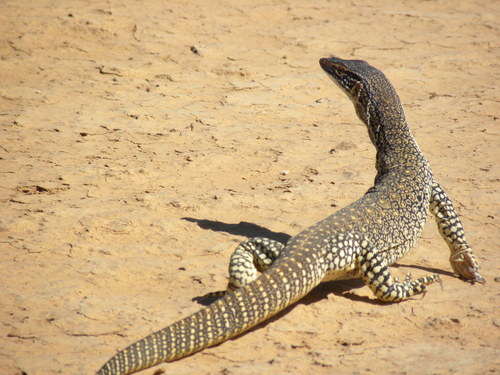


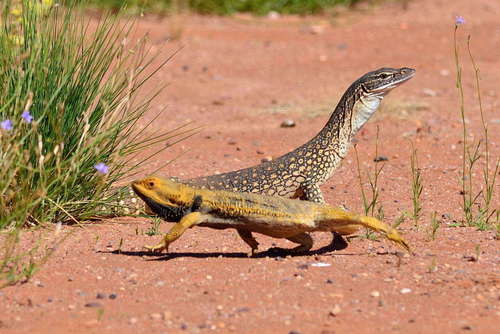

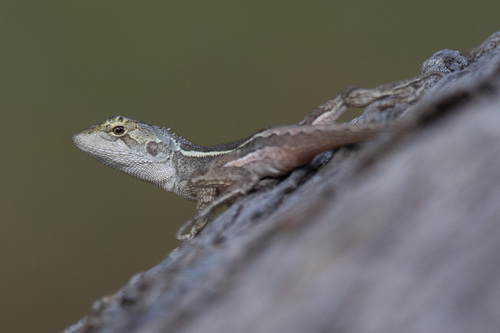

📊 Most Spotted
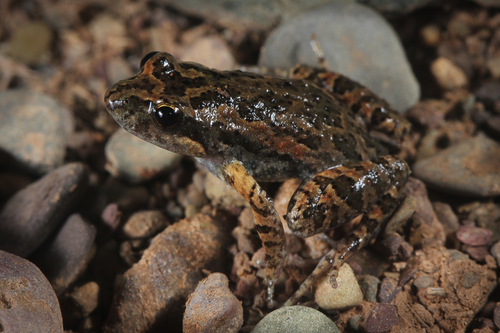


📊 Most Spotted
⭐ Iconic Species
🌙 Most active after dark


+ 356 more species with insufficient data
Recent sightings in Flinders Ranges National Park
LIVEiNaturalistSighting Calendar
How many species you'd see in a day
29Jan
26Feb
36Mar
36Apr
30May
34Jun
30Jul
32Aug
40Sep
40Oct
36Nov
13Dec
Sighting Zones
Warmer areas are where all species together are recorded most often.
-
Wilpena Pound
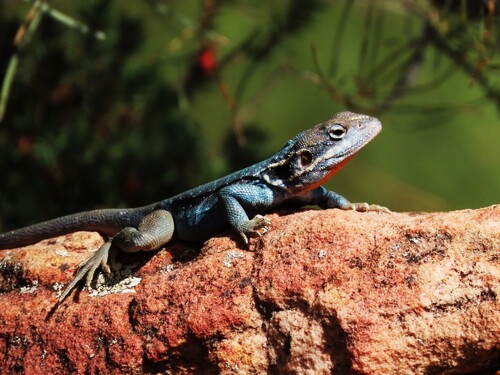
Daily sight. prob.vs avg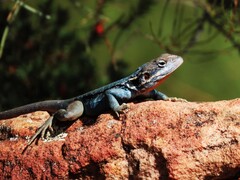 Swift Rock Dragon~90%+10%
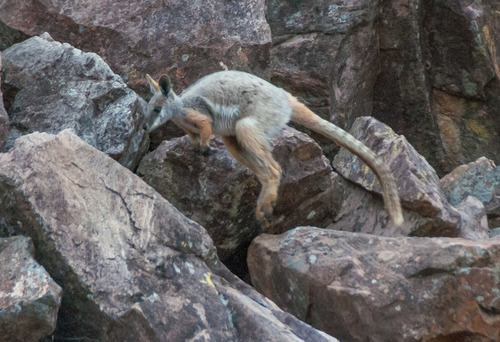
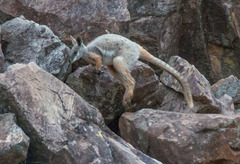 Yellow-footed Rock-wallaby~80%≈
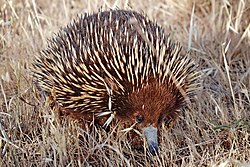 Short-beaked Echidna~80%+20%
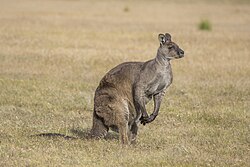 Western Grey Kangaroo~80%+20%
 Wallaroo~70%≈
 Australian Ringneck~70%-20%
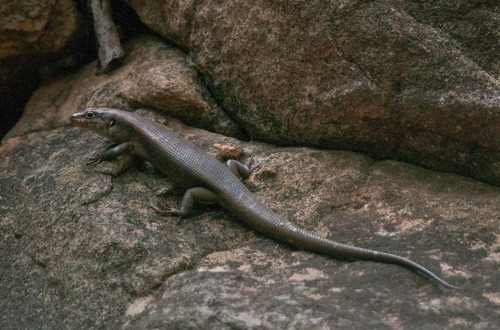
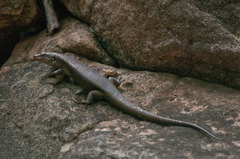 Flinder's Ranges Rock-skink~70%+20%
 Australian Raven~70%-20%
 Common Brushtail~60%+20%
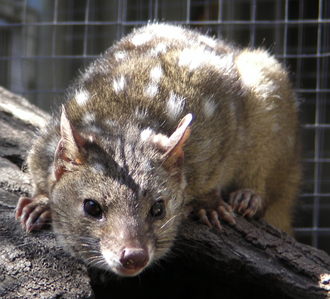
 Western Quoll~60%+20%
 Yellow-throated Miner~60%-20%
 Australian Magpie~60%-20%
-
Bunyeroo Gorge
Daily sight. prob.vs avg- Yellow-footed Rock-wallaby>90%+10%
- Wallaroo~90%+10%
- Australian Raven~60%-20%
- Short-beaked Echidna~60%-10%
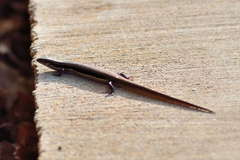 Boulenger's Snake-eyed Skink~60%+30%
 Gould's Goanna~60%+10%
 Blue Flier (Females)~60%+20%
- Western Quoll~60%+20%
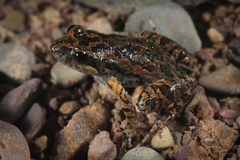 Northern Flinders Ranges Froglet~60%+20%
- Australian Ringneck~60%-30%
 Red-capped Robin~50%-10%
 Desert Tree Frog~40%+20%
-
Arkaroo Rock
Daily sight. prob.vs avg -
Brachina Gorge
Daily sight. prob.vs avg- Yellow-footed Rock-wallaby>90%+10%
- Wallaroo~70%-10%
 Red-barred Crevice-dragon~50%+20%
- Australian Raven~50%-30%
- Short-beaked Echidna~50%-20%
- Desert Tree Frog~50%+20%
 Spotted Grass Frog~40%+10%
- Yellow-throated Miner~30%-40%
 Inland Thornbill~30%-30%
 Common Prickly Gecko~30%-10%
- Gould's Goanna~30%-20%
- Western Grey Kangaroo~30%-30%
-
Stokes Hill




🏕️ Experience
Essentials
Entrance
Paid
Tourism
Low
Typical stay
1–2
daysTrails
Moderate
World Heritage
No
Climate
Temp °C Rain mm
JanFebMarAprMayJunJulAugSepOctNovDec
0.0 Good
Wallace's Line Score
How good is this park for seeing wildlife? 🦜
Biodiversity
GoodHow rich is the wildlife?
3.5
Species by taxon
🦅 Birds 290
🐒 Mammals 46
🦎 Reptiles 144
🐸 Amphibians 7
487 Total Species
828 Global average across 316 parks
13 Threatened 299 Endemic
🔭
Sighting
Very goodHow likely to see animals?
3.5
🎯
Top-12 Avg Probability
73% 📊
Coverage (126 species at ≥5% of 487 in the inventory)
26% 🔀
Taxon variety in top 12 (8 bird, 3 mammal, 1 reptile)
65% 🔭
Species per 10 outings (distinct species a visitor would meet over 10 outings — effort held equal across parks)
75 🌟
Iconic-group species (≥15%) (every species from the 19 iconic groups — monkeys, cats, toucans, macaws, sloths, crocodilians… — not just the 4 highlighted above)
11 ⭐
High-prob species (>40%)
31 🏕️
Experience
Very goodHow easy and pleasant is the visit?
3.6
Climate Mixed Medium
Entrance Paid Low
Tourism Medium Medium
Trails Moderate Medium
World Heritage No —
What visitors say
We headed to the Aroona campground for lunch, a stunning spot with an old homestead sitting in a field of flowers at the foot of looming orange mountains.
We also saw many other birds here, such as kookaburras and all kinds of parrots, but I didn’t really have a chance to photograph them.
I can think of is the Australian Wildlife Conservancy (AWC) who manage a sanctuary on the fringes of Flinders Ranges – Buckaringa.
After a brief stop to stock up the onboard fridge, we made our way five hours north to the Flinders Ranges, South Australia’s largest mountain range.
Before you go
What animals can you see in Flinders Ranges National Park?
487 species
Flinders Ranges National Park has 487 recorded vertebrate species. The ones wildlife watchers report most often on a given day are Yellow-footed Rock-wallaby (about 90%), Australian Ringneck (about 90%), Australian Raven (about 80%), Swift Rock Dragon (about 80%) and Australian Magpie (about 80%). Among amphibians, the most-seen is Northern Flinders Ranges Froglet (about 30%).
When is the best time to visit Flinders Ranges National Park for wildlife?
March and June–July
In those months the park's 12 most-seen species average about 80% on a given day, against about 60% in February and May.
Can you see a Yellow-footed Rock-wallaby in Flinders Ranges National Park?
Yes
About 90% of wildlife watchers report a Yellow-footed Rock-wallaby sighting in Flinders Ranges National Park on a given day, based on 263 verified sightings from GBIF citizen-science data from 2019 to 2026. The best time is November to August (about 90%).
Can you see a Flinder's Ranges Rock-skink in Flinders Ranges National Park?
Yes
About 50% of wildlife watchers report a Flinder's Ranges Rock-skink sighting in Flinders Ranges National Park on a given day, based on 65 verified sightings from GBIF citizen-science data from 2019 to 2026. The best time is October (about 70%).
Can you see a Wallaroo in Flinders Ranges National Park?
Yes
About 80% of wildlife watchers report a Wallaroo sighting in Flinders Ranges National Park on a given day, based on 128 verified sightings from GBIF citizen-science data from 2019 to 2026. The best time is July (about 90%).
Can you see a Wedge-tailed Eagle in Flinders Ranges National Park?
Yes
About 60% of wildlife watchers report a Wedge-tailed Eagle sighting in Flinders Ranges National Park on a given day, based on 272 verified sightings from GBIF citizen-science data from 2019 to 2026. The best time is March (about 80%).
Where in Flinders Ranges National Park is wildlife easiest to see?
Around Wilpena Pound
The richest sighting zone is around Wilpena Pound, followed by Bunyeroo Gorge and Arkaroo Rock, ranked by how many of the park's headline animals visitors can expect to see in each. See the zones on the map.
Is Flinders Ranges National Park good for wildlife watching?
3.5 out of 5
On the Wallace's Line Score, Flinders Ranges National Park rates 3.5/5: 199th of 316 parks worldwide and 16th in Oceania. 37 of its species are reported by about 40% or more of wildlife watchers on a given day.


