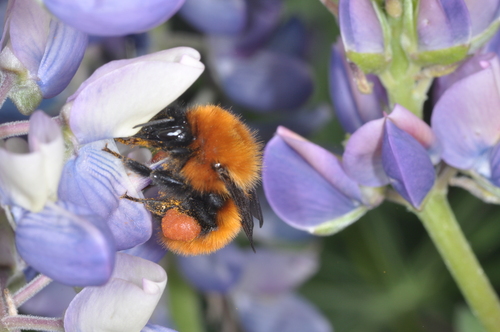
Giant Bumble Bee

Giant Bumble Bee

Bombus dahlbomii

Daily sighting probability ~50% · Likely
at Vicente Pérez Rosales National Park

In 3 days ~90% in a week >90%

33 Verified sightings at Vicente Pérez Rosales National Park From 2019 to 2026
83 In all 3 parks
October Best month
☀️ Diurnal When it's spotted

About the Giant Bumble Bee

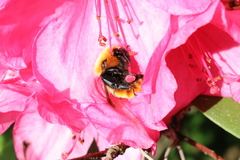
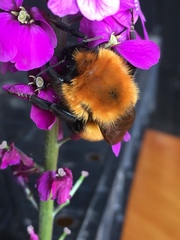
Bombus dahlbomii, also known as the moscardón (or mangangá, from Guarani: mamanga), is a species of bumblebee endemic to southern South American temperate forests. B. dahlbomii is one of the largest bee species in the world, with matured queens growing up to 40 mm (1.6 in) long. Because of its size and furry appearance, the species has been described as "flying mice" colloquially, and "a monstrous fluffy ginger beast" by British ecologist David Goulson.

B. dahlbomii is native to southern Chile and southern Argentina, including Patagonia. The decline of its populations started with the introduction of Bombus terrestris and B. ruderatus into Chile to serve as commercial pollinators. B. dahlbomii population decline can also be attributed to the pathogen spillover of the parasitic protozoan Apicystis bombi, which was co-introduced with B. terrestris.

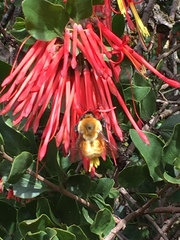
B. dahlbomii is an important insect in local ecosystems, such as the Maulino forest of central Chile. There, it is a major pollinator of native plants such as Lapageria rosea and Alstroemeria aurea, both of which serve important commercial purposes.

The species was originally described in 1835 by the French entomologist Félix... Wikipedia →
Global Distribution

Parks Where Found

# Park Country Daily sighting probability
1 Vicente Pérez Rosales National Park 🇨🇱 Chile
~50%
2 Nahuel Huapi National Park 🇦🇷 Argentina
~30%
3 Torres del Paine National Park 🇨🇱 Chile
~20%

Before you go

What are the chances of seeing a Giant Bumble Bee in Vicente Pérez Rosales National Park?

Likely

About 50% of wildlife watchers report a Giant Bumble Bee sighting in Vicente Pérez Rosales National Park on a given day, based on 33 verified sightings from GBIF citizen-science data from 2019 to 2026. It is the most-seen of the 8 insects we can rate there. Over three days the chance rises to about 90%, and over a week to over 90%, if each day is a fresh chance.

When is the best time to see a Giant Bumble Bee in Vicente Pérez Rosales National Park?

March and October

In those months about 70% of wildlife watchers report a Giant Bumble Bee in Vicente Pérez Rosales National Park on a given day, against about 10% in June and July, the lowest months.

What time of day is best to see a Giant Bumble Bee?

Between noon and 3 pm

Across all the parks we cover, that three-hour window holds the most Giant Bumble Bee sightings with a recorded time, and about 8 in 10 of them come between 6 am and 6 pm: it is a daytime animal.

Is Vicente Pérez Rosales National Park the best place to see a Giant Bumble Bee?

Yes

Of the 3 parks where we can rate Giant Bumble Bee sightings, Vicente Pérez Rosales National Park has the highest daily chance: about 50%. Next come Nahuel Huapi National Park (Argentina, about 30%) and Torres del Paine National Park (Chile, about 20%).

Where does the Giant Bumble Bee sighting chance come from?

GBIF citizen-science records

It is estimated from how often the Giant Bumble Bee is recorded against all the insects logged in Vicente Pérez Rosales National Park (33 verified sightings from 2019 to 2026), calibrated against known sighting rates. Figures are rounded to the nearest 10% because citizen-science data supports honest approximations, not decimals, and months with records from fewer than five people show "—". How it works.

← Back to Vicente Pérez Rosales National Park