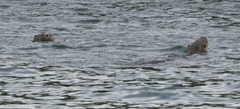
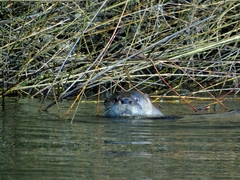
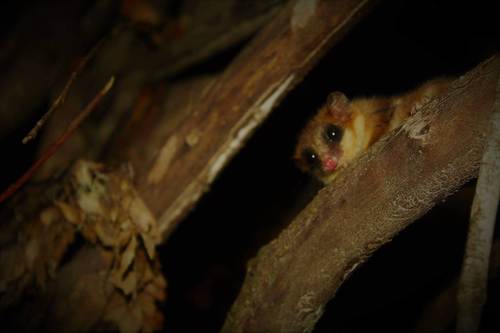
Southern River Otter

Southern River Otter

Lontra provocax

Silhouette: Nobu Tamura · PhyloPic

LCNTVUENEndangeredCR
Daily sighting probability ~10% · With luck
at Vicente Pérez Rosales National Park

In 3 days ~40% in a week ~60%

7 Verified sightings at Vicente Pérez Rosales National Park From 2019 to 2026
7 In 1 park
June Best month
☀️ Diurnal When it's spotted

About the Southern River Otter

The southern river otter (Lontra provocax), or South American river otter, is an otter species that lives in much of Patagonia. It is listed by the International Union for Conservation of Nature as an endangered species.

A medium-sized otter, the southern river otter's body can grow up to 70 cm (28 in) long, with the tail adding about 40 cm (16 in). Body weight averages about 5–10 kg (11–22 lb). Its fur is dark brown on the upper parts and a lighter cinnamon color or can be almost white on the underside.

Family groups usually consist only of a female and her young, as males are usually solitary except for the breeding season. Litter sizes average one to two pups, but up to four can be born at a time. They are piscivorous, and their natural prey includes many types of fish, crustaceans, mollusks, and occasionally birds or their eggs, particularly of ground-nesting species found near water. Occasional reptiles or amphibians may be hunted as well, including frogs, smaller turtles, lizards and even some snakes.

The southern river otter can be found in marine, freshwater, and terrestrial habitats, but are mostly found in freshwater lakes and... Wikipedia →

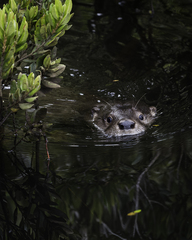
Sounds

Recording0:04

Chile · 2025

© eloisa-v · iNaturalist · CC BY-NC 4.0

Global Distribution

Parks Where Found

# Park Country Daily sighting probability
1 Vicente Pérez Rosales National Park 🇨🇱 Chile
~10%

More parks will be added in future updates.

Before you go

What are the chances of seeing a Southern River Otter in Vicente Pérez Rosales National Park?

With luck

About 10% of wildlife watchers report a Southern River Otter sighting in Vicente Pérez Rosales National Park on a given day, based on 7 verified sightings from GBIF citizen-science data from 2019 to 2026. It is the 5th most-seen of the 6 mammals we can rate there. Over three days the chance rises to about 40%, and over a week to about 60%, if each day is a fresh chance.

When is the best time to see a Southern River Otter in Vicente Pérez Rosales National Park?

June

In that month about 30% of wildlife watchers report a Southern River Otter in Vicente Pérez Rosales National Park on a given day, against under 5% in May and July–November, the lowest months. That is one of Vicente Pérez Rosales National Park's wettest months, with about 490 mm of rain against 85 mm in February.

What time of day is best to see a Southern River Otter?

Between noon and 3 pm

Across all the parks we cover, that three-hour window holds the most Southern River Otter sightings with a recorded time, and about 8 in 10 of them come between 6 am and 6 pm: it is a daytime animal.

Where else can you see a Southern River Otter?

Only Vicente Pérez Rosales National Park, in our data

Vicente Pérez Rosales National Park is the only park on Wallace's Line with enough records to rate Southern River Otter sightings: about 10% of wildlife watchers there report one on a given day.

Which relatives of the Southern River Otter live in Vicente Pérez Rosales National Park?

Same order: Carnivora

The closest relatives of the Southern River Otter that you can see in Vicente Pérez Rosales National Park (order Carnivora, Carnivorans) are Pampas Fox (about 90%), Güiña (about 30%) and Culpeo (about 30%), with each one's daily chance of a sighting.

Where does the Southern River Otter sighting chance come from?

GBIF citizen-science records

It is estimated from how often the Southern River Otter is recorded against all the mammals logged in Vicente Pérez Rosales National Park (7 verified sightings from 2019 to 2026), calibrated against known sighting rates. Figures are rounded to the nearest 10% because citizen-science data supports honest approximations, not decimals, and months with records from fewer than five people show "—". How it works.

← Back to Vicente Pérez Rosales National Park